


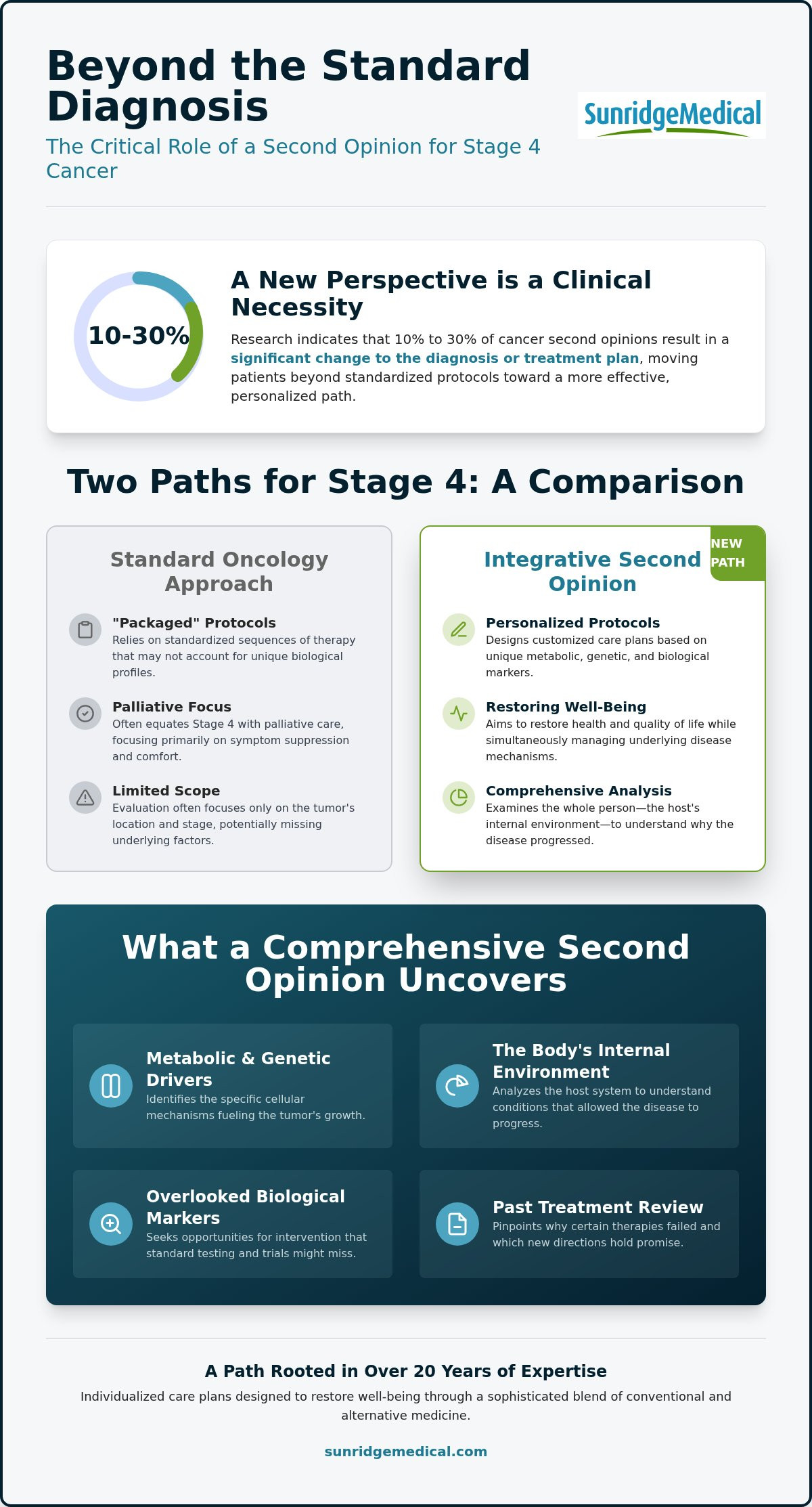
A Stage 4 diagnosis should never be the final word on your quality of life, yet many patients are told that palliative care is the only remaining path. Seeking a specialized second opinion for stage 4 cancer diagnosis is often the first step toward reclaiming agency in your medical journey. Research indicates that 10% to 30% of cancer second opinions result in a significant change to the diagnosis or the treatment plan, proving that a fresh perspective is a clinical necessity rather than a luxury.
It’s exhausting to feel like a statistic in a standardized system, especially when conventional protocols leave you fearing side effects as much as the disease itself. You likely feel the weight of conflicting advice and the frustration of being offered packaged care that doesn’t account for your unique biology. We understand that you are looking for a sanctuary where clinical expertise meets a dedicated advocate for your health.
This guide will show you how a specialized second opinion moves beyond standard palliative measures to identify advanced integrative protocols. You’ll discover how to move toward a path that combines deep research into cancer mechanisms with customized IV and biological therapies. We will outline a clear, structured framework for accessing a level of care that prioritizes both scientific precision and your fundamental quality of life.
Key Takeaways
- Discover how a specialized second opinion serves as a powerful tool for clinical advocacy, moving your care plan beyond standard palliative options toward advanced research-based protocols.
- Understand the critical importance of a second opinion for stage 4 cancer diagnosis to identify targeted integrative methodologies that address the unique biological mechanisms of your illness.
- Learn about the evaluation process for specialized IV and biological therapies, which offer a personalized alternative to the one-size-fits-all approach of traditional oncology.
- Identify the specific records and questions needed to prepare for a comprehensive consultation, ensuring every aspect of your previous treatment and current pathology is meticulously reviewed.
- Explore a path rooted in over 20 years of expertise, where individualized care plans are designed to restore well-being through a sophisticated blend of conventional and alternative medicine.
Why a Second Opinion is Essential for Stage 4 Cancer in 2026
Receiving a late-stage diagnosis often feels like the end of a medical conversation, yet it’s actually the most critical time to advocate for your health. A second opinion for stage 4 cancer diagnosis should be viewed as a proactive tool for clinical advocacy rather than a mere verification of pathology. While traditional systems often focus on confirming the accuracy of the initial diagnosis, a more comprehensive approach seeks to expand the horizon of what’s possible. Fundamentally, understanding what is a second opinion in the context of advanced oncology means looking for overlooked biological markers that integrative protocols can target. A Stage 4 second opinion is a comprehensive review of both conventional data and alternative treatment feasibility.
Moving Beyond the Palliative Label
Standard medical models frequently equate Stage 4 with palliative care, focusing solely on symptom suppression and comfort. We challenge the assumption that metastatic disease necessarily equals a terminal timeline with no room for clinical progress. Advanced integrative medicine seeks to restore well-being while simultaneously managing the underlying disease mechanisms. By examining the specific metabolic and genetic drivers of a tumor, we can identify opportunities for intervention that standard trials might miss. This nuanced approach is detailed in our guide on integrative cancer treatment by stage, which highlights how protocols evolve as a condition progresses. It’s about moving from a “wait and see” mindset to one of targeted, multi-faceted action.
The Role of Clinical Gravity and Hope
The emotional gravity of a Stage 4 diagnosis requires a steady hand and a clear, logical path forward. It’s natural to feel overwhelmed by the weight of the situation, yet this is precisely when scientific optimism is most valuable. A specialized second opinion provides a foundation of trust, offering a sanctuary where your experience is honored and your treatment is customized to your unique biological profile. We bridge the gap between clinical gravity and the possibility of progress by focusing on research-based alternatives that prioritize the person, not just the pathology. This process transforms a moment of fear into a structured plan for clinical action. You deserve a partner who isn’t satisfied with the status quo and is constantly seeking more effective ways to help you navigate this journey.
Components of a Comprehensive Integrative Second Opinion
A standard consultation often focuses on the tumor’s location and stage. However, a comprehensive integrative evaluation looks deeper, examining the host’s internal environment to understand why the disease progressed and how to restore balance. This is precision medicine. When pursuing a second opinion for stage 4 cancer diagnosis, the physician’s role is to act as a scientific guide, identifying the underlying mechanisms that standard protocols might overlook. While many patients start by getting a second opinion for your cancer diagnosis through traditional academic centers, an integrative approach adds layers of metabolic and biological analysis. This methodology considers the whole human experience, ensuring that every decision is rooted in both data and empathy.
Physician Evaluation and Protocol Development
The transition from “packaged” care to individualized treatment plans is the hallmark of a specialized second opinion. Traditional systems often rely on standardized sequences of chemotherapy that may not account for your unique biological profile. We bridge the gap between conventional clinical language and advanced, research-based alternative terminology to uncover new possibilities. By analyzing specific biological markers and previous treatment responses, we can pinpoint why certain therapies failed and which new directions hold the most promise. This intellectual rigor allows us to develop a structured path forward that is both ambitious and grounded in clinical reality. It’s a departure from the status quo, focusing on the possibility of progress through a more comprehensive lens.
Advanced IV and Biological Protocols
Customized intravenous protocols serve as a vital supportive pillar in our methodology. These are not generic infusions; they are specialized IV protocols designed to target the metabolic needs of late-stage conditions. Biological treatments also play a critical role in managing complex chronic diseases by supporting the immune system’s natural defenses. We prioritize ongoing patient monitoring to ensure these advanced therapies remain effective and well-tolerated. This multi-faceted approach also evaluates environmental factors and hormone optimization, which are often dismissed in standard oncology. Optimizing these underlying systems helps restore the body’s resilience and improves the overall quality of life. If you feel that your current plan is missing these critical elements, you can consult with a specialist to explore a more targeted strategy.
Standard Oncology vs. Integrative Protocols for Metastatic Cancer
Standard oncology centers are often bound by rigid institutional guidelines that prioritize volume over individualization. This creates a “one-size-fits-all” environment where patients feel like a number rather than a person with a unique biological story. Every individual has a fundamental right to a second opinion, and in the case of metastatic disease, this right is a clinical lifeline. A specialized second opinion for stage 4 cancer diagnosis allows for a much deeper physician-patient interaction. Instead of a brief review of imaging, we conduct an exhaustive analysis of your metabolic health, immune function, and previous treatment failures. This depth is essential for identifying why standard care may have stalled and where new opportunities exist.
Considering alternative cancer treatment is not a rejection of science; it’s an embrace of more advanced, research-based methodologies. Standard systems frequently focus on symptom management and slowing decline. Our goal is the restoration of well-being. We believe that managing a disease should not come at the cost of your fundamental quality of life. This requires a deliberate shift from standard palliative care to aggressive, targeted integrative protocols that honor the patient’s experience.
Precision vs. Standardization
Standardized chemotherapy protocols are designed for the “average” patient, but Stage 4 cancer is rarely average. It’s a complex, evolving disease that requires a scientific guide to navigate effectively. We look for precision by analyzing how your specific biological environment interacts with the cancer. This allows for targeted methodologies that account for individual sensitivities and unique metabolic drivers. While standard oncology relies on a packaged framework, integrative care prioritizes customization. We seek to identify the underlying mechanisms of the tumor, allowing for a more sophisticated application of advanced therapies that go beyond the status quo.
Comprehensive Lens on Chronic Disease
Cancer does not exist in a vacuum. Many patients with advanced diagnoses also struggle with underlying issues like autoimmune disorders, hormonal imbalances, or environmental toxicities. A premiere medical center must treat the holistic integration of these conditions to achieve progress. This broader framework is essential for recovery, as detailed in our clinical path for integrative medicine for chronic illness. By addressing the body as a whole system rather than a collection of isolated symptoms, we create a more resilient foundation for advanced protocols. This multi-faceted approach ensures that we aren’t just treating a tumor, but supporting a human being in their journey toward wellness.
How to Request and Prepare for Your Second Opinion
Preparing for a second opinion for stage 4 cancer diagnosis requires a shift from passive participation to active clinical advocacy. It’s not simply about transferring files; it’s about assembling a comprehensive biological map that allows a specialist to see what others may have missed. You’ll need to gather your full pathology reports, recent imaging scans, and a detailed chronology of your treatment responses. This history is invaluable. It reveals the specific behavior of the disease in your body, providing the data needed to identify more effective, research-based alternative paths.
Communicating with your current oncology team about seeking a broader perspective is a standard part of the process. You don’t need to feel as though you’re questioning their competence. Instead, frame the request as a desire to explore every possible avenue for your health. Most professionals understand that complex cases benefit from multiple viewpoints. Once you have your records, the next step is scheduling a physician evaluation to discuss individualized protocols that move beyond the status quo. This is a moment of clinical gravity and hope.
The Clinical Dialogue: What to Ask
A successful consultation is rooted in a deep, analytical dialogue. You should feel empowered to ask the “why” behind any current treatment stagnation. Inquire about the feasibility of targeted biological treatments and how specialized IV protocols can provide essential nutritional support during your journey. It’s also vital to ask how the clinic integrates hormone optimization and environmental illness protocols into their cancer care methodologies. These questions help bridge the gap between conventional data and a more holistic, multi-faceted approach to recovery. You are looking for a scientific guide who possesses deep technical knowledge but applies it with a focus on your individual human experience.
Logistics of National Care
Accessing premiere care shouldn’t be a source of additional stress. We provide a sanctuary for patients from across the country, starting with a welcoming and hopeful first point of contact. By utilizing our toll-free support, you can connect with a team that understands the urgency of your situation. We’ve streamlined the process of scheduling a comprehensive evaluation, ensuring that distance is not a barrier to receiving specialized attention. This steady hand helps you navigate the complexities of records management, allowing you to focus entirely on your restoration of well-being. If you are ready to explore a more targeted strategy, contact our team to schedule your physician evaluation and begin your journey toward a customized care plan.
The Sunridge Medical Path: Advanced Alternative Cancer Care
Sunridge Medical represents a definitive departure from the standardized medical model. Founded in 2003, our center has spent over two decades refining advanced alternative cancer protocols to meet the needs of complex cases. Under the clinical leadership of Dr. Steven S. Isaacman, we’ve established a sanctuary for those who feel overlooked or frustrated by traditional systems. We believe that a second opinion for stage 4 cancer diagnosis is more than a formality; it’s a critical entry point into a more sophisticated level of care. Our methodology prioritizes your unique biological experience, ensuring that every protocol is as individualized as the person receiving it. This approach transforms the patient experience from being a statistic to being a partner in a high-level clinical strategy.
Pioneering Expert Advocacy
Traditional oncology often settles for the status quo, but we’re dedicated to seeking more effective ways to help our patients reach their goals. We act as pioneering experts and dedicated advocates for those navigating the most difficult health journeys. This role requires a strategic blend of clinical authority and compassionate optimism. We aren’t satisfied with “one-size-fits-all” approaches that often accompany a late-stage diagnosis. Instead, we dive into the underlying mechanisms of the disease to find targeted solutions that others may have missed. Our personality is rooted in reliability and thoroughness, providing the steady hand you need to navigate complex medical decisions with confidence. We bridge the gap between conventional clinical language and advanced, research-based alternative terminology to ensure you’re fully supported.
Next Steps: Your Personalized Consultation
Reclaiming your health starts with a single, decisive step toward a broader perspective. We encourage you to take a steady hand in your own journey by moving beyond the limitations of standard palliative care. The process at Sunridge Medical is designed to be informative without being overwhelming, mimicking a professional consultation that moves from high-level concepts to practical next steps. It begins with a comprehensive physician evaluation where we review your conventional data alongside the feasibility of specialized IV and biological treatments. This evaluation serves as the foundation of a customized care plan tailored to your specific metabolic and immune profile. You don’t have to navigate this path alone. We’re here to act as your confident ally and scientific guide, focusing on the possibility of progress and the restoration of well-being through a more comprehensive lens.
Schedule your comprehensive physician evaluation with Sunridge Medical to explore advanced integrative options for your care.
Reclaiming Your Path with Advanced Integrative Care
A Stage 4 diagnosis marks the beginning of a more intensive search for answers, not the end of your options. Seeking a specialized second opinion for stage 4 cancer diagnosis is the first step toward a more comprehensive treatment horizon. By moving beyond standardized palliative care, you can access advanced protocols that target the underlying mechanisms of your specific condition. You deserve a care plan that prioritizes your unique biological profile and your fundamental quality of life.
Sunridge Medical serves as a national center for advanced alternative medicine, founded in 2003 by Dr. Steven S. Isaacman. With over two decades of specialized integrative oncology experience, our team acts as a dedicated advocate for patients who feel overlooked by traditional systems. We combine clinical authority with a sanctuary of compassionate optimism to help you navigate this journey with confidence. Contact Sunridge Medical at 1-800-923-7878 to schedule your physician evaluation and discover a path forward rooted in precision and hope. You don’t have to navigate this alone; a steady hand is ready to guide you.
Frequently Asked Questions
Is it too late to get a second opinion if I have a Stage 4 diagnosis?
It is never too late to seek a fresh clinical perspective on your health. A second opinion for stage 4 cancer diagnosis is often the most critical step a patient can take to move beyond standard palliative care. Our methodology focuses on identifying overlooked biological markers and metabolic drivers that may offer new avenues for intervention. By expanding the treatment horizon, we aim to restore well-being even when conventional systems suggest that options are limited.
Can I combine integrative treatments with my current chemotherapy?
Integrative oncology is specifically designed to function alongside conventional treatments like chemotherapy or radiation. We focus on a multi-faceted approach that supports your body’s resilience and immune function while you undergo standard protocols. This synergy aims to manage side effects and improve your overall quality of life. Our physicians carefully monitor your progress to ensure that alternative protocols complement your existing medical plan without interference.
What makes an alternative cancer treatment ‘research-based’?
A research-based alternative treatment is one rooted in peer-reviewed clinical studies and established biological mechanisms. We bridge the gap between traditional medicine and advanced alternative therapies by utilizing data to inform every decision. This means our protocols are not generic; they are precise applications of scientific knowledge designed to target specific tumor behaviors. We prioritize methodologies that have a documented physiological basis for supporting the host’s internal environment.
How do specialized IV protocols support Stage 4 cancer patients?
Specialized IV protocols provide targeted nutritional and oxidative support directly into the bloodstream, bypassing the digestive system for maximum absorption. For Stage 4 patients, these infusions help address the intense metabolic demands of the disease and support immune system defenses. Each protocol is customized to the individual’s biological needs, providing a supportive pillar that helps maintain strength and vitality during complex chronic disease management.
Will insurance cover an integrative second opinion for cancer?
Sunridge Medical operates as a private medical center and does not participate in standard health insurance billing. We prioritize an exclusive, premiere level of care that allows our physicians to focus entirely on individualized treatment plans rather than institutional restrictions. Patients typically pay for their comprehensive evaluations and specialized protocols out-of-pocket, ensuring that every clinical decision is based solely on the patient’s unique medical needs and research-based outcomes.
What should I bring to my first physician evaluation at Sunridge Medical?
You should bring a comprehensive collection of your medical records to your first physician evaluation. This includes detailed pathology reports, your most recent imaging scans, and a complete chronology of previous treatment responses. Having this data allows our team to build a sophisticated biological map of your condition. This information is essential for identifying why previous efforts may have stalled and where new, research-based opportunities for progress exist.
How long does it take to develop an individualized treatment plan?
The development of an individualized treatment plan begins immediately during your initial comprehensive physician evaluation. Because we prioritize precision and depth, our experts analyze your unique metabolic markers and medical history to create a structured path forward. This process is methodical yet urgent, reflecting the seriousness of a Stage 4 diagnosis. Most patients leave their first consultation with a clear understanding of the specialized protocols recommended for their specific journey.
Can Sunridge Medical treat other conditions alongside my cancer?
We believe in a holistic integration of care, meaning we treat the whole human experience rather than an isolated tumor. It’s common for cancer patients to struggle with concurrent issues like autoimmune disorders, chronic Lyme disease, or hormonal imbalances. Our center is equipped to manage these complex chronic conditions simultaneously. By optimizing your overall health and environmental resilience, we create a stronger foundation for your primary cancer protocols to succeed.