


You've had the fatigue, the foggy thinking, the digestive discomfort, or the strange tingling for long enough that each symptom now feels like a separate problem. Your routine blood work may look reassuring, yet you still don't feel well. Perhaps you've been told it's stress, aging, poor sleep, or an inflammatory condition, but the explanation doesn't account for everything happening in your body.
The symptoms of heavy metal poisoning in adults rarely arrive as one dramatic sign. More often, they form a shifting pattern across the nervous system, digestive tract, muscles, mood, blood, kidneys, and reproductive health. That pattern can resemble several more familiar chronic illnesses, which is why exposure history and thoughtful testing matter.
Table of Contents
- Are Unexplained Symptoms Pointing to a Deeper Cause
- Understanding Heavy Metals and Everyday Exposure Risks
- The Common Symptoms of Heavy Metal Poisoning in Adults
- How Symptom Patterns Vary by Specific Metals
- When to Seek Testing for Heavy Metal Toxicity
- Your Next Steps for a Clear Diagnosis and Recovery
Are Unexplained Symptoms Pointing to a Deeper Cause
A patient may describe months of exhaustion, difficulty concentrating, headaches, constipation, and aching joints. Another may notice numbness in the feet, irritability, abdominal pain, and a gradual decline in memory. Neither person necessarily remembers a single poisoning event. The exposure may have come from work, home renovation, water, food, a hobby, or repeated contact with a contaminated product.
That doesn't mean heavy metal toxicity is the explanation for every chronic symptom. Severe poisoning is uncommon, and many conditions can produce fatigue, neuropathy, digestive complaints, or cognitive changes. The practical issue is that a multisystem pattern deserves a wider differential diagnosis when routine evaluations haven't clarified the cause.
Clinical perspective: Persistent symptoms across unrelated body systems are a reason to revisit the history, not a reason to assume the symptoms are imaginary or purely psychological.
Environmental concerns can also overlap. Carbon monoxide exposure, for example, can cause serious illness without an obvious odor or visible warning, so homeowners may benefit from learning about detecting furnace carbon monoxide when unexplained headaches, weakness, or nausea affect more than one person in a household. Heavy metals require a different evaluation, but both situations show why the environment belongs in a complete medical history.
At Sunridge Medical, the clinical question is not, “Which symptom should we suppress?” It's whether the symptoms, timing, exposures, medications, nutrition, and laboratory findings point toward a connected process. Patients can learn more about this approach through environmental illness treatment and advanced medical approaches to toxic bio-accumulation.
The goal isn't to label every vague complaint as toxicity. It's to avoid overlooking a plausible contributor when persistent gastrointestinal, neurologic, and constitutional symptoms appear together.
Understanding Heavy Metals and Everyday Exposure Risks
Heavy metals are naturally occurring elements that can interfere with biological processes when exposure becomes harmful. Commonly discussed examples include lead, mercury, arsenic, and cadmium. Risk depends on the specific metal, the form of exposure, the route into the body, the amount, and how long contact continues.
Many adults think of poisoning as a single industrial accident. Chronic exposure is often less obvious. A person may work with dust, fumes, pigments, batteries, solder, ceramics, or contaminated materials without connecting those activities to later symptoms. Hobbies such as stained-glass work, shooting, refinishing furniture, pottery, or metalworking can also deserve discussion during an exposure review.
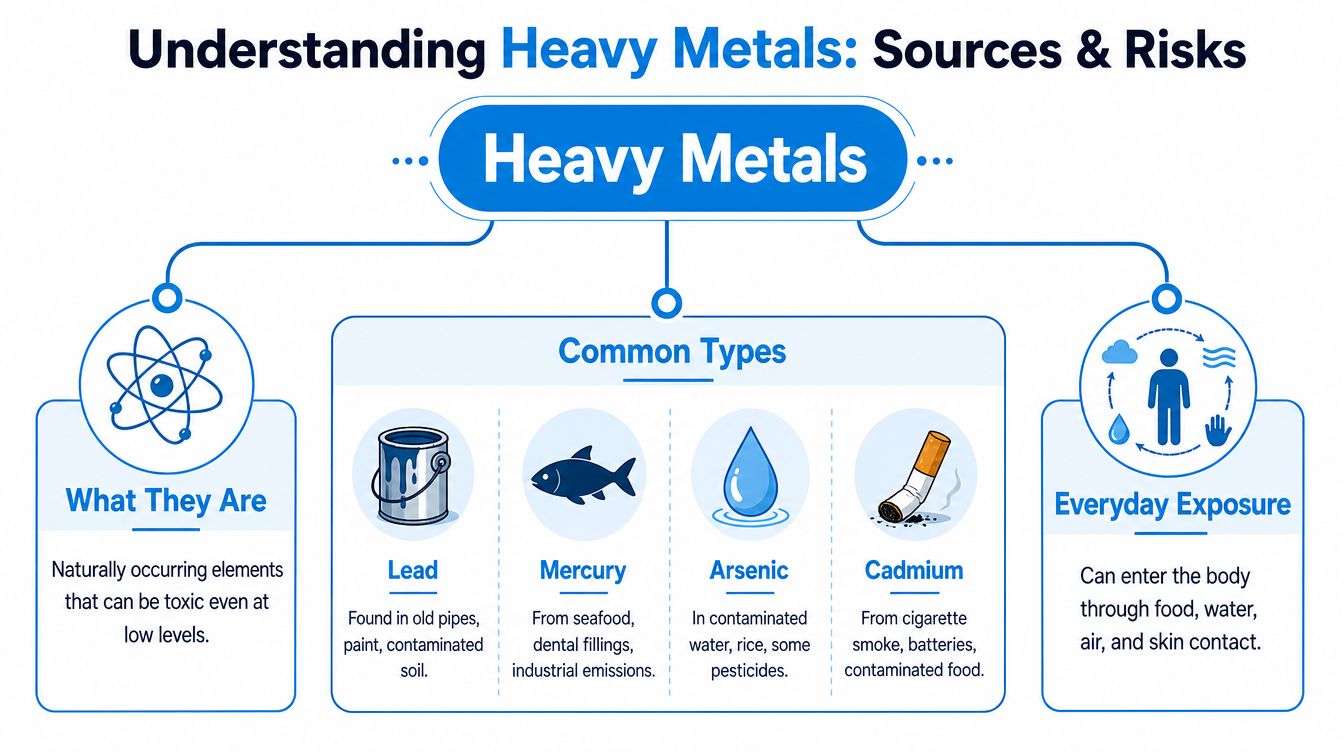
Where exposure can occur
Food and water deserve practical attention. Certain seafood can contain mercury, while rice and other foods may contribute to arsenic exposure depending on growing conditions. Drinking water may be relevant when plumbing, soil, or a private water source has been affected. A household assessment can be more useful than guessing from symptoms alone.
Consumer and workplace products can also matter. Old paint, pipes, glazed products, batteries, tobacco smoke, contaminated soil, and industrial materials may expose adults to lead, cadmium, or other metals. Skin contact, inhalation, and ingestion from contaminated hands are different routes, and a clinician should ask about each one.
If water quality is a concern, a homeowner may separately investigate household treatment options such as reverse osmosis water filtration systems. Filtration can reduce some contaminants, but it isn't a substitute for medical testing or for identifying the original source of exposure.
The most useful history includes occupation, home age, renovation work, hobbies, smoking, supplements, imported products, dietary patterns, seafood intake, water source, and symptoms in other household members. Patients in Scottsdale, Phoenix, and surrounding communities should bring these details to an appointment rather than relying on a commercial “detox” checklist. Sunridge Medical's environmental medicine program can be part of a broader discussion about exposures and complex symptoms.
The Common Symptoms of Heavy Metal Poisoning in Adults
Heavy metal poisoning usually produces a cluster of symptoms, not one unmistakable hallmark. The Cleveland Clinic describes a multisystem pattern involving gastrointestinal irritation, neurologic dysfunction, and hematologic or organ injury, including anemia, kidney damage, or liver damage in affected adults. That clinical overview is useful because it discourages patients from waiting for one dramatic sign.
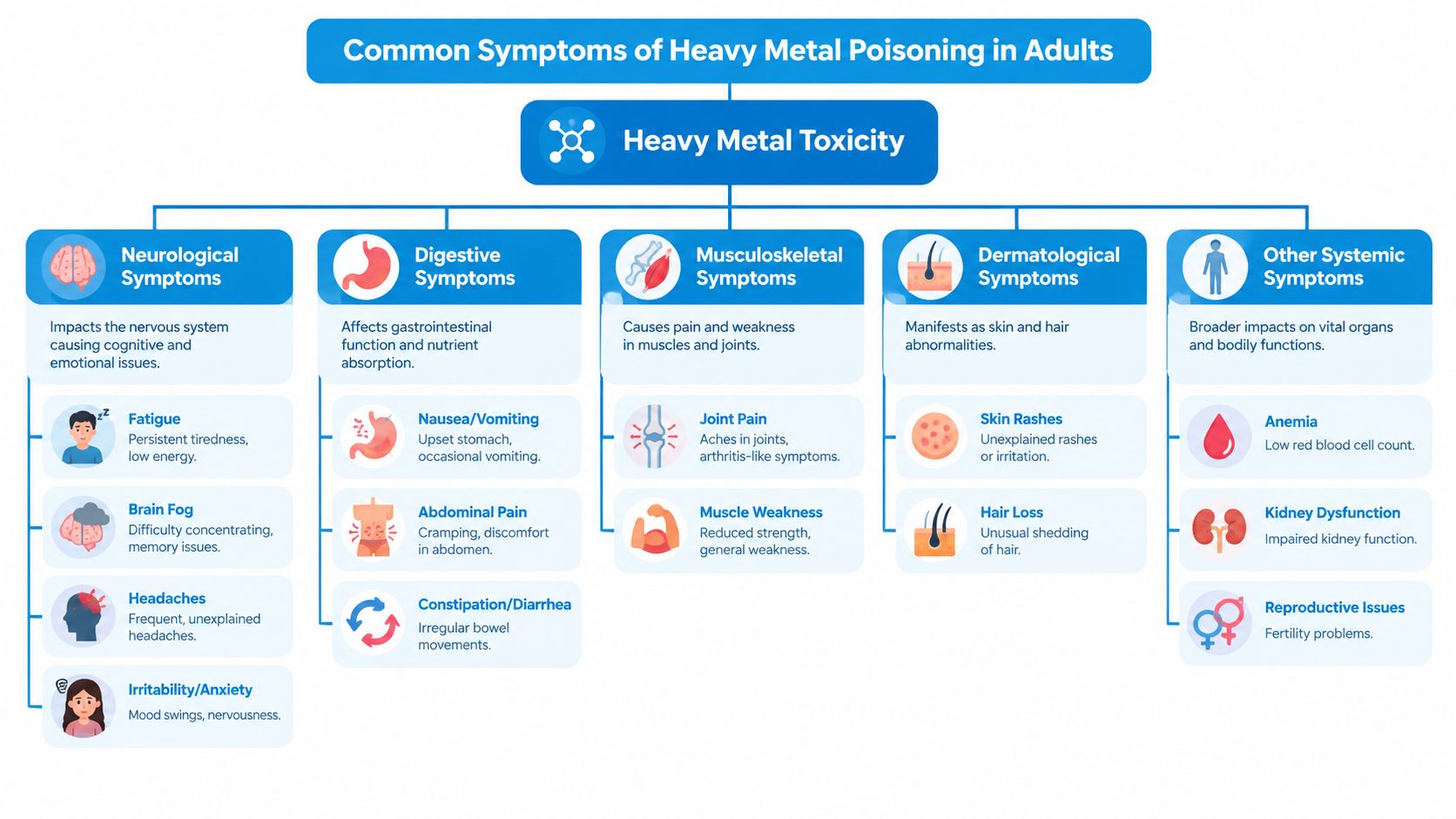
Neurologic and cognitive changes
Neurologic symptoms may include numbness or tingling, weakness, tremor, impaired coordination, headaches, poor concentration, memory loss, irritability, anxiety, mood changes, or sleep disruption. Some people describe this as brain fog, but a careful evaluation should clarify whether the problem involves attention, short-term memory, processing speed, balance, sensation, or mood.
Peripheral neuropathy can begin subtly. Tingling in the hands or feet may be attributed to diabetes, vitamin deficiency, medication effects, nerve compression, or autoimmune disease. That is why the symptom becomes more meaningful when it appears alongside abdominal complaints, fatigue, unexplained anemia, or a plausible exposure.
Digestive symptoms
The gastrointestinal pattern may include abdominal pain, nausea, vomiting, constipation, or diarrhea. Lead exposure is particularly associated with abdominal pain and colic, which can resemble an acute abdominal disorder or another gastrointestinal condition. Persistent digestive symptoms shouldn't automatically be classified as heavy metal toxicity, but they warrant further review when the usual explanations don't fit.
Constitutional and musculoskeletal symptoms
Fatigue, weakness, muscle aches, joint pain, reduced stamina, and headaches can dominate the early presentation. These complaints are common and nonspecific, yet their persistence alongside neurologic or digestive changes increases the value of an exposure-focused history.
Skin changes, rashes, reproductive effects, blood abnormalities, and kidney findings may add important context. Symptoms can worsen with greater exposure or longer duration, and severe cases can progress to encephalopathy, seizures, altered consciousness, coma, respiratory failure, arrhythmia, or death. Those emergencies require immediate hospital care, not an outpatient detox program.
The pattern matters more than any isolated complaint. A patient with fatigue alone needs a broad evaluation. A patient with fatigue, neuropathy, abdominal pain, cognitive change, and a credible exposure history needs that same evaluation to include environmental toxicity.
How Symptom Patterns Vary by Specific Metals
Different metals affect the body in different ways, although symptoms overlap. The table below is a clinical orientation, not a diagnostic tool. It can help organize questions about exposure, but only appropriate testing and medical interpretation can determine whether a metal is contributing to illness.
| Symptom Category | Lead | Mercury | Arsenic |
|---|---|---|---|
| Neurologic | Headache, irritability, poor attention, memory problems, paresthesias, tremor, weakness, and in severe cases encephalopathy or seizures | Tremor, impaired coordination, gait or writing difficulty, sensory changes, memory loss, mood changes, and peripheral vision problems | Neuropathy, weakness, altered sensation, and cognitive or constitutional complaints |
| Digestive | Abdominal pain or colic, nausea, vomiting, constipation, or diarrhea | Nausea, appetite changes, weight loss, and gastrointestinal distress can occur, particularly with chronic exposure | Severe gastrointestinal irritation may occur, with abdominal pain, nausea, vomiting, or diarrhea |
| Constitutional and other | Fatigue, joint pain, anemia, kidney effects, cardiovascular effects, and fertility problems | Fatigue, weakness, insomnia, headaches, irritability, skin rashes, and muscle weakness | Skin changes, rashes, organ injury, and broader systemic effects may be important clues |
| Exposure questions | Old paint, pipes, contaminated soil, workplace dust, batteries, ceramics, or renovation materials | Seafood, occupational settings, industrial emissions, and mercury-containing products | Contaminated water, rice, soil, pesticides, and industrial or mining environments |
Lead often looks abdominal and neurologic
Adult lead exposure can begin with abdominal pain, fatigue, weakness, headache, constipation, irritability, memory problems, or concentration difficulty. The CDC and ATSDR describe symptomatic adult intoxication as generally occurring around blood lead levels of 40 to 60 µg/dL, while measurable impairment has been documented at 10 to 25 µg/dL, and no clear safe threshold has been identified for some effects. These historical thresholds shouldn't be used for self-diagnosis, but they show why symptoms may develop before catastrophic toxicity is obvious. The CDC occupational lead guidance also documents that clinically relevant workplace exposure remains a real, though decreasing, concern.
The National Institute of Environmental Health Sciences reports that blood lead levels above 15 µg/dL are associated with cardiovascular effects, nerve disorders, decreased kidney function, and fertility problems, including delayed conception and adverse effects on sperm and semen. The CDC and NIOSH lead information provides additional clinical context for discussing these findings with a qualified professional.
Mercury often has a sensory and neuropsychiatric signature
Mercury exposure may cause tremors, impaired coordination, gait or writing difficulty, speech and hearing problems, peripheral vision changes, numbness, mood swings, memory loss, muscle weakness, or skin rashes. In a U.S. series of 317 women exposed to mercury-containing skin cream, fatigue occurred in 67%, nervousness or irritability in 63%, severe headaches in 61%, insomnia in 51%, and memory loss in 44%. These figures are reported by the National Institute of Environmental Health Sciences, and they illustrate how common complaints can coexist with distinctive neurologic symptoms.
Arsenic can involve the digestive tract, nerves, skin, and internal organs. Skin changes or neuropathy may become particularly relevant when symptoms occur alongside a possible contaminated water or occupational exposure. The absence of a visible skin finding doesn't exclude toxicity, and the presence of one doesn't prove it.
Patients seeking a focused assessment can review Sunridge Medical's heavy metals screening for whole blood arsenic, lead, and mercury with a clinician who can explain what the test can and cannot establish.
When to Seek Testing for Heavy Metal Toxicity
Testing deserves consideration when symptoms persist across more than one body system and the usual evaluation hasn't produced a convincing explanation. The strongest reason isn't symptom severity alone. It's the combination of symptoms, timing, and a credible possibility of exposure.

Red flags that justify a clinical conversation
Consider discussing testing if you have:
- Persistent gastrointestinal symptoms: Abdominal pain, nausea, constipation, or diarrhea that remains unexplained, especially when neurologic symptoms are present.
- Peripheral neuropathy: Burning, tingling, numbness, tremor, weakness, or balance changes without a clear cause.
- Neurocognitive change: New difficulty with memory, concentration, mood regulation, coordination, or sleep.
- Unexplained laboratory findings: Anemia, kidney abnormalities, liver abnormalities, or blood pressure concerns that fit the broader pattern.
- A plausible exposure: Industrial work, renovation dust, contaminated water, frequent contact with metals, certain hobbies, tobacco smoke, or an unusual dietary source.
A chronic exposure can remain subtle for a long time. The National Organization for Rare Disorders emphasizes that fatigue, emotional lability, and peripheral neuropathy may appear before severe findings, making a red-flag framework more useful than a simple symptom checklist. Its heavy metal poisoning overview supports evaluating persistent gastrointestinal complaints combined with neuropathy, unexplained anemia, or neurocognitive change when exposure is possible.
Testing should be selected according to the suspected metal and exposure timing. Blood, urine, and other specialized methods may answer different questions, and a result can be misleading if collected without a clear clinical rationale. Provoked urine testing or unsupervised chelation can create confusion and risk, particularly when a patient interprets mobilized metal as proof of disease without appropriate baseline context.
An integrative evaluation in Scottsdale may include a detailed exposure history, medication and supplement review, physical examination, standard laboratory studies, kidney and liver assessment, blood counts, and targeted toxic-element testing. Conventional evaluation remains important, especially when symptoms could reflect anemia, kidney disease, neurologic illness, endocrine dysfunction, infection, medication effects, or an urgent abdominal condition.
This video provides additional educational context before you decide whether a medical discussion is appropriate.
Patients in Phoenix, Paradise Valley, Tempe, Mesa, Chandler, Gilbert, and the greater Phoenix metropolitan area may choose a clinic that can coordinate exposure assessment with broader chronic-illness care. The right next step may be testing, source removal, conventional treatment, referral, or a combination. It shouldn't be determined by an online symptom score.
Your Next Steps for a Clear Diagnosis and Recovery
The central lesson is simple. Symptoms of heavy metal poisoning in adults are usually a pattern, and the pattern can be easy to miss when each complaint is treated separately. Fatigue may be approached as a sleep problem, abdominal pain as a digestive disorder, tingling as a nerve issue, and memory change as stress. Sometimes those explanations are correct. Sometimes they leave an important contributor unexplored.
Start by writing down when symptoms began, how they changed, where you work, what products or materials you handle, whether you've renovated an older home, what water you drink, which seafood you eat, and what supplements or medications you use. Bring prior laboratory results and a list of failed treatments. These details help a clinician decide whether heavy metal testing is reasonable and which type of testing is clinically appropriate.
Do not start chelation, binders, or an aggressive detox protocol because a social media post links your symptoms to metals. Chelation is an established medical treatment for selected poisoning situations, but it has potential adverse effects and requires professional supervision. Nutritional support may be appropriate in some patients, but the benefits of chelated minerals shouldn't be confused with chelation therapy for toxic metal exposure. These are different concepts.
A clinician may recommend removing the exposure source, correcting nutritional deficiencies, treating organ effects, monitoring symptoms and laboratory findings, or referring you for urgent care. Sunridge Medical describes its heavy metal detox protocol as a medically supervised process that begins with confirming exposure and then considers treatment options appropriate to the patient.
If you're experiencing seizures, confusion, loss of consciousness, severe weakness, breathing difficulty, or rapidly worsening abdominal symptoms, seek emergency care. For persistent but nonemergency concerns, a structured consultation can help replace guesswork with a clear plan.
Sunridge Medical offers individualized integrative evaluations for complex, multisystem concerns, including environmental exposure assessment and medically supervised heavy metal treatment when appropriate. If you live in Scottsdale, Phoenix, or elsewhere in Arizona, visit Sunridge Medical to request a consultation and discuss whether targeted testing can help clarify your symptoms.