


What if the most advanced medical response to a complex diagnosis isn’t found in a massive hospital wing, but in a specialized clinic that views your biology as a unique puzzle rather than a statistic? For those facing a Stage 4 or metastatic diagnosis, standard protocols often feel like a rigid path defined by toxic side effects and a frustrating lack of personal agency. When researching alternative cancer treatment centers, it’s vital to look beyond surface-level promises and seek out centers that bridge the gap between rigorous clinical science and compassionate, individualized care.
You deserve a medical team that treats the whole person, not just the tumor. It’s exhausting to feel like just another number in a large healthcare system, especially when you’re seeking options that go beyond the status quo. This 2026 guide provides the essential clinical criteria you need to evaluate your options and find a research-based path toward healing. We’ll explore how to identify centers offering advanced therapies not found in standard hospitals, helping you regain control over your treatment journey and your future.
Key Takeaways
- Understand why Arizona has emerged as a national leader in integrative oncology and what distinguishes a legitimate research-based clinic from standard care.
- Learn the essential clinical criteria for evaluating alternative cancer treatment centers Arizona, including the necessity of specialized sensitivity testing and physician credentials.
- Explore advanced clinical features such as customized metabolic protocols and biological response modifiers designed to stimulate the body’s natural defenses.
- Discover how to prepare for a professional consultation and what to expect regarding the duration and intensity of specialized alternative protocols.
- Identify the importance of individualized care plans that move beyond standardized treatments to address the unique mechanisms of your specific diagnosis.
What Defines Top-Tier Alternative Cancer Treatment Centers in Arizona and Beyond?
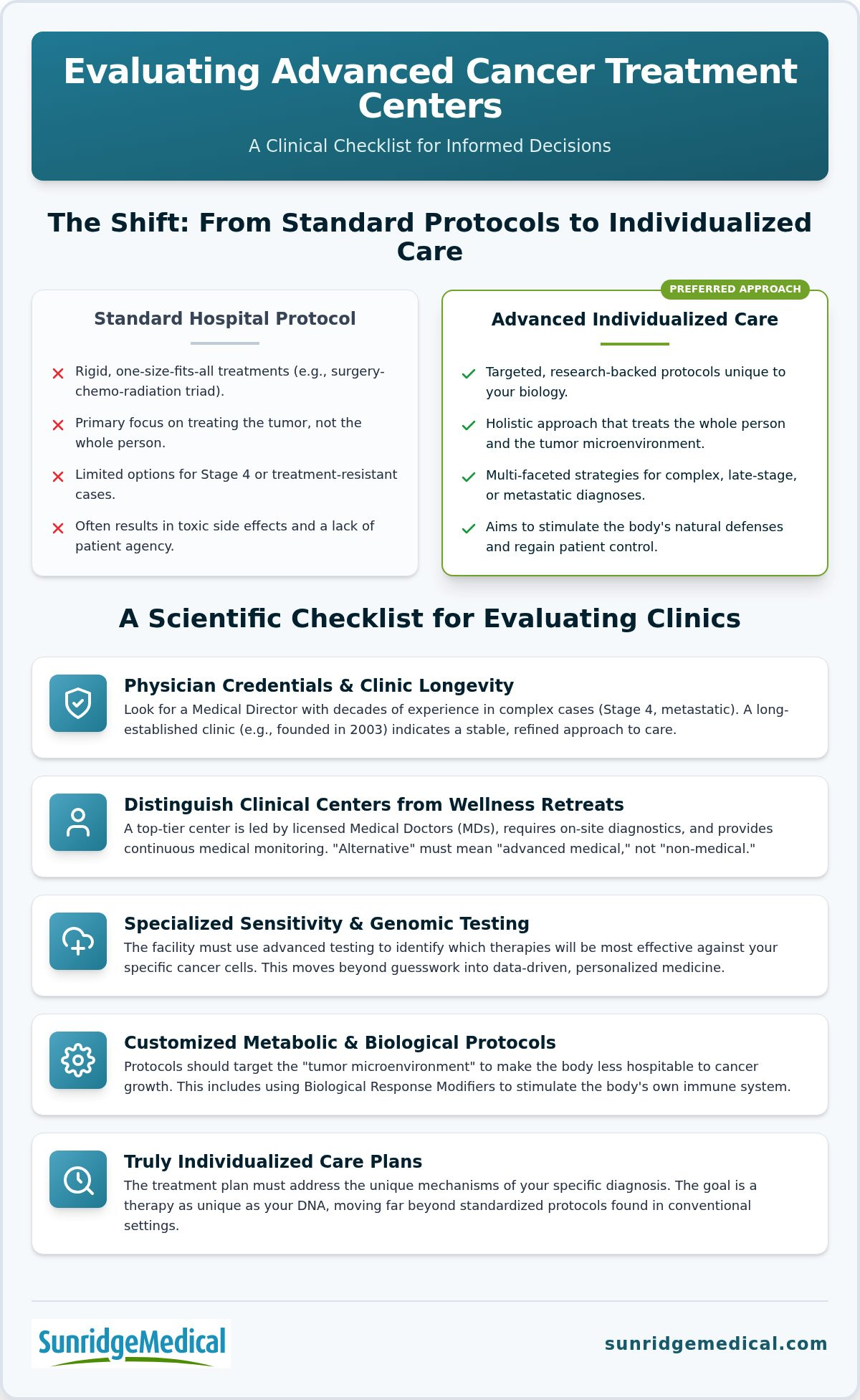
A top-tier medical facility specializing in alternative oncology isn’t defined by the absence of conventional tools, but by the presence of more targeted, research-backed protocols. These centers represent a departure from the standard surgery-chemo-radiation triad, focusing instead on advanced methodologies that disrupt cancer at a cellular level. Arizona has emerged as a premier destination for those seeking an alternative cancer treatment due to its unique concentration of pioneering physicians and a regulatory environment that encourages medical innovation. For many, alternative cancer treatment centers Arizona provide a sanctuary where clinical science meets highly personalized care.
By 2026, the medical landscape has shifted decisively from “Standard of Care” to “Advanced Individualized Care.” This evolution is particularly critical for patients facing treatment-resistant or metastatic diagnoses. While traditional systems often reach a plateau in options for Stage 4 cases, specialized alternative centers utilize multi-faceted strategies to address the complex nature of advanced disease. They don’t just look for a way to manage symptoms; they seek to identify and correct the underlying mechanisms that allow malignancy to persist.
Clinical Centers vs. Wellness Retreats
It’s essential to distinguish between a wellness retreat and a clinical center. A wellness retreat might focus on supportive therapies like massage or meditation, which are valuable for quality of life but don’t constitute a primary medical protocol. In contrast, a top-tier alternative center is led by licensed medical doctors (MDs) and specialized oncologists. These facilities require on-site diagnostic testing and continuous medical monitoring to ensure patient safety and protocol efficacy. Choosing a center means looking for clinical authority. At the highest levels of care, “alternative” does not mean “non-medical.” It means utilizing a broader, more sophisticated toolkit of interventions overseen by experienced medical professionals. Patients who want to compare facilities side by side will find that a holistic approach to cancer recovery requires evaluating the clinical depth of each center’s diagnostic and treatment protocols, not just their amenities.
The Evolution of Alternative Oncology in 2026
Modern centers have moved far beyond the generic supplement plans of the past. Today, leading facilities integrate genomic testing and personalized medicine into the patient’s daily experience. This precision allows doctors to tailor treatments to the specific genetic expression of the individual’s cancer. There’s also a significant transition toward targeting the “tumor microenvironment.” Instead of only attacking the tumor mass, clinicians work to change the internal terrain of the body, making it less hospitable to cancer growth. For a deeper look at these advancements, you can explore our Alternative Cancer Treatment: A Comprehensive Clinical Guide to Integrative Oncology in 2026. This shift ensures that the treatment is as unique as the patient’s own DNA, providing a level of depth that standardized hospital protocols simply can’t match.
A Scientific Checklist for Evaluating Advanced Cancer Clinics
Selecting a medical facility for specialized care is a high-stakes decision that requires a rigorous, objective framework. When evaluating alternative cancer treatment centers Arizona, the first priority must be the clinical pedigree of the leadership. You should look for a Medical Director with decades of experience in complex cases, specifically those involving Stage 4 or metastatic diagnoses. A center’s longevity, such as a foundation dating back to 2003, often indicates a stable and refined approach to patient care. This level of scrutiny ensures that alternative cancer treatment centers Arizona meet the high standards required for life-changing medical interventions.
Transparency is the hallmark of clinical excellence. A premier clinic will provide clear explanations of their protocols and maintain open lines of communication with your existing medical team. The National Cancer Institute categorizes these approaches under Complementary and Alternative Medicine (CAM), emphasizing the need for evidence-based evaluation. Professional coordination ensures continuity of care, allowing your local doctors to stay informed while you receive advanced therapies not available in standard hospital systems.
The Importance of Individualized Protocols
Standardized hospital protocols often fail because they treat the tumor as an isolated event rather than a systemic issue. Cookie-cutter alternative plans are equally limited. A truly advanced center begins with a comprehensive physician evaluation to design a unique path to recovery. Your protocol shouldn’t be static; it must adapt based on real-time diagnostic feedback. If a specific therapy isn’t producing the expected metabolic shift, the medical team must have the expertise to pivot. Speaking with a clinical coordinator at Sunridge Medical can help clarify how these highly individualized protocols are structured for your specific diagnosis.
Advanced Diagnostic Testing
Basic imaging like CT or PET scans only tells part of the story. To disrupt cancer effectively, doctors must look deeper into metabolic and environmental markers that drive growth. This includes specialized sensitivity testing to determine which agents will be most effective against your specific cell type. Advanced lab work can identify underlying triggers, such as chronic inflammation or environmental toxicities, that standard oncology might overlook. Advanced diagnostics serve as the clinical compass that separates elite medical centers from general clinics by pinpointing the exact metabolic vulnerabilities of a specific malignancy. This depth of insight allows for the creation of a targeted strike rather than a broad, systemic assault.
Essential Clinical Features of Leading Integrative Oncology Centers
The distinction between a general wellness clinic and a leading medical center lies in the depth of its clinical offerings. While many facilities offer basic support, the most advanced alternative cancer treatment centers Arizona provide sophisticated, research-driven protocols that target the biological foundations of the disease. These centers move beyond simple nutrition. They implement metabolic therapies designed to disrupt the specific energy production pathways that malignant cells rely on for rapid proliferation. By starving the tumor of its primary fuel sources, clinicians can create a tactical advantage that standard therapies often miss.
Leading practitioners in integrative oncology emphasize that the goal isn’t just to manage symptoms but to actively change the body’s internal environment. This is especially vital for patients dealing with complex, advanced diagnoses where standard options have been exhausted. Even in cases involving stage 5 cancer, a comprehensive clinical approach can offer pathways for stabilizing health and improving quality of life through precision medicine. It’s a process of calm determination, focusing on the possibility of progress even when previous systems have offered little hope.
Targeted Intravenous (IV) Therapies
The clinical rationale behind high-dose IV protocols is rooted in bioavailability. Oral supplements often fail to reach the therapeutic concentrations necessary to impact cancer cells due to digestive limitations and metabolic breakdown. Customized infusions allow for the direct delivery of nutritional, oxidative, and metabolic agents into the bloodstream, ensuring maximum cellular uptake. In a premier clinical setting, these administrations are governed by strict safety standards. Unlike home care or non-medical lounges, a top-tier center provides continuous medical monitoring by licensed professionals. This ensures each protocol is administered safely and adjusted based on the patient’s immediate response. For patients with skeletal malignancies, understanding how these infusion-based approaches complement bone cancer treatment through integrative clinical protocols can be an important step in evaluating your options.
Biological and Immunological Support
A cornerstone of modern alternative care is the use of biological response modifiers. These protocols focus on stimulating the patient’s own immune system to recognize and target malignant cells that have previously evaded detection. By integrating integrative oncology principles, clinicians can reduce therapy-induced toxicity while simultaneously strengthening the body’s natural defenses. This multi-faceted strategy is essential for metastatic or “incurable” cases where the objective is to restore biological balance. It’s about empowering the immune system to act as a steady hand in the recovery process. This provides a level of specialized attention that goes far beyond standardized hospital care, positioning the center as a confident ally in your health journey.
Choosing a Center: Logistics, Consultations, and Patient Expectations
Transitioning from a traditional hospital setting to a specialized clinical environment requires careful planning and a clear understanding of the road ahead. For many patients, the search for alternative cancer treatment centers Arizona begins when they feel standard options have reached a limit. Moving forward involves more than just a change in location. It requires a shift in mindset from being a passive recipient of care to becoming an active participant in a highly technical, individualized journey. Preparing for this transition ensures that you can focus entirely on the healing process without the distraction of logistical uncertainty.
The financial landscape of advanced alternative medicine differs significantly from standard practices. Because these centers utilize research-based protocols that fall outside the conventional triad of surgery, chemotherapy, and radiation, they typically do not participate in standard health insurance billing. Patients should expect a transparent discussion regarding costs during their initial evaluation. Understanding the duration and intensity of these protocols is equally important. Most advanced therapies require a commitment of several weeks for the initial phase to establish a metabolic shift and monitor biological responses in real time.
Questions to Ask During Your First Contact
Your first interaction with a center is an opportunity to gauge their clinical depth and experience. It’s vital to ask about their specific success in managing your diagnosis, such as their approach to integrative treatment for prostate cancer or other complex malignancies. You should also inquire about the frequency of physician monitoring. In a premier setting, you aren’t just seen once a week. You should have consistent access to the medical team to ensure your protocol is adjusted based on daily progress. Finally, always request clarification on how the center coordinates with local emergency services or hospitals should acute needs arise during your stay.
Managing Travel for National Patients
Arizona is a national hub for advanced oncology, meaning many patients travel from out of state to access these specialized services. Premier alternative cancer treatment centers Arizona often provide dedicated support for national patients, assisting with local lodging recommendations and transportation logistics to minimize stress. The first 30 days are typically considered a “Deep Dive” diagnostic and loading phase. During this period, the medical team conducts exhaustive testing to refine your protocol and begins the intensive administration of targeted therapies. Maintaining a steady hand is vital as you transition from the rigidity of standard hospital systems to the dynamic, research-driven environment of specialized care. If you’re ready to explore how a customized protocol can be designed for your specific needs, you can contact a patient advocate at Sunridge Medical to begin your clinical evaluation.
Sunridge Medical: Pioneering Advanced Alternative Cancer Care
Sunridge Medical represents the pinnacle of advanced alternative oncology. While the search for alternative cancer treatment centers Arizona often begins with a desire to avoid the toxic side effects of conventional therapy, it must conclude with a commitment to clinical excellence. Our philosophy centers on the belief that every patient deserves a scientific guide who refuses to accept the status quo. By merging clinical authority with compassionate, individualized care, we’ve created a sanctuary for those who have been told by standard systems that their options are exhausted. It’s about moving beyond the feeling of being just a number and finding a dedicated ally in your recovery.
At the heart of our center is the research-based approach of Medical Director Dr. Steven S. Isaacman. Since founding Sunridge in 2003, Dr. Isaacman has set a national standard for excellence by focusing on the specific underlying mechanisms of malignancy. We specialize in Stage 4 and complex chronic cases that require a level of specialized attention rarely found in standardized hospital settings. This expertise extends into a broader understanding of systemic health; our team is also recognized as lyme disease specialists. This multi-faceted knowledge allows us to address environmental triggers and immune dysfunction that often complicate a cancer diagnosis, providing a more comprehensive lens than standard practices.
The Sunridge Advantage: Research-Based Protocols
Our commitment to using the latest clinical evidence ensures that your treatment isn’t just “alternative,” but truly advanced. We don’t offer packaged or standardized care. Instead, every IV and injection therapy protocol is designed following an exhaustive physician evaluation. This means that fees for these specialized services are personalized based on the specific agents, dosages, and duration required for your unique biology. This level of precision is why patients from across the country choose Sunridge as their primary choice for alternative cancer treatment centers Arizona. We provide the steady hand and technical depth needed to navigate the most challenging health journeys with calm determination.
Start Your Recovery Journey Today
Regaining a sense of agency in your treatment journey starts with a single, decisive step. For national patients, the process of scheduling an initial consultation is designed to be seamless, regardless of your current location. You can call our toll-free number at 1-800-923-7878 to speak with a patient advocate who can provide immediate support and guidance. This initial contact is the first stage in moving from a broad medical philosophy to the practical application of a protocol built specifically for you. Sunridge Medical remains a pioneering advocate for patient health, dedicated to finding a research-based path to individualized healing when it’s needed most.
Secure Your Path to Individualized Healing
Choosing a clinical path for a complex diagnosis requires more than just hope; it requires a scientific guide who understands the intricate mechanisms of your specific disease. We’ve explored the essential criteria for evaluating alternative cancer treatment centers Arizona, emphasizing the necessity of licensed medical leadership and the depth of advanced diagnostic precision. A premier center doesn’t just manage symptoms. It actively works to disrupt malignancy through targeted metabolic and immunological support, moving beyond the plateau of standard hospital protocols. With over 20 years of clinical experience, Sunridge Medical provides a sanctuary for those seeking a sophisticated departure from standardized care.
Our approach is rooted in rigorous, physician-led evaluations and advanced IV protocols tailored to your biological profile. You don’t have to settle for feeling like a number or navigating a metastatic diagnosis with limited agency. By focusing on the whole person and utilizing research-based therapies, we help you regain control over your health journey. Speak with a Patient Advocate at Sunridge Medical today to explore your personalized treatment options. Your recovery deserves the specialized attention and calm determination that only a pioneering expert can provide.
Frequently Asked Questions
Are alternative cancer treatment centers covered by standard health insurance?
Standard health insurance providers typically don’t cover treatments provided at alternative cancer treatment centers Arizona. These facilities utilize research-based protocols that fall outside the conventional “Standard of Care” defined by major insurance carriers. Consequently, patients should prepare for out-of-pocket costs. A professional center will discuss these fees transparently during the initial physician evaluation, ensuring you understand the financial commitment before beginning your individualized medical protocol.
Can I use alternative therapies alongside conventional chemotherapy?
Yes, many patients successfully combine advanced alternative therapies with conventional chemotherapy. This integrative approach focuses on reducing therapy-induced toxicity while enhancing the body’s natural defenses. By coordinating with your standard medical team, alternative clinicians can design protocols that support your biological terrain without interfering with conventional drugs. This multi-faceted strategy is designed to improve quality of life and provide a more comprehensive strike against the malignancy.
What types of cancer do alternative treatment centers typically treat?
Specialized centers treat a wide spectrum of malignancies, including breast, prostate, lung, and colorectal cancers. They’re particularly sought after for Stage 4 or metastatic diagnoses where standard hospital options have reached a plateau. Because these protocols target the underlying metabolic mechanisms of the disease rather than just the tumor site, they’re applicable to almost any cancer type, including rare or treatment-resistant cases that require a highly individualized medical perspective. Patients facing skeletal malignancies can also explore how an integrative approach to bone cancer treatment addresses the unique biological challenges of these diagnoses through advanced clinical protocols.
How long do I need to stay at an alternative cancer treatment center?
The duration of treatment varies, but most national patients should plan for an initial intensive phase lasting several weeks. This period allows the medical team to establish a metabolic shift and monitor your biological response to targeted IV protocols in real time. Following this “Deep Dive” phase, many centers transition patients to a maintenance schedule. The exact timeline is determined during your comprehensive physician evaluation to ensure the protocol matches your specific recovery needs.
Is there a difference between holistic and alternative cancer centers?
Yes, there’s a significant clinical distinction between the two. Holistic centers often focus on supportive wellness therapies like acupuncture or massage to manage quality of life. In contrast, alternative cancer treatment centers Arizona provide primary medical interventions, such as oxidative therapies and biological response modifiers. While holistic care supports the person, advanced alternative oncology actively targets the cancer’s energy production pathways and microenvironment through sophisticated, research-based medical protocols. Patients who want to understand this distinction more deeply can review a detailed holistic approach to cancer recovery that compares facility types and outlines the clinical criteria that separate true medical centers from general wellness retreats.
What is the success rate of alternative cancer treatments for Stage 4 patients?
Clinical outcomes for Stage 4 patients depend on the specific biology of the malignancy and the patient’s overall state of health. Success is measured by stabilization, improved quality of life, and the disruption of cancer growth. Because these cases are complex, premier centers focus on individualized metrics rather than generic statistics. They seek progress where standard systems have failed, using advanced diagnostics to pivot protocols as needed for the best possible clinical outcome.
How do I know if a center’s protocols are based on scientific research?
You can verify a center’s scientific foundation by examining the credentials of the medical director and the depth of their diagnostic capabilities. A research-based clinic will utilize genomic testing, sensitivity markers, and peer-reviewed metabolic strategies. During your consultation, ask for the clinical rationale behind specific infusions or biological modifiers. A legitimate center will provide detailed, medically literate explanations that bridge the gap between conventional oncology and advanced, evidence-based alternative methodologies.
What should I look for in an alternative center’s medical director?
A qualified medical director must be a licensed physician, such as an MD or DO, with extensive experience in oncology and chronic disease. Look for a leader who has practiced for decades, demonstrating a steady hand and a commitment to medical innovation. They should act as both a scientific guide and a dedicated advocate, prioritizing individualized physician-led evaluations over standardized, “one-size-fits-all” packages commonly found in less specialized clinics.