


Glutathione injections are given to support antioxidant activity, but no injectable glutathione product is FDA-approved for a general indication, and most uses remain adjunctive or investigational rather than established treatments.
If an antioxidant already works inside your cells, does injecting more necessarily improve your health? That's the gap between a plausible biological idea and a treatment shown to help patients. Before choosing an injection, you need to understand both the evidence for your particular goal and the quality of the product being administered.
Table of Contents
- What Glutathione Injections Are and Why Patients Ask
- How Glutathione Works Inside the Body
- Conditions Where Glutathione Injections Are Studied
- What the Evidence Shows and Where It Falls Short
- Safety Concerns Patients Should Understand
- Contraindications and Oral Versus Injected Options
- What to Expect at a Sunridge Medical Consultation
What Glutathione Injections Are and Why Patients Ask
A patient might ask, “What is glutathione injection used for?” after seeing an advertisement promising brighter skin, detoxification, or support during cancer treatment. Those are very different goals. They shouldn't be grouped together as though the same evidence supports each one.
Glutathione is the body's principal intracellular antioxidant, meaning it does much of its work inside cells. An injection supplies glutathione through a route other than the digestive tract. Intravenous, or IV, administration delivers it into the bloodstream.
That describes the delivery method, not a proven medical outcome. An infusion can deliver a substance without establishing that the substance improves symptoms, prevents complications, or changes the course of a disease.
What patients usually mean by “used for”
The phrase can refer to several different things:
- A marketed use, such as cosmetic skin lightening or general wellness.
- A research use, where investigators test a specific outcome in a defined patient group.
- An individualized adjunct, considered alongside other care for a documented clinical reason.
These categories matter because availability isn't the same as approval, and clinical use isn't the same as demonstrated effectiveness. The Minnesota Department of Health's glutathione safety alert notes that injections aren't FDA-approved treatments for general wellness, cancer, detoxification, anti-aging, or skin lightening.
Where integrative care fits
Sunridge Medical is an integrative clinic in Scottsdale, Arizona, that includes glutathione IV among its physician-directed IV therapy options. Its clinical context includes cancer care and complex chronic health concerns, where patients often want help evaluating complementary approaches.
A useful consultation starts with the diagnosis and the patient's goals, not with selecting an infusion from a menu. Conventional medical care and an integrative approach may complement one another, but each proposed treatment still needs its own justification.
For another patient-facing discussion, you can explore the evidence behind glutathione injections through Yoyime Clinic. Treat educational material as preparation for a clinical conversation, not as confirmation that an advertised treatment fits your needs.
How Glutathione Works Inside the Body
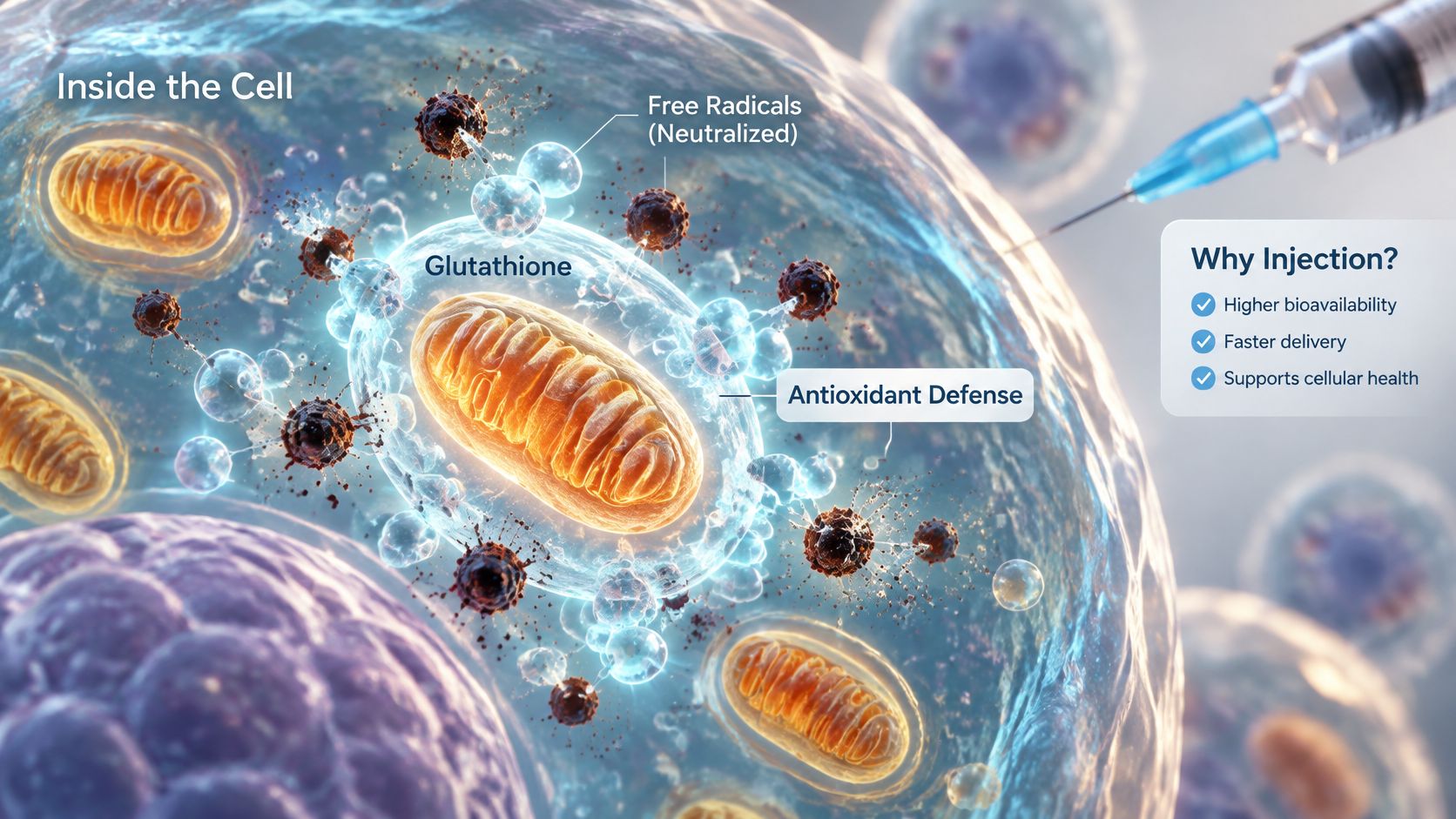
Think of a cell as a recycling plant. Normal activity produces reactive byproducts, and the cell needs systems that process them without disrupting the surrounding machinery. Glutathione participates in that protective work.
The illustration below offers a simplified view of this cellular role.
Redox balance in plain language
Redox balance describes the balance between oxidation and reduction, chemical processes involving the transfer of electrons. Glutathione helps regulate these processes. It participates in peroxide reduction and helps maintain protein sulfhydryl groups.
Those terms sound technical, but the practical idea is straightforward. Peroxides are reactive compounds that cells need to manage. Sulfhydryl groups are sulfur-containing parts of proteins whose chemical condition matters to how those proteins function.
The recycling-plant analogy helps explain the purpose. Glutathione contributes to keeping the cellular environment workable. It isn't a universal cleaning agent that removes every harmful substance or reverses every source of illness.
Why consider an injection?
Parenteral administration, meaning delivery outside the digestive tract, is intended to raise circulating availability when oral absorption or the body's own production is considered inadequate. That is a rationale for studying treatment. It isn't proof that a particular patient needs it.
Several separate questions remain:
- Delivery, does the chosen route provide the intended exposure?
- Clinical effect, does that exposure improve an outcome that matters to the patient?
- Net benefit, is the improvement meaningful enough to justify the risks and treatment burden?
Practical rule: A convincing explanation of how a molecule works is a starting point for research, not a substitute for evidence that treatment helps.
The same distinction applies when comparing injected antioxidants with skin products. Mesoderm RX's discussion of choosing effective antioxidant skincare formulations is relevant to a different formulation question. It shouldn't be treated as evidence that an IV treatment improves skin appearance.
Route, formulation, and purpose all matter. A topical product, an oral supplement, and an injection may involve related antioxidant concepts, but they aren't interchangeable treatments.
Conditions Where Glutathione Injections Are Studied
The most useful answer to what glutathione injections are used for is condition-specific. A study involving a neurologic disorder can't establish a benefit for cancer support. A cosmetic study can't establish general wellness benefits.
Parkinson's disease provides a concrete example of direct but preliminary clinical research. In a randomized, placebo-controlled pilot study, participants received 1,400 mg intravenously three times weekly for four weeks; treatment was described as well tolerated, with no withdrawals caused by adverse events or identified safety concerns, but the study wasn't designed to establish broad effectiveness (Parkinson's disease pilot study).
That schedule is a research detail, not a dosing recommendation. A small study's tolerability findings also don't establish long-term safety or effectiveness in other patient groups.
Common Glutathione Injection Uses and Their Evidence Level
| Use Patients Ask About | Current Evidence Level | Practical Takeaway |
|---|---|---|
| Antioxidant support | Biological rationale, with limited condition-specific clinical evidence | Identify a measurable clinical goal rather than assuming general benefit |
| Parkinson's disease | Preliminary controlled research | Don't interpret early findings as an established neurologic treatment |
| Cancer-treatment support | Regimen-dependent research into selected supportive outcomes | Separate supportive-care questions from treatment of the cancer itself |
| Skin lightening | Insufficient reliable evidence for injectable use | Cosmetic availability doesn't establish effectiveness |
| Detoxification or general wellness | Broad claims aren't established clinical indications | Ask what specific condition is being treated |
Cancer support requires a narrower question
Patients with cancer may be asking whether an adjunct could make treatment more tolerable, protect function, or help them continue daily activities. Those are reasonable questions. They're also different from asking whether glutathione treats cancer.
The clinic's information on IV nutritional therapy in cancer care can help patients prepare for a discussion about supportive options. Any recommendation should account for the cancer diagnosis, treatment regimen, and the oncology team's plan.
What “detoxification” leaves unanswered
The word detoxification is often too broad to guide a medical decision. A clinician needs to know whether the concern is a documented exposure, a diagnosed illness, or an unexplained symptom.
For example, someone seeking treatment for persistent fatigue needs an evaluation of the fatigue. An antioxidant explanation alone doesn't establish its cause or show that an infusion will address it.
What the Evidence Shows and Where It Falls Short
A useful evidence review asks more than whether anyone improved. It asks whether patients receiving treatment did better than those receiving a comparison treatment, whether the study was designed well, and whether its results apply to the person considering care.
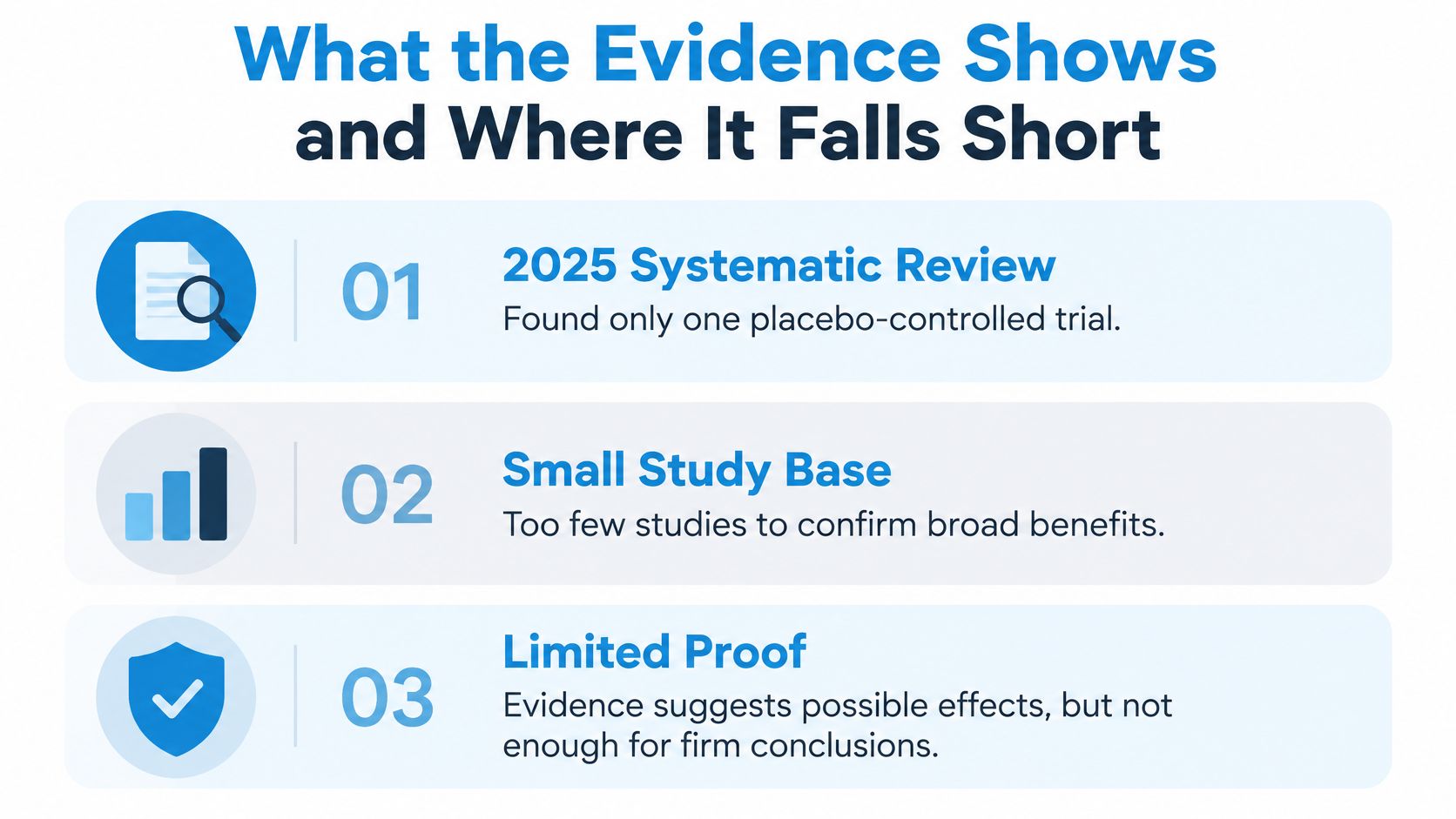
The graphic below summarizes the limitations of the skin-lightening evidence discussed here. Its reference to a single placebo-controlled trial concerns intravenous cosmetic research, not every glutathione study.
What the cosmetic study actually showed
A 2025 systematic review identified only one placebo-controlled intravenous skin-lightening study: 6 of 16 participants receiving glutathione, or 37.5%, showed the reported outcome, compared with 3 of 16 receiving placebo, or 18.7%; the p-value was 0.054, above the conventional 0.05 significance threshold (systematic review of glutathione evidence).
The result doesn't reliably establish that the injection caused a cosmetic benefit. It also shouldn't be translated into a personal probability of success. The review found mixed methodological quality, with nearly equal numbers of studies assessed as having low and high risk of bias.
The Philippine FDA advisory on injectable skin-lightening use stated that no published clinical trials established this use and that validated dosing and treatment-duration guidelines were lacking. That regulatory advisory and later research publications represent different points in the evidence record, not interchangeable statements about when research appeared.
Preliminary findings need proportionate conclusions
A Parkinson's disease review described a randomized study with 21 participants, including 11 assigned to glutathione and 10 to control, and suggested possible mild motor-score improvement without increased adverse events (systematic review of glutathione for Parkinson's disease). Such findings justify further investigation, not a promise that injections treat Parkinson's disease.
Small studies can identify signals worth pursuing. They can't settle every question about durability, uncommon harms, or which patients may benefit.
The following video is supplementary educational material, not a replacement for reviewing the research with a clinician.
An honest treatment discussion should name the intended benefit, the uncertainty, and the plan for reassessment. The clinic's checklist for evaluating alternative-medicine claims offers a useful framework.
Ask your clinician what specific benefit is expected, how it will be measured, and what would justify stopping treatment.
Safety Concerns Patients Should Understand
The fact that your body makes glutathione doesn't mean every injectable preparation is safe. A manufactured injection also involves ingredient sourcing, preparation, storage, sterility, and administration.
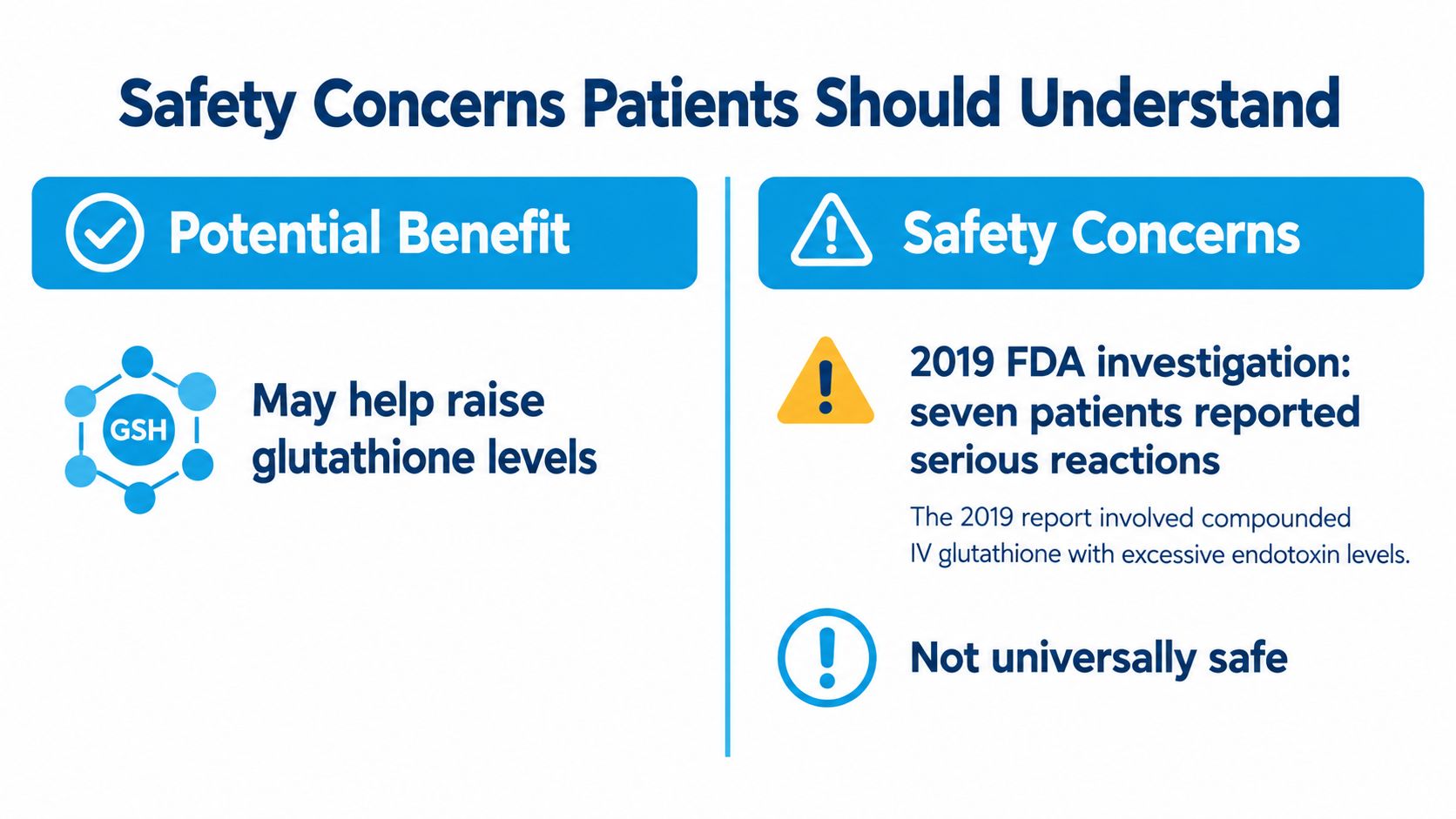
The safety overview below highlights why the formulation deserves as much attention as the ingredient.
What the contamination investigation revealed
In 2019, the U.S. FDA investigated adverse events involving seven patients who received compounded IV injections containing glutathione at 200 mg/mL; testing found excessive bacterial endotoxin in all tested samples, with some levels reaching five times the appropriate limit calculated for the administered dose (FDA investigation of compounded glutathione injectables).
The reported reactions were consistent with endotoxin exposure. Such exposure can produce fever, chills, pain, dizziness, low blood pressure, inflammatory reactions, and potentially severe illness. This episode shows why a safety discussion can't focus only on glutathione's biological properties.
The FDA specifically warned against using dietary-supplement-grade glutathione to compound sterile injectable drugs. Ingredients intended for oral supplements may contain contaminants or impurities unsuitable for injection.
What to verify before treatment
A patient shouldn't have to judge pharmaceutical quality alone. The prescribing clinician and compounding pharmacy should be able to explain their safeguards.
- Ingredient suitability, confirm that the ingredient is appropriate for pharmaceutical injectable use, not labeled for dietary supplementation.
- Compounding oversight, ask which pharmacy prepares the medication and how it addresses sterility and endotoxin controls.
- Clinical supervision, clarify who prescribes treatment, who administers it, and who responds if a reaction occurs.
- Follow-up instructions, know whom to contact if symptoms develop after leaving the clinic.
Regulatory warnings concerning cosmetic injectable use also include concerns about kidney, liver, and nervous-system toxicity, Stevens-Johnson syndrome, infectious transmission, and uncertain long-term effects. These are warnings that warrant attention, not proof that every patient will experience those outcomes.
Safety perspective: Medical supervision and quality controls address important risks. They don't turn an uncertain treatment into a universally safe one.
New fever, chills, marked dizziness, or significant illness after an infusion deserves prompt medical assessment. Severe symptoms require urgent care, rather than reassurance that a reaction is part of “detoxing.”
Contraindications and Oral Versus Injected Options
There isn't a single suitability checklist that can replace medical judgment for every proposed glutathione use. A patient's diagnosis, medications, organ function, prior reactions, and treatment goals all affect the decision.
Pause before adding an injection if you're receiving chemotherapy or radiation. Glutathione's redox effects may theoretically interact with oxidative mechanisms involved in some cancer treatments. Your oncology team should help assess the proposed adjunct, including its timing and intended purpose.
Research protocols aren't universal cancer-care protocols
A randomized phase III clinical trial evaluated glutathione for preventing paclitaxel- and carboplatin-associated peripheral neuropathy in ovarian, fallopian-tube, and primary peritoneal cancers, illustrating that this use is a specific research question rather than an established universal treatment (clinical trial NCT02311907).
The distinction matters. Studying prevention of a treatment complication doesn't establish that glutathione treats the cancer, improves survival, or should accompany unrelated chemotherapy regimens.
People with kidney or liver concerns, those taking multiple medications, and anyone with a history of treatment reactions also need individualized review. These factors don't all amount to an automatic prohibition. They are reasons not to proceed without a careful assessment.
Choosing a route begins with choosing a goal
Oral supplementation and injection have different absorption and evidence profiles. Neither route should be selected solely because it sounds more powerful or convenient.
| Option | Main Question to Resolve |
|---|---|
| Oral supplementation | Does evidence for this formulation and purpose justify trying it? |
| Injection | Is there a clinical reason to use this route despite its additional quality and administration requirements? |
| No glutathione treatment | Would diagnosis-specific care or another approach better address the concern? |
An injection bypasses digestive absorption, but that doesn't automatically make it the better treatment. Oral use also shouldn't be presumed effective merely because it avoids an IV.
Before deciding, bring a complete medication and supplement list. Ask whether the proposed benefit is supported for your condition, what alternatives exist, and how treatment would fit alongside standard care.
A responsible clinician should be comfortable recommending against an injection when the expected benefit is unclear. Choosing not to receive treatment can be a sound medical decision.
What to Expect at a Sunridge Medical Consultation
For a patient seeking an integrative opinion in Scottsdale, the consultation should begin with the health problem, not a predetermined injection protocol. The purpose is to decide whether an adjunct has a defensible place in the overall care plan.
The clinic's experience with cancer and complex chronic illness provides context for that discussion. It doesn't remove the need to examine each proposed therapy critically or coordinate with other treating clinicians.
Bring the information that changes decisions
Useful preparation includes a clear description of your symptoms, previous diagnoses, current treatment, and what you hope to accomplish. A physician typically needs to review medications and supplements, prior treatment responses, relevant records, and available kidney and liver information.
- For cancer care, bring the oncology treatment plan and identify the clinicians coordinating chemotherapy or radiation.
- For chronic symptoms, describe their timing, what limits daily function, and which evaluations have already been completed.
- For previous infusion reactions, provide details about the product, symptoms, and any treatment you received.
The dedicated care team can explain which records to send before the appointment. Patients can also review the clinic's clinical guide to a first IV therapy session while preparing questions.
Expect a decision process rather than a package
If glutathione is considered, a sound plan should document the indication, explain the uncertainty, identify an objective outcome, and establish reassessment. Treatment shouldn't continue just because it was started.
For example, a general wish to feel better needs a more precise clinical conversation. The physician and patient should identify which symptom or functional limitation matters, how it will be assessed, and whether another explanation requires attention first.
Patients in Phoenix and nearby Paradise Valley can seek an evaluation without first committing to an infusion. The same applies to those coming from Tempe, Mesa, Chandler, Gilbert, or elsewhere in the greater Phoenix metropolitan area.
Out-of-town patients should ask the care team about record review, scheduling, and travel guidance before arranging a Scottsdale visit. A consultation may lead to a complementary treatment discussion, further evaluation, or a recommendation to prioritize conventional care.
Sunridge Medical offers individualized integrative evaluations for cancer and complex chronic health concerns, including discussion of whether glutathione IV has a defined supportive role. Visit Sunridge Medical to contact the Scottsdale care team, ask which records to provide, and request a consultation to review the evidence, alternatives, and safety considerations for your situation.