


Have you been asking whether cancer and ozone therapy belong in the same conversation, while the more practical question remains unanswered: could an investigational therapy support symptoms or treatment tolerance without interfering with proven cancer care?
Patients often find ozone therapy after a new diagnosis, a recommendation from a friend, or a difficult round of chemotherapy or radiation. Online testimonials may describe it as a cure, while other sources dismiss it entirely. The most accurate position is narrower. Ozone therapy is an investigational, complementary approach, and current human evidence does not establish it as a treatment that controls cancer or improves survival.
A careful discussion should therefore begin with what ozone therapy can and cannot reasonably mean in oncology. It may be considered for supportive goals, such as quality of life, but it should never delay evaluation or replace a qualified oncology plan.
Table of Contents
- What Ozone Therapy Means in Cancer Care
- How Ozone Interacts With Cells and the Immune System
- Main Ways Ozone Therapy Is Administered
- What the Current Evidence Actually Shows
- Common Claims and What Patients Often Misunderstand
- Safety, Side Effects, and When Ozone Therapy Is Not Appropriate
- How an Integrative Clinic Approaches Ozone Therapy in Oncology
What Ozone Therapy Means in Cancer Care
Medical ozone is a prepared mixture of ozone and oxygen used in controlled clinical settings. The therapy is designed to create a temporary biological signal, not to flood the body with oxygen or deliver a conventional anticancer drug. Depending on the route, a clinician may expose blood, tissue, or a mucosal surface to the mixture under a defined protocol.
In cancer care, responsible practitioners describe ozone as complementary or adjunctive care. That means it may be considered alongside surgery, chemotherapy, radiation, immunotherapy, or targeted therapy when a qualified clinician believes the potential supportive role is appropriate. It doesn't mean ozone has been shown to shrink tumors, prevent recurrence, or extend life.
Three boundaries matter
Ozone therapy is not:
- A cure for cancer: Current clinical evidence doesn't validate ozone as a stand-alone anticancer treatment.
- A replacement for oncology care: It must not substitute for chemotherapy, radiation, surgery, immunotherapy, targeted therapy, or urgent cancer evaluation.
- A universal protocol: Route, dose, timing, and candidacy depend on the patient's diagnosis, treatment phase, laboratory findings, and medical risks.
The proposed supportive goals include physiological signaling, immune modulation, and symptom support. Patients may ask about fatigue, pain, mucosal irritation, or reduced well-being during treatment, but these goals require individualized assessment and realistic expectations. Evidence for symptom relief remains limited and uneven, so a clinician should define what will be monitored before treatment begins.
Practical rule: If a provider tells you to stop standard oncology treatment, promises remission, or presents ozone as a guaranteed cure, seek another medical opinion.
For readers exploring supportive options alongside conventional care, Sunridge Medical's information on cancer and oxygen therapy provides additional context. Anyone primarily seeking a cure should begin with a board-certified oncology team and treat ozone, if considered at all, as a separate investigational question.
How Ozone Interacts With Cells and the Immune System
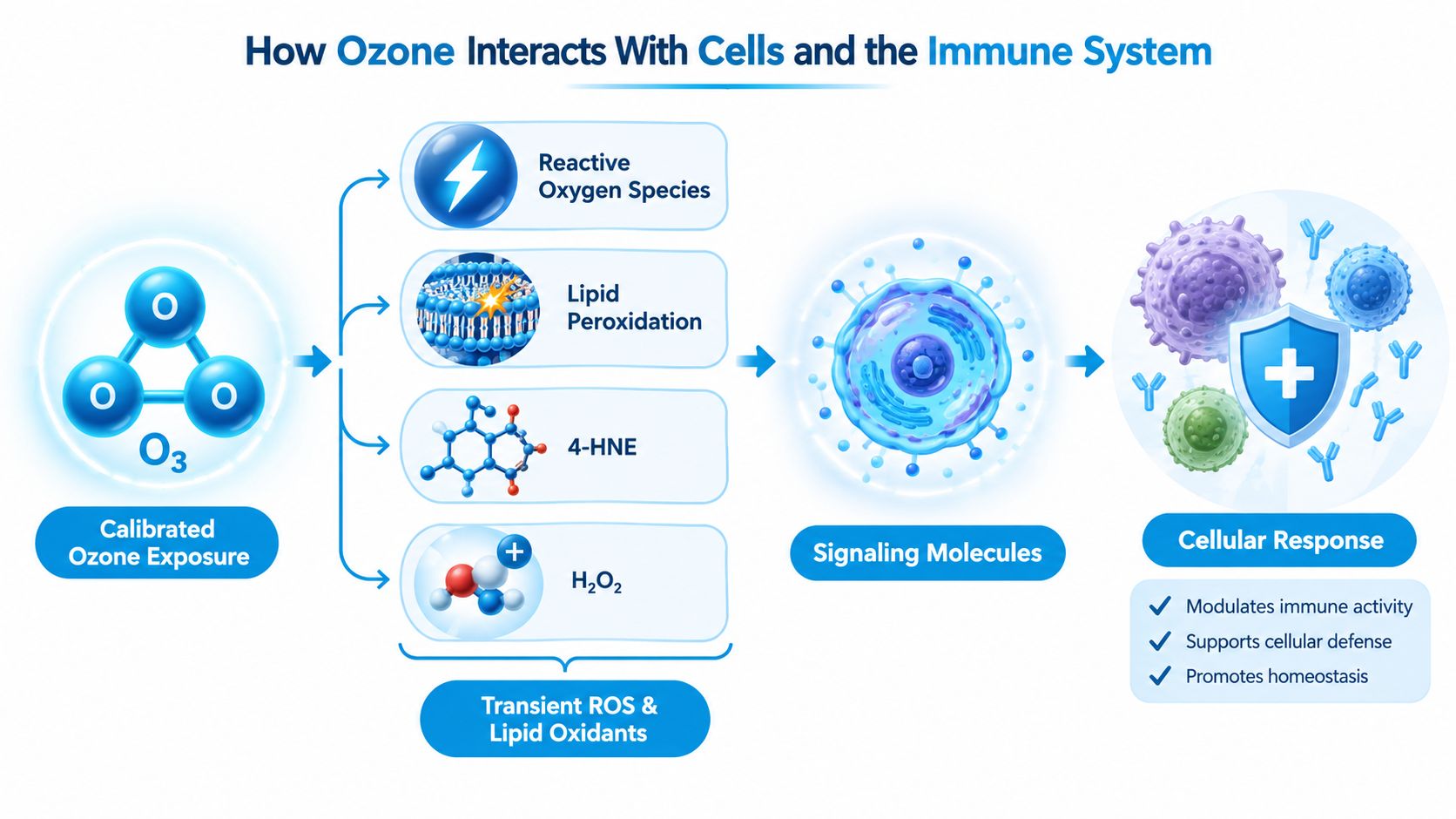
The proposed mechanism is based on oxidative preconditioning, not direct tumor destruction. When ozone contacts plasma, it reacts rapidly with water and lipids, producing hydrogen peroxide and lipid oxidation products that can act as short-lived signaling molecules. These signals may influence redox pathways, including Nrf2 and NF-κB, which help regulate antioxidant defenses and immune activity. A NIH-hosted review of ozone mechanisms describes this biological model and summarizes preclinical findings.
One useful analogy is a vaccination for a cell's defense systems. A calibrated, brief challenge may prompt antioxidant and repair pathways to respond, while a larger or uncontrolled exposure could cause damage. That distinction explains why medical ozone protocols depend on concentration, route, equipment, and supervision. The therapy isn't harmless because the dose is controlled.
What the laboratory findings mean
The same NIH-hosted review reported dose-dependent inhibition of human lung, breast, and uterine cancer cell growth in vitro. In that laboratory work, ozone concentrations of 0.3 ppm and 0.5 ppm inhibited growth by about 40% and 60%, respectively, as reported in the review. Those findings help researchers form hypotheses, but cells in a laboratory dish aren't a patient with a tumor, a functioning immune system, other illnesses, and active cancer treatment.
The dominant working model in supportive oncology is therefore immunomodulation and redox signaling, not a proven tumor-killing effect. Claims about improved oxygen delivery, including proposed changes involving red blood cell metabolism, remain mechanistic explanations rather than evidence of better cancer outcomes.
A broader clinical guide on oxidative therapy and chronic disease can help explain why clinicians distinguish a biological mechanism from a demonstrated clinical benefit.
Main Ways Ozone Therapy Is Administered
Patients may encounter several routes, and they aren't interchangeable. A method that exposes blood outside the body has a different risk profile and patient experience from a topical application or rectal insufflation. The supervising clinician should select the route based on the diagnosis, current oncology treatment, vascular access, laboratory results, and clinical training.
| Route | What the Patient Experiences | Typical Use in Oncology |
|---|---|---|
| Major autohemotherapy | A measured blood draw, ozone exposure outside the body, and reinfusion. The process may take 20 to 30 minutes and can involve needle or line discomfort. | Considered as a systemic supportive approach, when medically appropriate. |
| Minor autohemotherapy | A smaller amount of treated blood followed by injection, often into muscle. Patients may notice brief injection-site discomfort. | Sometimes considered for immune-related signaling, though oncology evidence remains limited. |
| Rectal insufflation | Ozone gas is introduced through the rectum. Patients may experience pressure, cramping, or temporary bloating. | A nonintravenous systemic route used by some integrative clinicians. |
| Topical ozonated oils | The product is applied to the skin. The experience is local and usually avoids needles. | May be considered for selected skin irritation or lesions, including treatment-related skin concerns. |
| Intratumoral or peritumoral injection | A trained clinician places the therapy into or around a selected lesion. Local pressure, discomfort, or bruising may occur. | Selective use only, with careful review of anatomy, bleeding risk, and oncology treatment. |
Proposed treatment schedules vary. Some clinics describe an initial series of two to three sessions weekly, but that frequency isn't a universal recommendation and should not be treated as a standard supported by randomized oncology trials.
Direct intravenous infusion of ozone gas is a critical safety distinction. Ozone gas must not be injected directly into a vein, because gas embolism and other serious harm are possible. Patients should ask exactly what is being administered, whether blood is treated outside the body, and how the clinic prevents gas from entering the circulation as a free gas bolus.
A discussion of ozone therapy methods for chronic infections may describe routes in greater detail, but cancer patients still need an oncology-specific medical review before choosing any method.
What the Current Evidence Actually Shows
The evidence becomes easier to understand when separated into tiers. A laboratory finding, a small symptom study, and a randomized trial answer different questions. Confusing them is one reason online claims about ozone therapy can sound stronger than the underlying research.
Tier one, laboratory and preclinical research
Preclinical work has explored how oxidative signaling might affect cancer cells. The NIH-hosted review discussed earlier reported dose-dependent inhibition of several human cancer cell lines in vitro. That result is scientifically relevant, but it doesn't show that ozone will selectively damage a tumor in a person, work safely with every chemotherapy regimen, or improve survival.
Laboratory studies can identify mechanisms worth investigating. They can't establish a treatment recommendation by themselves.
Tier two, small human studies and supportive outcomes
Human oncology studies have generally focused more on supportive care than tumor control. Reviews describe investigations involving treatment-related symptoms, fatigue, radiation effects, and quality-of-life measures. These studies may suggest areas for further research, but they're often small, heterogeneous, unblinded, or not designed to measure tumor response.
A 2025 systematic review and meta-analysis examined ozone therapy for medication-related osteonecrosis of the jaw in oncology patients. It included 6 studies with 178 patients and reported a pooled clinical success rate of 71%, with a 95% confidence interval of 55% to 84%. The review reported no adverse effects across the included studies, but rated the certainty of evidence very low and called for randomized trials with standardized protocols. Read the 2025 review and its full methods. This is a supportive-care outcome involving a specific jaw complication, not proof of direct anticancer activity or improved survival.
Tier three, randomized evidence and survival
The most important limitation is the absence of convincing randomized evidence showing that ozone therapy improves cancer survival. A 2018 NIH-indexed review of ozone as an adjuvant in cancer treatment reported that no randomized clinical trials had been conducted at that time in patients receiving conventional anticancer treatment. It concluded that the evidence was too weak for routine systematic use and emphasized that ozone shouldn't replace standard oncologic care.
A major CAM-Cancer evidence summary identified only one full English randomized controlled trial and seven additional small controlled studies available as English abstracts. It reported no demonstrated survival benefit and described the evidence as inconsistent and methodologically weak.
| Evidence Tier | What Has Been Studied | Strength of Evidence | Relevance to Cancer Patients |
|---|---|---|---|
| Preclinical | Cell lines and biological mechanisms | Exploratory | Helps generate hypotheses, not treatment decisions |
| Small human studies | Symptoms, treatment effects, and quality of life | Limited and heterogeneous | May inform supportive-care discussions |
| Randomized oncology evidence | Survival and direct tumor outcomes | Insufficient for validation | Doesn't support ozone as a cancer treatment |
The reasonable conclusion is cautious use only as an adjunct, if a qualified team finds it appropriate. Testimonials may describe one person's experience, but they can't replace controlled evidence.
Common Claims and What Patients Often Misunderstand
The phrase “ozone cures cancer” usually compresses several different ideas into one unsupported conclusion. A clinician may observe a plausible mechanism, a patient may report feeling better, and a clinic may present those observations as evidence that ozone eliminated a tumor. Those steps don't prove the same thing.
Separate symptom support from tumor control
Some supportive-care reports have examined outcomes such as fatigue, mucositis during radiation, and general well-being. Those are meaningful concerns, especially when side effects make it harder for someone to eat, sleep, move, or continue daily activities. They still don't demonstrate that ozone kills cancer cells in the body or improves survival.
The Frontiers in Oncology review discussing ozone in cancer care describes oncology research as concentrated largely on adjunctive uses, treatment side effects, fatigue, and quality-of-life outcomes. It also emphasizes that the strongest emerging interest is in symptom management, while definitive proof remains absent.
Biological plausibility isn't clinical proof. A mechanism can be real while the proposed treatment remains ineffective, unsafe in a particular context, or too poorly studied to recommend routinely.
Marketing signals that deserve caution
Be skeptical of a provider who:
- Discourages standard care: No ozone practitioner should tell you to abandon an oncologist's treatment plan.
- Promises remission without scans: A symptom change can't confirm tumor response.
- Sells a large prepaid package: You should understand the clinical rationale, alternatives, risks, and total commitment before paying for a series.
- Uses testimonials as proof: Personal stories don't reveal staging, concurrent treatments, natural disease variation, or objective follow-up.
- Avoids specific answers: A reputable clinician should explain the route, dose, monitoring, and emergency plan in understandable terms.
Bring four questions to the consultation: Who conducted the study? How many patients were included? What exactly was measured? Did participants continue conventional cancer treatment? Those questions quickly reveal whether a claim concerns laboratory biology, symptom relief, or an actual cancer endpoint.
Safety, Side Effects, and When Ozone Therapy Is Not Appropriate
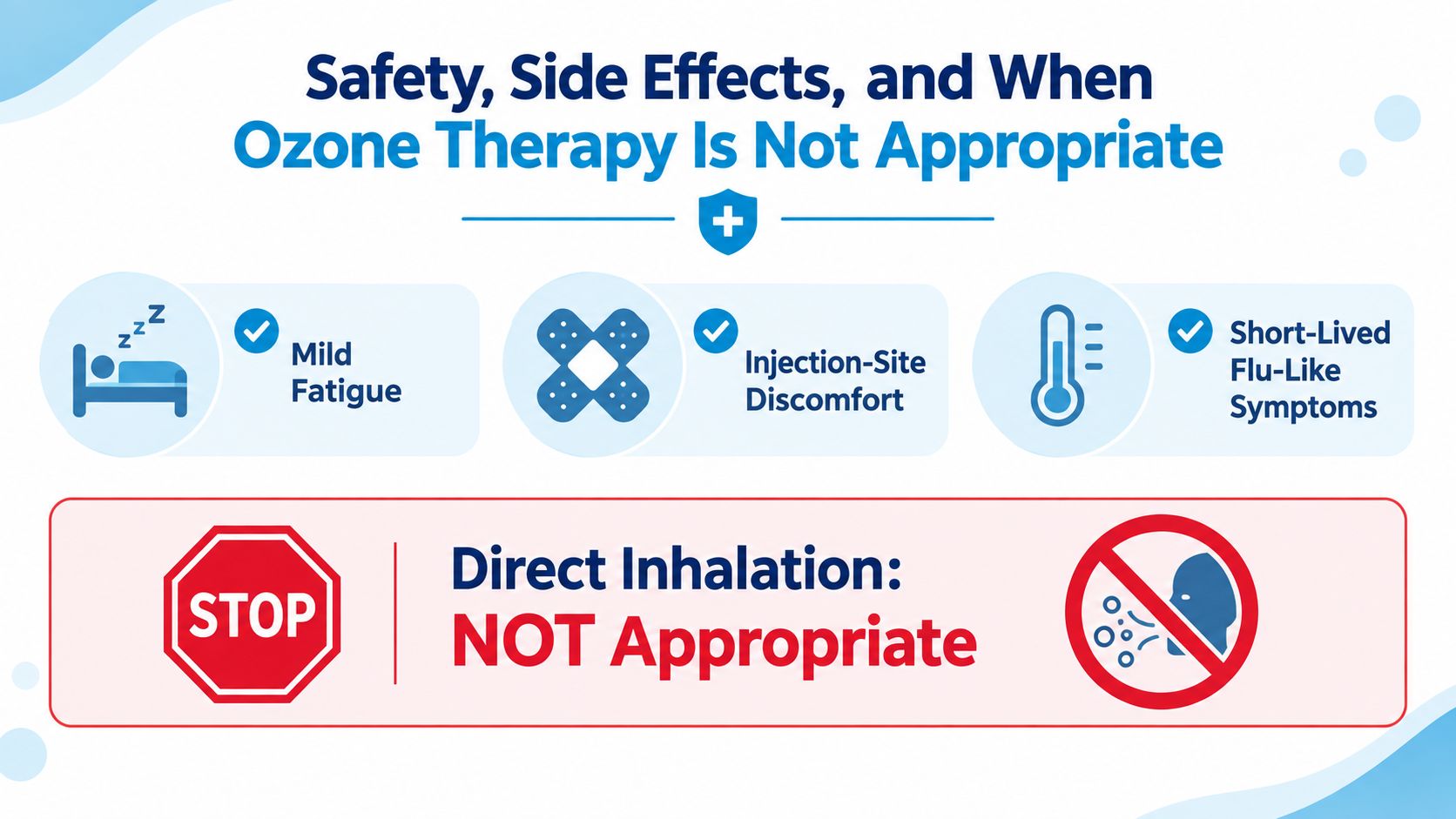
Safety depends on the route, equipment, dose, sterile technique, patient selection, and clinician judgment. Properly administered ozone therapy may cause mild fatigue, injection-site discomfort, or short-lived flu-like symptoms, but “natural” or “oxygen-based” doesn't mean risk-free.
Direct inhalation is never appropriate. Ozone can injure the respiratory system when inhaled, and medical ozone should not be breathed. A clinic should explain how it prevents accidental inhalation and how it handles the gas safely.
Conditions that require special caution
Commonly cited contraindications and cautions include:
- G6PD deficiency: Reduced ability to manage oxidative stress can increase risk.
- Hyperthyroidism: Active thyroid overfunction requires careful medical review.
- Uncontrolled heart disease: Physiological stress may be unsafe when cardiac disease is unstable.
- Pregnancy: Ozone therapy should not be pursued without an appropriate medical indication and specialist guidance.
- Active bleeding disorders: Blood draws, injections, and tissue procedures may create additional risk.
- Thrombocytopenia: Low platelets can increase bruising or bleeding risk.
- Anticoagulant use: Medication effects must be reviewed before invasive routes.
- Implanted medical devices: The device, access site, and proposed route may affect candidacy.
These categories aren't a substitute for an examination. Your clinician may need current blood counts, medication details, organ-function information, and a clear timeline of surgery, radiation, or systemic treatment.
Ask before treatment: What route will you use, what dose will be given, how often will sessions occur, how are supplies sterilized, and what emergency procedures are available?
Coordination with the oncology team is essential. The timing of chemotherapy infusions, radiation fractions, procedures, and postoperative recovery can change the risk-benefit calculation. Ozone should never be scheduled in a way that delays urgent cancer care or assumes that every treatment combination is automatically compatible.
Patients considering the therapy can review potential ozone therapy side effects before a consultation, then ask the treating physician to apply that information to the patient's actual medical history.
How an Integrative Clinic Approaches Ozone Therapy in Oncology
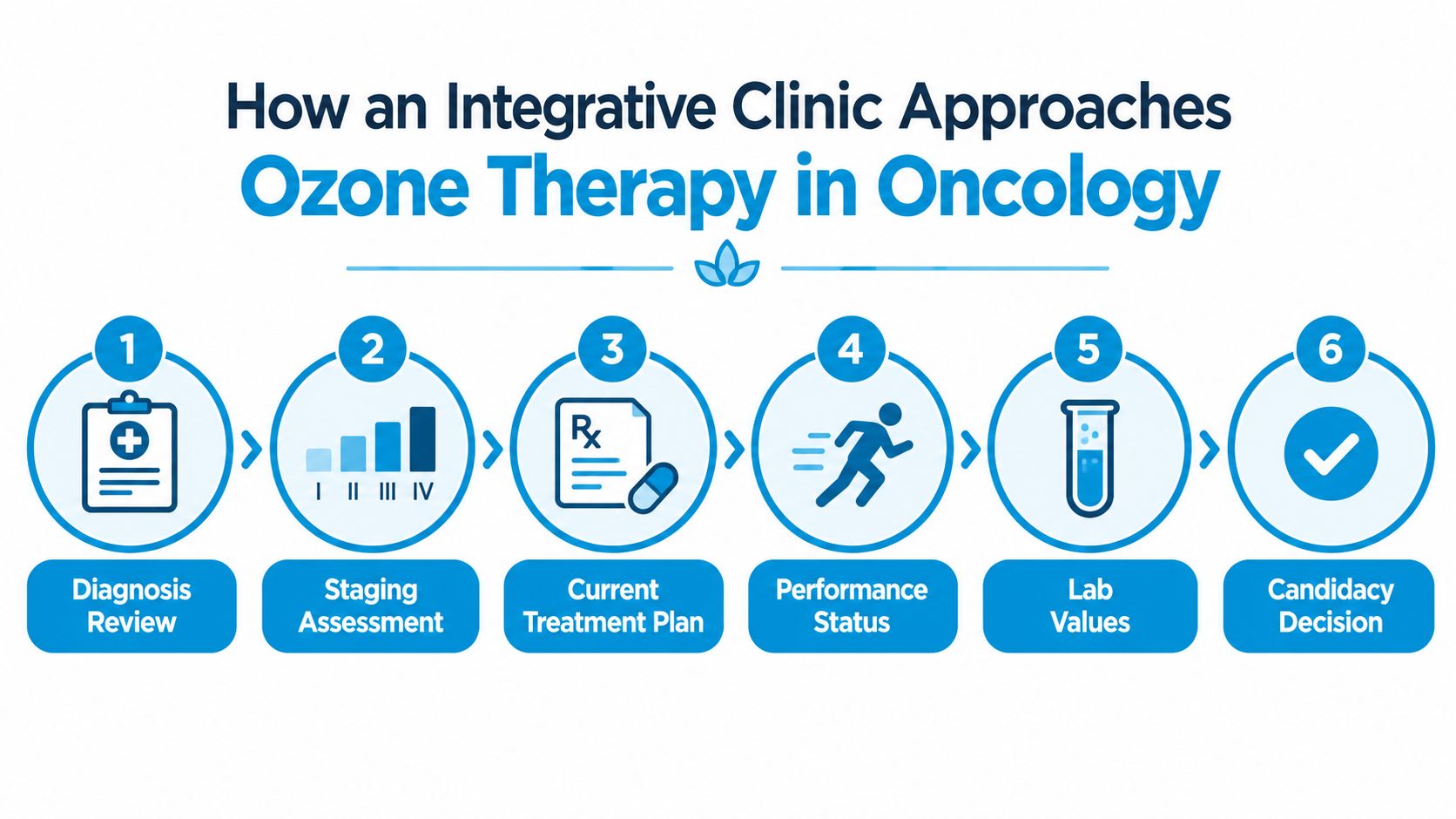
An integrative oncology consultation should begin with the cancer itself, not with a preselected ozone protocol. The clinician needs to understand the diagnosis, staging, pathology, current treatment plan, prior therapies, symptoms, medications, functional status, and relevant laboratory values. That review helps determine whether the patient needs supportive care, urgent oncology attention, or a different intervention entirely.
The candidacy review
A careful process may include:
- Diagnosis review: Confirm the cancer diagnosis and relevant pathology.
- Staging assessment: Understand disease extent and the treatment goals established by oncology.
- Current treatment plan: Identify chemotherapy, radiation, surgery, immunotherapy, or targeted therapy and their timing.
- Performance status: Discuss mobility, daily activities, nutrition, fatigue, and treatment tolerance.
- Laboratory values: Review blood counts and other findings relevant to bleeding, infection, organ function, and oxidative risk.
- Candidacy decision: Decide whether ozone has a defensible supportive role, whether another approach is safer, or whether no ozone treatment is appropriate.
The treatment plan, if one is developed, should be individualized. Route, concentration, session frequency, and timing should reflect the patient's symptoms and medical risks rather than a package selected in advance. The clinic should document the plan and communicate with the oncology team when coordination is needed.
Outcome tracking should focus on practical supportive goals, such as fatigue, sleep, nausea, pain, appetite, daily function, and ability to tolerate conventional treatment. Those measures can help determine whether the patient feels a meaningful benefit, but they shouldn't be mislabeled as evidence of tumor shrinkage. Imaging, pathology, and oncology-directed assessments remain the appropriate tools for evaluating cancer response.
Sunridge Medical is an integrative medical clinic in Scottsdale that evaluates individualized supportive options for complex conditions, including patients seeking an additional perspective alongside conventional oncology care. A first visit should be treated as an evaluation, not a commitment to ozone treatment. Bring oncology records, medication lists, pathology or imaging information, and a clear description of the symptoms you want help addressing.
If you're in Scottsdale, Phoenix, Paradise Valley, Tempe, Mesa, Chandler, Gilbert, or the greater Phoenix area and want to discuss ozone therapy as a possible supportive adjunct, Sunridge Medical can review your cancer history, current oncology plan, symptoms, and safety considerations. Contact the clinic to request an integrative consultation and bring your oncology records so the discussion can focus on an appropriate, coordinated plan.