


A professional in Scottsdale returns from an annual trip to Connecticut with a memory that now feels important: a spreading rash, followed by fatigue, joint pain, and a course of doxycycline from an East Coast urgent-care clinic. Months later, the infection was treated, but the exhaustion, brain fog, and migratory pain remain. Their primary-care clinician in Phoenix isn't sure whether this represents ongoing infection, a post-infectious process, another tick-borne illness, or an unrelated condition.
That uncertainty is common in Arizona, where Lyme disease has a different clinical context than it does in the Northeast. Patients searching for chronic Lyme disease treatment in Arizona often need more than another antibiotic prescription or a dismissal of symptoms. They need a careful review of exposure, treatment history, testing limitations, coexisting conditions, nervous-system symptoms, sleep, metabolism, and immune function.
Table of Contents
- When Lyme Symptoms Will Not Go Away in Arizona
- What Chronic Lyme Actually Means and Why the Term Is Contested
- How Conventional Medicine Diagnoses and Treats Lyme Disease
- Integrative and Adjunctive Therapies Available in Arizona
- How to Evaluate and Choose a Lyme Provider in Scottsdale
- What a Personalized Lyme Treatment Plan Looks Like
- Outcomes, Safety, and Realistic Expectations
- Travel, Telemedicine, and Next Steps for Patients
When Lyme Symptoms Will Not Go Away in Arizona
The Scottsdale patient in this example took the prescribed treatment after the Connecticut trip. The rash was consistent with erythema migrans, although they didn't recognize its significance at the time. After returning to Arizona, they developed crushing fatigue that sleep didn't relieve, migratory joint pain, reduced concentration, tingling in the hands and feet, and episodes of lightheadedness when standing.
Three months later, the practical question wasn't "Do I need more antibiotics?" It was, "What is causing my current symptoms, and what treatment is safe if the original infection has already been treated?"
Arizona matters because Lyme disease is considered a low-incidence condition in federal surveillance. CDC reporting for 2022 recorded 15 confirmed cases and 9 probable cases in Arizona, and the Arizona Department of Health Services states that, to date, no confirmed cases were acquired from tick bites in the state, as described in Arizona's Lyme disease protocol. Many Arizona cases therefore require a detailed travel and exposure history, particularly when a patient spent time in a region where Lyme transmission is more established.
The symptom pattern deserves a broad review
Persistent symptoms may include:
- Cognitive changes: Slowed processing, word-finding difficulty, poor working memory, and a sense of mental “static.”
- Energy disruption: Fatigue that doesn't match recent activity and doesn't improve adequately with rest.
- Pain and sensation changes: Migratory joint discomfort, muscle pain, burning, tingling, or numbness.
- Autonomic symptoms: Palpitations, temperature sensitivity, lightheadedness, altered sweating, or difficulty tolerating standing.
- Post-exertional flares: A disproportionate increase in fatigue, pain, or cognitive symptoms after exercise or demanding work.
Those symptoms can occur after an infection, but they can also arise from sleep disorders, medication effects, thyroid disease, anemia, autoimmune illness, migraine, neuropathy, hormonal changes, mood disorders, or other infectious and noninfectious conditions. A responsible clinician won't assume that every symptom is active Borrelia infection.
Patients in Phoenix, Paradise Valley, Tempe, Mesa, Chandler, and Gilbert may have difficulty finding a clinician who is comfortable with both the controversy and the complexity. The practical middle path is described in this clinical discussion of whether chronic Lyme disease is real: confirm what can be confirmed, investigate other explanations, treat documented disease appropriately, and address persistent symptoms without promising an unproven cure.
What Chronic Lyme Actually Means and Why the Term Is Contested
The phrase chronic Lyme disease doesn't have one universally accepted clinical meaning. Some people use it to describe symptoms after standard treatment. Others use it to mean persistent active infection, a broader tick-borne illness picture, or a combination of infection-related injury and immune or nervous-system dysfunction.
A useful analogy is a house that has been broken into. Borrelia is the burglar, but removing the burglar doesn't automatically repair the damaged door, reset the alarm, or reassure the neighborhood watch. In the body, those repairs may involve the immune system, connective tissue, pain-processing pathways, autonomic nervous system, sleep, and gut function. The analogy doesn't prove that infection persists. It does explain why symptoms may continue even when additional antibiotics aren't appropriate.
Three terms that shape clinical decisions
Acute Lyme disease refers to an infection diagnosed from compatible symptoms, exposure history, and appropriate testing or clinical findings. CDC guidance describes standard antibiotic treatment as generally lasting 2 to 4 weeks, with the regimen selected according to the stage and organ involvement. The CDC treatment guidance lists doxycycline, amoxicillin, and cefuroxime axetil among the commonly used medications.
Post-Treatment Lyme Disease Syndrome, or PTLDS, is a research and clinical term for a defined pattern of persistent symptoms after recommended treatment for documented Lyme disease. The CDC describes prolonged fatigue, body aches, or difficulty thinking after treatment, while also stating that the cause is currently unknown in its clinical care guidance.
Chronic Lyme disease is a broader, contested label. In integrative practice, it may include persistent or recurrent symptoms, possible co-infections, immune dysregulation, tissue injury, autonomic dysfunction, and post-infectious changes. That broader working definition can help a clinician consider more potential contributors, but it can also encourage overdiagnosis if every symptom is attributed to Borrelia.
| Term | Used By | Definition | Treatment Implication |
|---|---|---|---|
| Acute Lyme disease | Conventional infectious-disease and primary-care settings | A clinically compatible infection supported by exposure, examination, and validated testing when appropriate | Stage-specific antibiotic treatment |
| PTLDS | Research and mainstream clinical settings | Persistent fatigue, pain, or cognitive symptoms after recommended treatment for established Lyme disease | Reassessment, symptom-directed care, and evaluation for other causes |
| Chronic Lyme disease | Some integrative and patient communities | A broad clinical picture that may include persistent infection, co-infections, immune changes, or tissue injury | Individualized evaluation, with clear separation between established and investigational therapies |
The terminology matters because it predicts the treatment philosophy. A clinician who uses PTLDS may prioritize rehabilitation, sleep, pain processing, autonomic evaluation, and alternative diagnoses. A clinician who uses chronic Lyme may also investigate Bartonella, Babesia, immune dysfunction, environmental exposures, and other contributors. Neither label should replace a documented assessment. Patients can read a broader clinical perspective on chronic Lyme recovery before deciding which questions to bring to a consultation.
How Conventional Medicine Diagnoses and Treats Lyme Disease
Conventional care begins with probability, not with a specialty panel ordered in isolation. The clinician reviews travel, tick exposure, rash history, timing, fever, neurologic findings, joint swelling, cardiac symptoms, and other possible diagnoses.
The commonly used testing pathway begins with an enzyme immunoassay or another first-tier antibody test, followed by confirmatory testing when indicated. That approach has important limitations. Antibodies may not yet be detectable early in illness, and antibodies can remain present after successful treatment, so a positive result doesn't automatically demonstrate active infection or explain current symptoms.
Treatment is usually defined by stage
For early localized disease, CDC adult regimens include doxycycline for 10 to 14 days, or amoxicillin or cefuroxime for 14 days, as detailed in the CDC overview of Lyme disease. More complicated disease, including some cardiac or neurologic presentations, may require a different duration or intravenous treatment such as ceftriaxone. The decision depends on the clinical presentation, not on how long a patient has felt unwell.
The difficult question is what to do after appropriate treatment. The major NIH-sponsored randomized trials commonly discussed in this debate include the Klempner, Marques, Berende, and Fallon studies. Taken together, they didn't show that extended antibiotic treatment reliably outperformed placebo on primary outcomes for unselected patients with persistent symptoms. Some studies reported secondary symptom findings, and critics have raised questions about how well tightly selected trial participants represent the full range of patients seen in practice. Those limitations justify continued research, but they don't establish prolonged antibiotics as routine care.
The CDC discussion of chronic symptoms after Lyme disease states that when a patient has already received recommended treatment, more antibiotics are unlikely to help. It also notes that many patients improve over time without additional antibiotics, although recovery may take many months. An American Academy of Family Physicians review similarly concludes that prolonged antibiotic therapy beyond standard recommendations provides no benefit and isn't recommended.
Clinical bottom line: Persistent symptoms deserve attention, but persistence alone doesn't prove that active infection remains.
Arizona adds another layer. A local clinician may see very little locally acquired Lyme disease and reasonably question the diagnosis. At the same time, a patient who traveled to Connecticut, New England, or another higher-risk region may have a genuine exposure history and may need a nuanced second opinion. That gap can send patients to integrative clinicians in Scottsdale or Phoenix, sometimes while conventional care is still ongoing. A careful review of testing options and limitations is available in this guide to advanced Lyme diagnostic testing.
Integrative and Adjunctive Therapies Available in Arizona
Integrative care works best when it adds structure rather than replacing sound diagnosis. Antibiotics remain the treatment for confirmed acute Lyme disease. Adjunctive therapies may address pain, fatigue, sleep, nutritional deficiencies, exercise tolerance, autonomic symptoms, or recovery after treatment, but their evidence varies widely.
A Scottsdale clinician may discuss the following options:
- IV vitamin C, glutathione, and Myers' cocktail infusions: These are used to provide fluids and selected nutrients or antioxidants. Evidence for persistent Lyme symptoms is limited and does not establish these infusions as infection-eradicating treatment. They may be considered for selected patients with nutritional or recovery goals after medication review and appropriate laboratory assessment.
- Ozone and oxidative therapies: Major autohemotherapy and prolozone are proposed to influence oxidative signaling, circulation, or local pain. These approaches remain complementary and require attention to procedure risks, glucose control, pulmonary history, and the provider's training. Ozone isn't a substitute for antibiotic treatment when active infection is established.
- Binders, sauna, and lymphatic work: These are often described as detox support. The practical value depends on what problem is being treated. A binder may interfere with medication absorption, sauna may worsen orthostatic symptoms or dehydration, and aggressive detoxification can leave a medically fragile patient feeling worse.
- Low-dose naltrexone, peptides, and herbal regimens: These may be used with the aim of modifying pain signaling, immune activity, or recovery. Low-dose naltrexone is commonly considered when pain amplification or exertion-related flares are prominent. Herbal systems such as Zhang's, Buhner, or Byron White protocols require medication interaction review and shouldn't be assumed to be harmless because they're plant-based.
- Platelet-rich plasma: PRP may be discussed for a specific tendon or joint problem when the clinical picture supports a localized musculoskeletal target. It isn't a systemic Lyme treatment, and it won't explain or correct unrelated fatigue or cognitive symptoms.
- Hyperthermia and hyperbaric-oriented protocols: These approaches attempt to influence tissue oxygenation, temperature, healing, or recovery. Claims about reaching so-called persister organisms remain investigational and shouldn't be presented as established treatment for persistent Lyme symptoms.
Patients also benefit from separating symptom support from claims about treating infection. A resource on natural remedies for chronic pain can help frame lifestyle and comfort measures, but natural doesn't mean risk-free, and symptom relief doesn't confirm a particular diagnosis.
| Modality | Primary Mechanism | Evidence Tier |
|---|---|---|
| IV nutrients and glutathione | Nutrient delivery, hydration, and antioxidant support | Complementary, condition-dependent |
| Ozone and prolozone | Proposed oxidative signaling and local tissue effects | Emerging and limited for Lyme-related symptoms |
| Binders, sauna, and lymphatic work | Symptom support and selected elimination strategies | Supportive, with important safety limits |
| Low-dose naltrexone | Proposed modulation of pain and neuroimmune signaling | Off-label and emerging |
| Peptides and herbal protocols | Proposed immune, tissue, or antimicrobial effects | Variable, often investigational or adjunctive |
| PRP | Local tissue repair and pain treatment | Established for selected orthopedic uses, not systemic Lyme |
| Hyperthermia and hyperbaric-oriented care | Proposed effects on tissue environment and recovery | Investigational for persistent Lyme symptoms |
The safest approach is to select only the modalities that match a documented problem. The integrative Lyme disease protocol guide provides a framework for discussing conventional and adjunctive care without presenting one protocol as appropriate for everyone.
How to Evaluate and Choose a Lyme Provider in Scottsdale
A provider who treats persistent Lyme symptoms should be willing to discuss uncertainty. Ask whether the clinician can coordinate with primary care, infectious-disease specialists, neurology, rheumatology, or other services when needed. The right fit isn't the person who agrees with every theory. It's the person who can explain which parts of the plan are established, off-label, complementary, or investigational.
Start with credentials. Verify the clinician's license and training as an MD, DO, ND, or PA, then look for relevant board certification and continuing education. ILADS education may show familiarity with the chronic Lyme debate, while prior affiliation with ILIFAD may be relevant to a provider's professional background. Neither affiliation, by itself, proves diagnostic accuracy or treatment effectiveness.
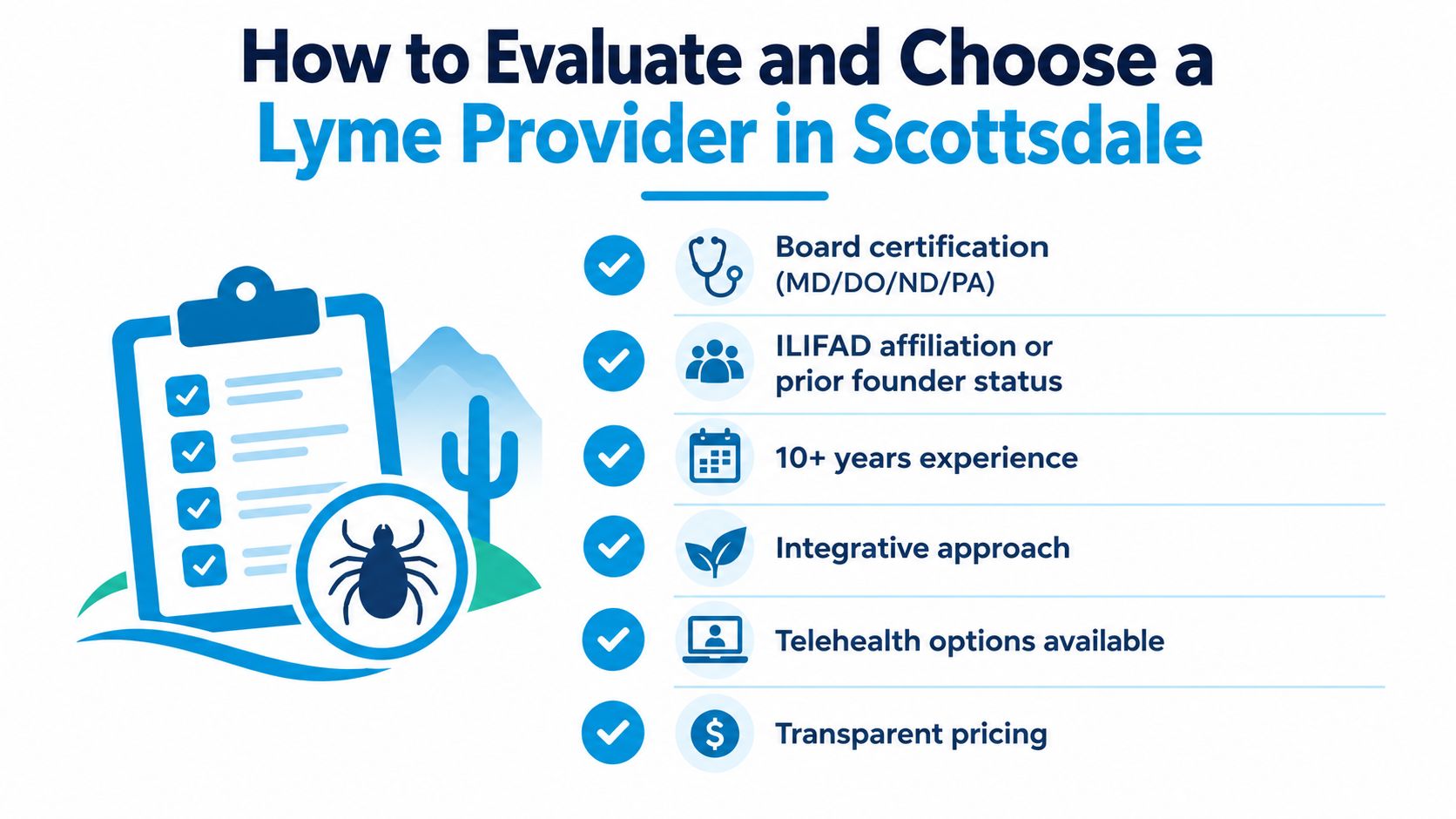
A thorough intake should include:
- A timeline: Travel, possible bites, rash, fever, testing, treatment, relapses, and the point when symptoms changed.
- A medication review: Antibiotics, supplements, hormones, psychiatric medications, anticoagulants, and previous adverse reactions.
- A symptom inventory: Fatigue, sleep, cognition, pain, neuropathy, digestion, heart rate, blood pressure, temperature regulation, and exertional tolerance.
- Objective records: Prior laboratory reports, imaging, specialist notes, and vaccination or medical history where relevant.
- A differential diagnosis: The clinician should explain what else could cause the symptoms and how those possibilities will be assessed.
Be cautious if a practice demands a large prepaid package before reviewing records, guarantees a cure, refuses to coordinate with your primary-care clinician, or treats every abnormal specialty test as proof of active infection. Ask whether the practice uses standard serology, specialty tick panels, or both, and what action would follow from a positive or negative result.
Before committing, ask:
- Which findings would support active infection?
- Which symptoms might reflect post-infectious illness or another diagnosis?
- What are the goals of the first phase of treatment?
- Which therapies are conventional, off-label, or investigational?
- What are the stop criteria if a treatment causes harm or fails to help?
- What will the full cost include, and which services are separate?
- Can my existing clinicians receive records and coordinate care?
The embedded video offers another way to think through the provider selection process.
What a Personalized Lyme Treatment Plan Looks Like
A realistic plan begins with uncertainty rather than a predetermined package. For the Scottsdale patient with a travel-associated rash, the first visit would focus on the original illness, the doxycycline course, symptom progression, current medications, and evidence that might point toward another diagnosis.
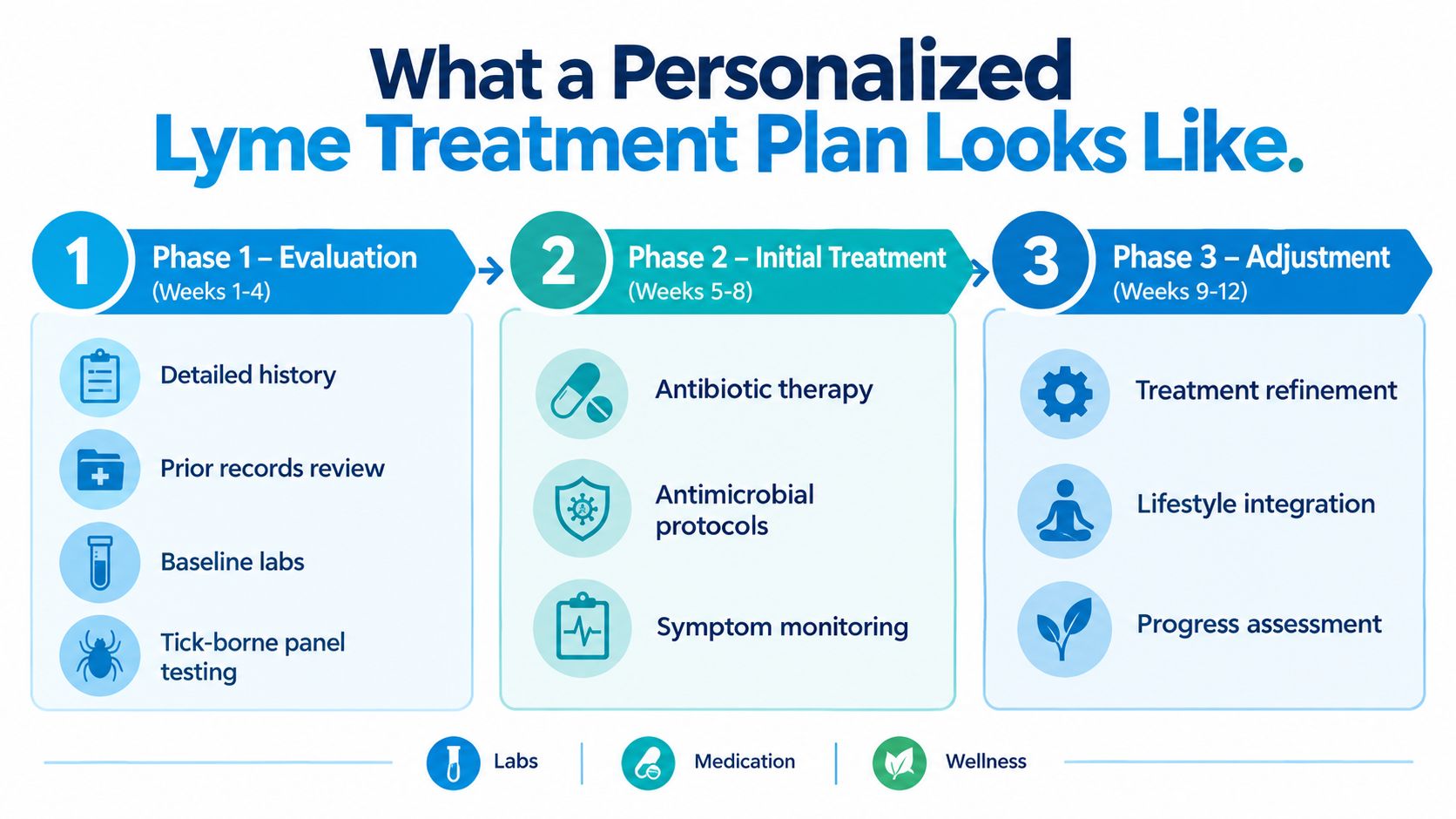
Phase one is evaluation
The clinician reviews prior records, performs an examination, and orders only testing that can answer a clinical question. Depending on the history, that may include baseline blood work, assessment for co-infections, thyroid or nutritional evaluation, inflammatory markers, neurologic review, or assessment of sleep and autonomic symptoms. Symptom tracking can record fatigue, cognitive function, pain, sleep quality, standing tolerance, and activity recovery.
Phase two is stabilization
Before adding multiple antimicrobials or immune-modulating therapies, the plan may address hydration, sleep timing, nutrition, medication tolerance, pain, and exertion. Some patients may discuss IV support or other adjunctive treatment, while others may need a referral for neurology, rheumatology, cardiology, physical therapy, or behavioral sleep care. Stabilization isn't a concession that symptoms are “just psychological.” It reduces variables and makes treatment safer.
Phase three is targeted intervention
If evaluation supports a specific infection, the clinician coordinates appropriate antimicrobial care. If findings instead suggest post-infectious pain, neuropathy, dysautonomia, or another condition, treatment may emphasize rehabilitation, immune or pain modulation, nutrition, or local musculoskeletal care. A good plan doesn't add therapies merely because a patient is desperate for action.
Follow-up should occur often enough to detect adverse effects and judge direction, with a clear reassessment point. Validated symptom measures and functional goals are more useful than relying on a vague impression of whether the patient feels “better.” The time commitment varies considerably. Patients should ask what appointments, infusions, laboratory visits, home practices, and travel will involve before agreeing to a plan.
A useful measure of progress: Better function, steadier energy, improved sleep, fewer flares, and clearer thinking matter more than adding another test or supplement.
Outcomes, Safety, and Realistic Expectations
Patients often ask whether integrative care can cure chronic Lyme disease. The honest answer depends on what is causing the symptoms. Treatable acute infection, post-infectious symptoms, nerve injury, inflammatory arthritis, sleep disruption, and unrelated illness have different expected courses. Symptom improvement isn't the same as proving that Borrelia has been eradicated, and a temporary reaction after treatment isn't proof that a therapy is working.
Harvard estimates that 10% to 20% of treated patients may report lingering fatigue, pain, or cognitive symptoms, as described in its overview of persistent symptoms after Lyme disease. The CDC's 2025 analysis of a large commercial claims dataset found that persistent symptoms affect a minority of patients and that most improve or resolve within about 6 months after diagnosis, while a smaller group continues to experience effects on daily quality of life, according to the CDC analysis in Emerging Infectious Diseases. These findings describe populations, not a guaranteed timeline for an individual patient.
| Therapy | Reported Symptom Improvement | Primary Safety Consideration |
|---|---|---|
| Standard antibiotics | Effective treatment for confirmed Lyme disease when matched to stage and organ involvement | Allergy, gastrointestinal effects, drug interactions, and inappropriate repeat treatment |
| Prolonged antibiotics | Randomized evidence doesn't support routine use for persistent symptoms | Serious infection, colitis, line complications, organ toxicity, and antimicrobial resistance |
| IV nutrients | Some patients seek support for hydration or nutritional concerns | Vein access, fluid or electrolyte issues, allergy, and interactions |
| Ozone or oxidative therapy | Possible supportive or local symptom goals remain uncertain | Procedure-related injury and risks linked to the patient's medical conditions |
| Immune modulators and peptides | Potentially useful for selected symptom targets, but evidence varies | Immune effects, interactions, off-label use, and insufficient long-term data |
| Herbal regimens | May support selected symptom or antimicrobial goals | Variable potency, liver effects, interactions, and inconsistent product quality |
| PRP | May help a defined local tendon or joint problem | Bleeding, infection, post-procedure pain, and limited relevance to systemic symptoms |
Baseline testing, medication reconciliation, informed consent, and a plan for stopping treatment are essential. A patient who develops severe diarrhea, fever, shortness of breath, chest pain, fainting, a new neurologic deficit, or a serious infusion reaction needs prompt medical attention, not a routine follow-up.
If symptoms plateau, the diagnosis should be reopened. That may mean investigating sleep apnea, anemia, endocrine disease, autoimmune illness, migraine, neuropathy, medication effects, postural intolerance, or another infection. Reassessment is a sign of good care, not a failure of the patient.
Travel, Telemedicine, and Next Steps for Patients
Patients traveling to Scottsdale from outside Arizona can often begin with a remote records review or telemedicine consultation, depending on the clinician's licensing and the nature of the evaluation. Send a concise timeline, treatment records, laboratory reports with reference ranges, imaging, medication and supplement lists, and your main functional goals before the appointment.
An initial visit may clarify whether an in-person examination, laboratory collection, infusion, injection, or specialist referral is appropriate. Patients should ask whether procedures can be grouped into scheduled clinic days and how follow-up will be handled after returning home. Phoenix Sky Harbor provides the main air access for visitors, and Scottsdale has lodging across several clinic corridors, but the appropriate stay depends on the planned evaluation and whether treatment is being initiated.
The first consultation should leave you with a working assessment, a list of unanswered questions, immediate safety advice, and a clear explanation of what happens next. If you're seeking a second opinion after standard antibiotics, bring the original diagnosis and treatment records rather than relying on memory.
Sunridge Medical offers physician-directed evaluation and integrative care for Lyme disease and persistent Lyme-related symptoms in Scottsdale, including conventional coordination and selected IV or supportive therapies when clinically appropriate. Visit Sunridge Medical to request a consultation and discuss whether an individualized evaluation is the right next step for your symptoms.