


You finished the antibiotics. The rash disappeared, but the fatigue, brain fog, migrating joint pain, and disrupted sleep didn't. Months later, you're still being told either that everything is normal or that you need another aggressive treatment plan. That uncertainty is common among people seeking integrative Lyme disease treatment in Scottsdale, Phoenix, and throughout the greater Phoenix area.
A responsible integrative plan doesn't treat every lingering symptom as proof of active infection. It starts with a careful review of the original diagnosis, treatment history, current symptoms, medication risks, and possible alternative explanations. Then it combines established Lyme care with carefully selected support for sleep, pain, neurologic function, immune regulation, physical capacity, and quality of life.
Table of Contents
- When Antibiotics Are Not the End of the Story
- What Conventional Lyme Treatment Covers
- How an Integrative Approach Differs in Practice
- Core Integrative Modalities and What They Target
- Building an Individualized Integrative Protocol
- Safety, Evidence Strength, and Common Misconceptions
- Choosing a Clinic and Planning Your Next Step
When Antibiotics Are Not the End of the Story
A patient may complete an appropriate antibiotic course and still feel unwell. That experience deserves serious evaluation, but it doesn't automatically mean that Lyme bacteria remain active or that longer antibiotics are the answer. The CDC explains that most people recover completely after a 2 to 4 week course of oral antibiotics, while some people experience prolonged symptoms afterward. The same source notes that careful studies over two decades found extended antibiotic treatment was no better than placebo for curing those symptoms.
Start with the clinical question
The first question is not, “Which alternative treatment should I add?” It is, “What is most likely driving my symptoms now?”
Possibilities include post-treatment symptoms, reinfection, an untreated manifestation of Lyme disease, another tick-borne infection, thyroid or hormonal dysfunction, sleep disruption, medication effects, an autoimmune process, dysautonomia, mood-related distress, or an unrelated neurologic or rheumatologic condition. Symptoms can overlap, so a structured assessment matters more than a long menu of therapies.
In plain language, integrative Lyme care is a coordinated process. It preserves guideline-based antimicrobial treatment when infection is established, while addressing the systems that may be limiting recovery. Depending on the findings, that can include nutrition, sleep restoration, physical rehabilitation, pain management, autonomic regulation, immune-focused care, and carefully screened adjunctive therapies.
Practical rule: Persistent symptoms should trigger reassessment, not an automatic escalation to indefinite antimicrobial treatment.
Patients who have been ill for years may also need a different diagnostic lens. A detailed review of Lyme disease treatment after years of symptoms can help clarify why symptom persistence, active infection, and another medical condition aren't interchangeable conclusions.
The useful path ahead is practical: establish the conventional baseline, compare conventional-only and integrative models, examine what each modality is intended to target, design a phased protocol, review safety and evidence, and assess whether a clinic can provide medically supervised continuity.
What Conventional Lyme Treatment Covers
A sound integrative Lyme disease plan starts with conventional diagnostic and treatment standards. The clinician reviews exposure history, physical findings, symptom timing, and laboratory results before choosing a treatment path. Lyme serology commonly follows a two-tier approach, beginning with an ELISA or comparable immunoassay and using a Western blot when indicated.
PCR has a narrower role. In selected cases, clinicians may test synovial fluid when objective Lyme arthritis is being considered, or cerebrospinal fluid when neurologic involvement requires evaluation. Results must be interpreted alongside the clinical picture. A positive antibody result can reflect prior exposure and does not, by itself, establish that current symptoms come from active infection.
Treatment depends on the manifestation
Treatment duration and route depend on the documented presentation. The IDSA, AAN, and ACR Lyme disease guideline describes 7 to 14 days for erythema migrans and 14 to 28 days for other manifestations, depending on the clinical situation. The UIC review of current treatment guidance summarizes commonly used oral doxycycline, amoxicillin, or cefuroxime axetil for early disease. Longer or intravenous treatment may be considered for selected disseminated presentations. Our intravenous treatment for Lyme disease page explains the clinical factors that inform that decision.
| Disease Stage | First-Line Regimen | Route | Duration |
|---|---|---|---|
| Early disease with erythema migrans | Doxycycline, amoxicillin, or cefuroxime axetil | Oral | 7 to 14 days |
| Early disseminated or late manifestations | Antibiotic selected for the manifestation | Oral or intravenous when clinically indicated | 14 to 28 days |
| Lyme disease without focal symptoms under NICE guidance | Doxycycline, with amoxicillin as a first alternative | Oral | 21 days |
| Central nervous system involvement under NICE guidance | Ceftriaxone, with doxycycline as an alternative in specified circumstances | Intravenous or oral, depending on the regimen | 21 days |
Persistent, nonspecific symptoms raise a separate evidence question: do repeated or prolonged antibiotics improve recovery? Randomized controlled trials accumulated over time, including NIH-sponsored work associated with investigators such as Klempner, Marques, and Berende. A 2026 review of these trials and modern guideline recommendations concludes that routine long-term antibiotics should be avoided without objective evidence of ongoing infection.
Intravenous therapy also carries risks. The IDSA-affiliated guideline release supports reassessment and specialist escalation for selected objective findings, rather than indefinite treatment for nonspecific symptoms alone. A port or PICC line, repeated antibiotic exposure, and the monitoring burden require a clear clinical indication.
How an Integrative Approach Differs in Practice
Conventional-only care and integrative care can share the same antimicrobial foundation while differing in what happens around it. Conventional care generally focuses on identifying the Lyme manifestation, treating it within a defined window, and assessing residual symptoms afterward. Integrative care keeps those priorities but adds a broader examination of the factors affecting recovery.
| Dimension | Conventional-only model | Integrative model |
|---|---|---|
| Primary goal | Treat confirmed infection and monitor response | Treat confirmed infection while addressing function, symptoms, and contributing systems |
| Main tools | Clinical examination, serology, targeted imaging or fluid testing, antibiotics | Conventional evaluation plus rehabilitation, nutrition, sleep care, symptom-directed support, and selected adjuncts |
| Main risk | Residual symptoms may receive limited explanation or support | More variables can mean more interactions, expense, and exposure to therapies with uneven evidence |
| Follow-up | Reassess infection and objective complications | Reassess infection, safety, function, symptoms, tolerance, and measurable progress |
The difference isn't that one model uses medicine and the other doesn't. A sound integrative program still uses medical history, examination, laboratory interpretation, antibiotic stewardship, and specialist referral. It may also evaluate sleep architecture, hormonal status, gut symptoms, immune patterns, autonomic function, nutritional gaps, and physical deconditioning when those issues fit the patient's story.
Some clinics use herbal antimicrobials such as Japanese knotweed or Cryptolepis, nutraceuticals, IV nutrient support, physical rehabilitation, and mind-body interventions. These are adjuncts, not substitutes for antibiotics when antibiotics are indicated. Their evidence varies, and a clinician must check interactions, organ function, pregnancy status, allergies, and the patient's full medication list.

An integrative model offers more tools, but that flexibility creates responsibility. Each additional supplement, infusion, injection, or procedure introduces another variable. The rest of the plan should therefore answer three questions for every intervention: What problem is it meant to address? How strong is the evidence? How will we know whether to continue, change, or stop it?
Core Integrative Modalities and What They Target
A credible program organizes therapies by clinical target, not by novelty. A supplement or procedure may have a plausible mechanism without having strong evidence for treating Lyme disease in humans. That distinction should be stated before treatment begins.
Inflammation, nutrition, and cellular support
Herbal and nutraceutical protocols may include Cryptolepis, Japanese knotweed, cat's claw, magnesium, omega-3 fatty acids, and glutathione precursors. Clinicians may consider these products for inflammation, nutritional support, oxidative stress, or mitochondrial function. They aren't replacements for guideline-based antibiotics, and they aren't automatically safe because they're labeled natural.
Magnesium may be relevant when intake is low or muscle symptoms and sleep concerns fit a broader pattern. Omega-3s can affect bleeding risk, especially with anticoagulants or antiplatelet drugs. Herbal combinations can affect liver enzymes that change the concentration of prescription medicines. The right question is not whether a product is popular. It's whether the expected benefit justifies the patient's specific risk.
Immune modulation
Some integrative clinicians use low-dose naltrexone or peptide protocols with the aim of modifying immune signaling or supporting repair. These approaches are not equivalent to established Lyme treatment, and evidence can range from early clinical experience to mechanistic reasoning. A careful clinician should describe them as off-label, emerging, or investigational when that is their status.
The same standard applies to IV nutrient therapy. Intravenous vitamins or glutathione may be considered when oral intake, absorption, tolerance, or a defined clinical objective makes them reasonable. They still require attention to kidney function, medication interactions, fluid status, and infusion reactions. More frequent or more concentrated treatment isn't automatically more effective.
Oxidative therapies and hyperthermia
Ozone and related oxidative approaches are used in some integrative settings to support immune or cellular goals, but the National Center for Complementary and Integrative Health overview of Lyme disease notes that high-quality trials are insufficient to support oxygen, energy, nutritional, herbal, or essential-oil “cures.” Ozone shouldn't be presented as a proven way to eradicate Lyme disease.
Hyperthermia is another time-limited adjunct sometimes considered for selected patients. It requires appropriate screening, temperature control, hydration planning, and monitoring. A treatment that produces a strong physiologic response should have a defined rationale and stopping criteria.
Detoxification and pain-focused care
Detoxification should address a documented problem rather than a vague idea of accumulated toxins. Chelation is generally reserved for a confirmed heavy-metal burden and a medically appropriate indication. Unnecessary chelation can expose patients to kidney injury, mineral depletion, and other complications.
For persistent joint or tendon pain, regenerative options such as PRP, prolozone, or peptide repair protocols may be discussed when the pain generator is clearly identified. These approaches target tissue symptoms. They don't prove or treat active Borrelia infection.
Finally, rehabilitation often determines whether improvement lasts. Graded activity that respects post-exertional worsening, autonomic retraining, sleep restoration, psychotherapy when appropriate, and practical pacing can help rebuild function. Patients often need a plan that makes daily activity possible, not just another intervention added to the schedule.
The clinic's guide to IV therapy for chronic Lyme and integrative recovery should be read as part of a broader medical discussion, not as evidence that IV therapy is suitable for every patient.
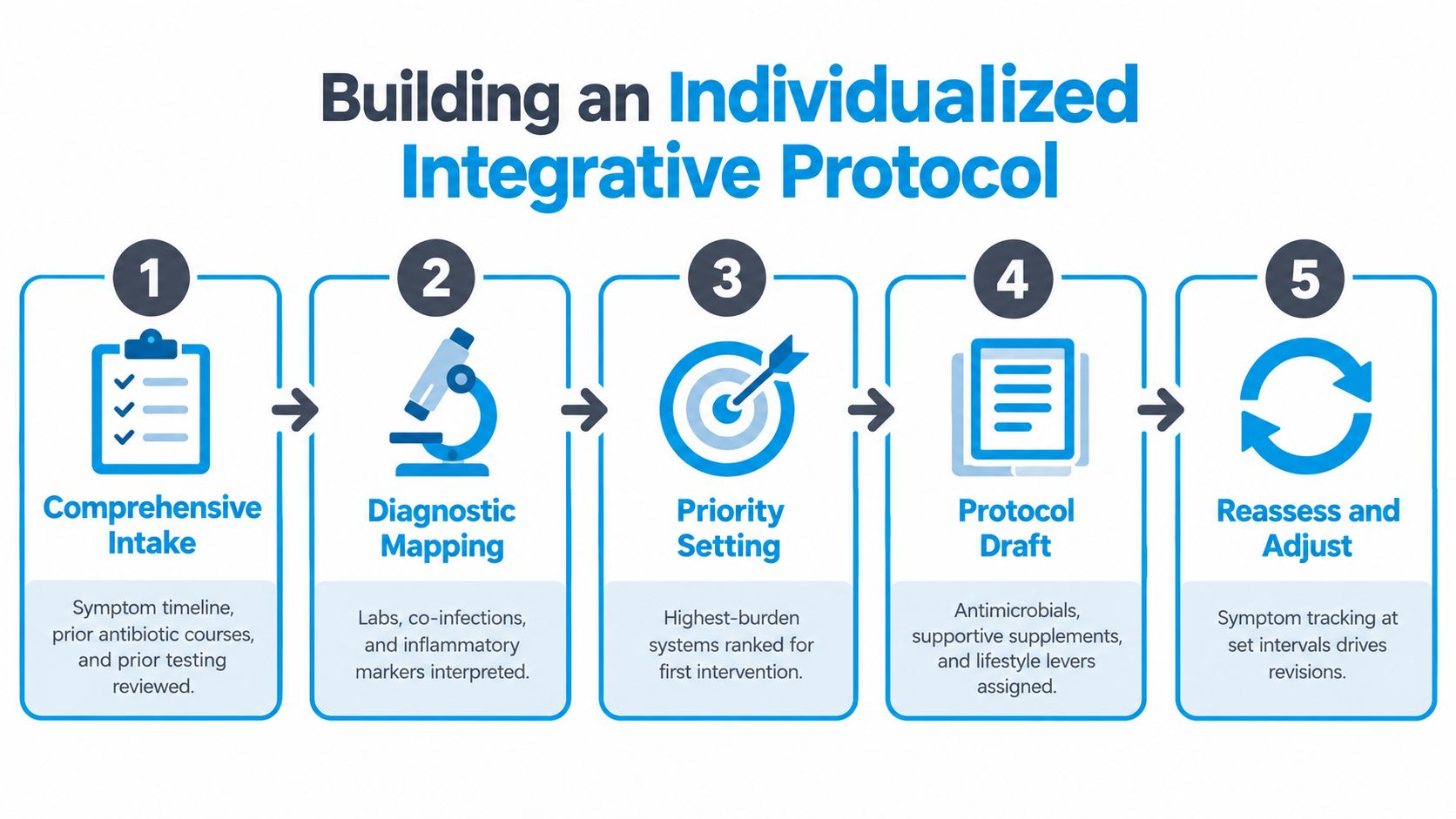
Building an Individualized Integrative Protocol
A useful protocol begins with your story in chronological order. The intake should document the possible exposure, first symptoms, rash or other objective findings, prior antibiotic courses, response and side effects, co-infection concerns, comorbidities, current medicines, supplements, allergies, and previous laboratory reports.
The clinician should also identify symptoms that need a different workup. Chest discomfort, fainting, new weakness, facial droop, severe headache, new vision changes, or progressive cognitive problems shouldn't be folded into a generic chronic Lyme label. They may require urgent or specialty evaluation.
Map the findings before choosing therapies
A layered evaluation may include repeat or confirmatory Lyme testing when clinically appropriate, band-level review of a Western blot, selected co-infection testing, inflammatory markers, thyroid assessment, adrenal-related evaluation when indicated, micronutrient studies, gastrointestinal assessment, mold or environmental exposure review, and autonomic testing. No single panel answers every question, and broad testing can create false leads when it isn't connected to symptoms and examination findings.
The next step is prioritization. A patient with severe insomnia and orthostatic symptoms may need stabilization before tolerating an intensive antimicrobial or infusion protocol. Someone with objective arthritis may need a rheumatology or infectious disease pathway rather than a supplement-first approach. A person with medication toxicity may need simplification before anything new is added.
Use phases and stopping rules
A practical sequence often looks like this:
- Stabilize function. Address sleep, pain, nutrition, hydration, activity tolerance, and autonomic regulation.
- Target the leading problem. Add antimicrobial treatment or immune-focused support only when the clinical reasoning supports it.
- Repair and rehabilitate. Build strength, mobility, cognitive strategies, and sustainable daily routines.
- Maintain gains. Reduce unnecessary therapies and continue only what has a clear role.
The sequence isn't fixed. It should change when new information appears or a treatment causes harm. Drug and supplement interactions must be checked before every meaningful addition. Liver and kidney monitoring may be needed depending on the medicines, herbs, infusions, and underlying conditions involved.
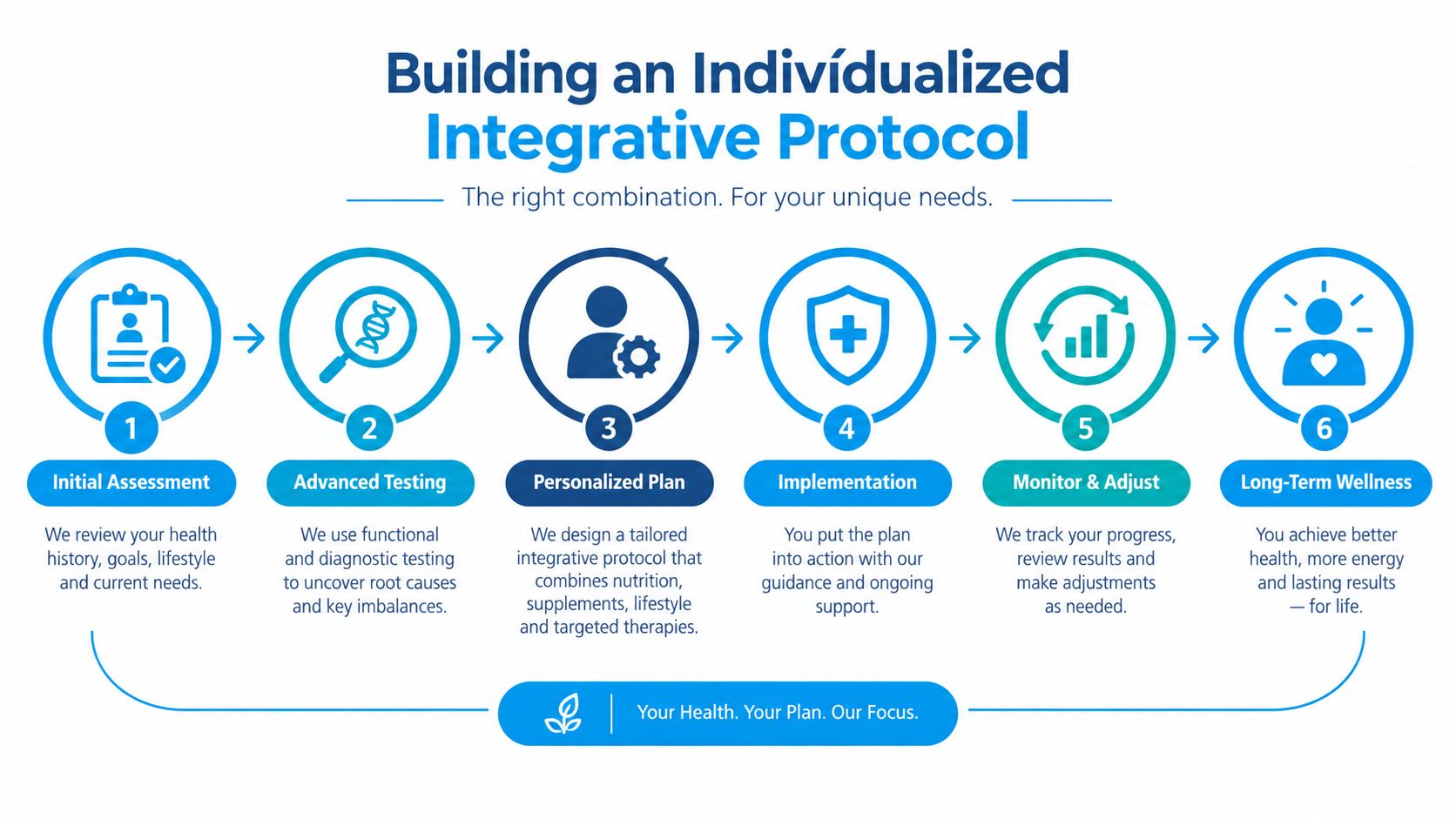
Scheduled reassessments prevent a protocol from continuing by inertia. Track sleep quality, activity tolerance, pain location and severity, cognitive function, gastrointestinal symptoms, medication effects, and objective examination findings. If a treatment has no meaningful benefit, creates new symptoms, or cannot be monitored safely, the plan should be revised rather than expanded.
Safety, Evidence Strength, and Common Misconceptions
The integrative Lyme market can be confusing because treatments with very different evidence levels are often presented side by side. Guideline-supported antibiotics sit at one end of the spectrum. Adjunctive treatments with early clinical data occupy another. Mechanistic therapies, case reports, and practitioner experience may justify a cautious discussion, but they don't establish a cure.
A positive IgM band alone doesn't prove active infection, particularly when the timing and clinical findings don't fit. Likewise, a temporary symptom flare isn't reliable proof that a treatment is killing bacteria. Patients deserve explanations that separate an expected physiologic response from an adverse event or a sign that treatment should stop.
Common claims that need scrutiny
- “More antibiotics will solve persistent symptoms.” Randomized trials haven't shown sustained benefit from prolonged or repeated antibiotics for nonspecific post-treatment symptoms. The NICE recommendations for Lyme disease support reassessment for treatment failure, reinfection, organ damage, or another diagnosis rather than empiric indefinite antimicrobials.
- “Everyone needs chelation or detox.” Chelation should be tied to documented heavy-metal exposure and a clinical indication. Sweating, binders, glutathione, or a restrictive diet may be used in selected plans, but intensity doesn't equal effectiveness.
- “Chronic Lyme is one single diagnosis.” Persistent fatigue, pain, and cognitive symptoms can have multiple causes. The treatment plan should match the cause being addressed.
- “Herbal means risk-free.” Herbal combinations can create CYP450 interactions, bleeding risk, and liver toxicity. They need the same medication reconciliation as prescription drugs.
Prolonged antimicrobials can cause Clostridioides difficile infection, line-associated infection, sepsis, colitis, drug toxicity, liver injury, tendon injury, and antibiotic resistance. The CDC's discussion of chronic symptoms and Lyme disease specifically warns that long-term antibiotic use can cause serious harms, including sepsis and colitis.
| Therapy | Evidence Strength | Main Safety Concerns |
|---|---|---|
| Guideline-based antibiotics for an established manifestation | Guideline-supported | Allergy, drug toxicity, gastrointestinal effects, and complications related to intravenous access |
| Herbal combinations | Uneven, often limited for Lyme-specific outcomes | CYP450 interactions, bleeding risk, liver toxicity, and product quality |
| IV nutrients or glutathione | Indication-dependent and not a proven Lyme cure | Infusion reactions, fluid concerns, medication interactions, and organ-specific risks |
| Ozone or oxidative therapies | Insufficient high-quality evidence for Lyme cure | Procedure-related complications and risk of delaying established care |
| Chelation | Appropriate only for documented heavy-metal burden | Kidney injury, mineral depletion, and medication interactions |
| Rehabilitation and sleep support | Symptom and function focused | Overexertion, especially when activity is advanced too quickly |
An honest risk-benefit conversation is not a barrier to integrative care. It's what makes individualized care medically responsible.
Choosing a Clinic and Planning Your Next Step
Look for a clinic that can explain both what it offers and what it doesn't know. Medical direction should come from a licensed MD, DO, or NP with documented training or credentials relevant to infectious disease, integrative medicine, or the symptoms being evaluated. The clinician should review prior records rather than assume that every positive test explains every current complaint.
Ask direct questions before paying for a protocol:
- Medical oversight: Who makes treatment decisions, and who handles urgent complications?
- Testing and monitoring: Are prescribing, laboratory review, liver and kidney monitoring, and follow-up coordinated through the clinic?
- Interaction review: How does the team check prescription drugs against herbs, peptides, infusions, and other supplements?
- Treatment boundaries: What findings would lead the clinician to stop antibiotics, refer to a specialist, or reconsider the diagnosis?
- Financial transparency: Are costs explained separately for evaluation, medication, infusions, procedures, and follow-up?
Be cautious about guarantees of cure, cash-only bundled protocols, pressure to begin prolonged IV antibiotics before a complete evaluation, or claims that worsening symptoms always prove treatment is working. A useful external resource is this guide to clinic evaluation methodology, which offers broader questions for assessing how a complex-care clinic operates.
Patients traveling from Phoenix, Paradise Valley, Tempe, Mesa, Chandler, Gilbert, or outside Arizona should ask about telehealth intake, the length of on-site visits, infusion center hours, nearby lodging, record transfer, and what monitoring can happen with a local physician. A clinic should provide a written intake packet before travel, not ask you to make major treatment decisions from a brief sales call.
The comparison of specialized Lyme clinics and general practitioners may help you decide what level of coordination your situation requires. The right next step may be a second opinion, a focused diagnostic review, symptom-directed rehabilitation, or a supervised integrative protocol. It shouldn't be chosen from marketing language alone.
Sunridge Medical provides physician-directed evaluation for Lyme and persistent tick-borne illness symptoms, with individualized review of prior testing, treatment history, and appropriate supportive options in Scottsdale. Visit Sunridge Medical to request a new patient consultation and receive an intake packet before planning your visit.