


You've completed the treatment your specialist recommended, yet fatigue, pain, brain fog, digestive problems, or poor sleep still interfere with daily life. Or perhaps you've received a serious diagnosis and want a broader evaluation before deciding what comes next. These situations can leave patients moving between specialists, test results, medications, and unanswered questions.
Integrative medicine in Scottsdale offers a structured way to bring those pieces together. It doesn't replace emergency care, surgery, chemotherapy, radiation, antibiotics, or other proven treatments. Instead, it combines appropriate conventional care with carefully selected nutritional, lifestyle, behavioral, and complementary therapies that address the patient's symptoms, function, environment, and overall health.
Table of Contents
- Understanding Integrative Medicine in Scottsdale
- The Arizona Context for Advanced Care
- Conventional Care Versus an Integrative Approach
- Clinical Programs for Complex Conditions
- What to Expect During Your Evaluation
- Safety, Coordination, and Realistic Outcomes
Understanding Integrative Medicine in Scottsdale
A complex illness rarely stays within one organ system. Fatigue may affect work and exercise, poor sleep can worsen pain, medication side effects can reduce appetite, and digestive symptoms may complicate nutrition. Integrative medicine in Scottsdale provides a framework for examining those connections while keeping the diagnosed condition and proven treatment at the center of care.
The starting question is practical: What does this individual patient need in addition to, or alongside, disease-specific treatment? A person with cancer may need support for fatigue, nutrition, sleep, anxiety, and treatment tolerance. Someone with an autoimmune condition may need a careful review of medications, inflammation-related symptoms, digestion, activity, and possible environmental contributors. Persistent symptoms after Lyme disease treatment may call for diagnostic reassessment rather than another round of the same therapy.
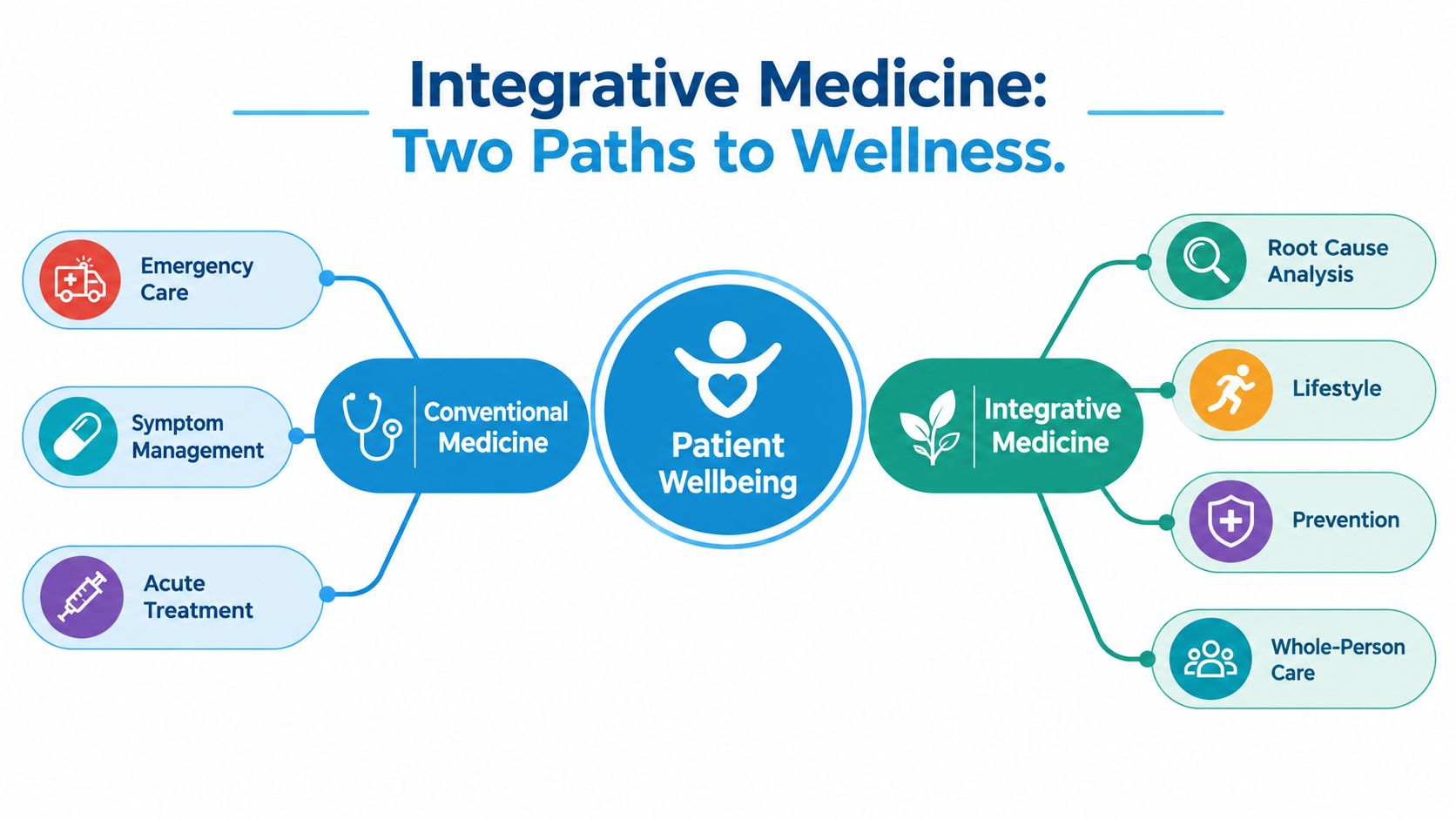
Treating the disease and the patient
The whole person is not a vague idea or a promise to find one hidden cause. It is a clinical lens, much like looking at both the map and the terrain before choosing a route. A physician may review the illness timeline, previous treatment, current symptoms, laboratory findings, nutrition, sleep, stress, physical activity, and medication or supplement use. Sunridge Medical's broad clinical capabilities reflect this approach by connecting disease-focused assessment with questions about function, daily life, and factors that may influence recovery.
Conventional medicine is often strongest when a patient needs a diagnosis, urgent intervention, targeted medication, surgery, radiation, or another therapy aimed at a defined disease process. Integrative care adds context. It examines how illness and treatment affect sleep, strength, mood, nutrition, mobility, immune function, and the patient's ability to participate in ordinary activities.
The approach also requires limits. Complex disease may have several interacting contributors, while some symptoms need standard medical treatment. A responsible evaluation separates a plausible contributor from a testable finding and from a claim that has not been established.
Practical rule: A complementary therapy should have a defined purpose, a safety review, and a plan for measuring whether it helps.
A 2026 source reports that integrative healthcare use among U.S. adults was substantially higher in 2022 than in 2002. That trend does not show that every therapy works. It does show why patients and clinicians need a clear method for weighing evidence, risk, interactions, and personal goals.
For a broader explanation, review this guide to integrative medicine for chronic illness. Integrative medicine is coordinated medical care, not a synonym for “natural.” Each therapy should have a defined role within the patient's overall plan.
The Arizona Context for Advanced Care
A patient in Scottsdale may be managing several diagnoses, reviewing an uncertain earlier diagnosis, or seeking a second opinion while continuing care elsewhere. The surrounding healthcare setting matters because complex illness rarely stays within one specialty or one city. Patients from Scottsdale, Phoenix, Paradise Valley, Tempe, Mesa, Chandler, Gilbert, and other parts of the greater Phoenix metropolitan area may need a plan that connects medical decisions with the practical demands of daily life.
Cancer remains one reason demand for coordinated care is high. In 2022, malignant neoplasm was Arizona's second leading cause of death, with 13,171 deaths, or 132.0 deaths per 100,000 people (Arizona's cancer control plan). These are population-level figures, not a forecast for any one patient. They show why Arizona families may seek care that considers diagnosis and treatment alongside symptoms, nutrition, physical function, emotional strain, and life after treatment. The same reasoning applies to chronic conditions involving several body systems, even when cancer is not part of the picture.
Why local history matters
Arizona has also played a notable role in the development of integrative medicine. Andrew Weil founded the University of Arizona Program in Integrative Medicine in 1994. The program is described as the first of its kind in the world and has trained physicians, physician assistants, and nurse practitioners in approaches that connect conventional medicine with evidence-informed complementary care.
That history does not establish that every therapy offered in Arizona is effective. It does provide a longstanding setting for clinicians and patients to discuss nutrition, lifestyle, mind-body practices, and other supportive measures within medical care. Each option still requires attention to evidence, safety, interactions, and the patient's diagnosis.
The practical question is not whether to choose “regular medicine” or “alternative medicine.” It is which medical services are needed now, which supportive therapies have a reasonable evidence base, and how should they be coordinated? A person receiving cancer treatment in Phoenix may need help addressing treatment-related effects. Someone with a multi-system chronic illness in Scottsdale may need prior diagnoses and medications reviewed together. An out-of-town patient may need a second opinion that can be communicated to the existing care team.
Sunridge Medical's integrative oncology care in Phoenix illustrates this regional approach, while its broader clinical framework can address the patient's needs beyond a single diagnosis.
Conventional Care Versus an Integrative Approach
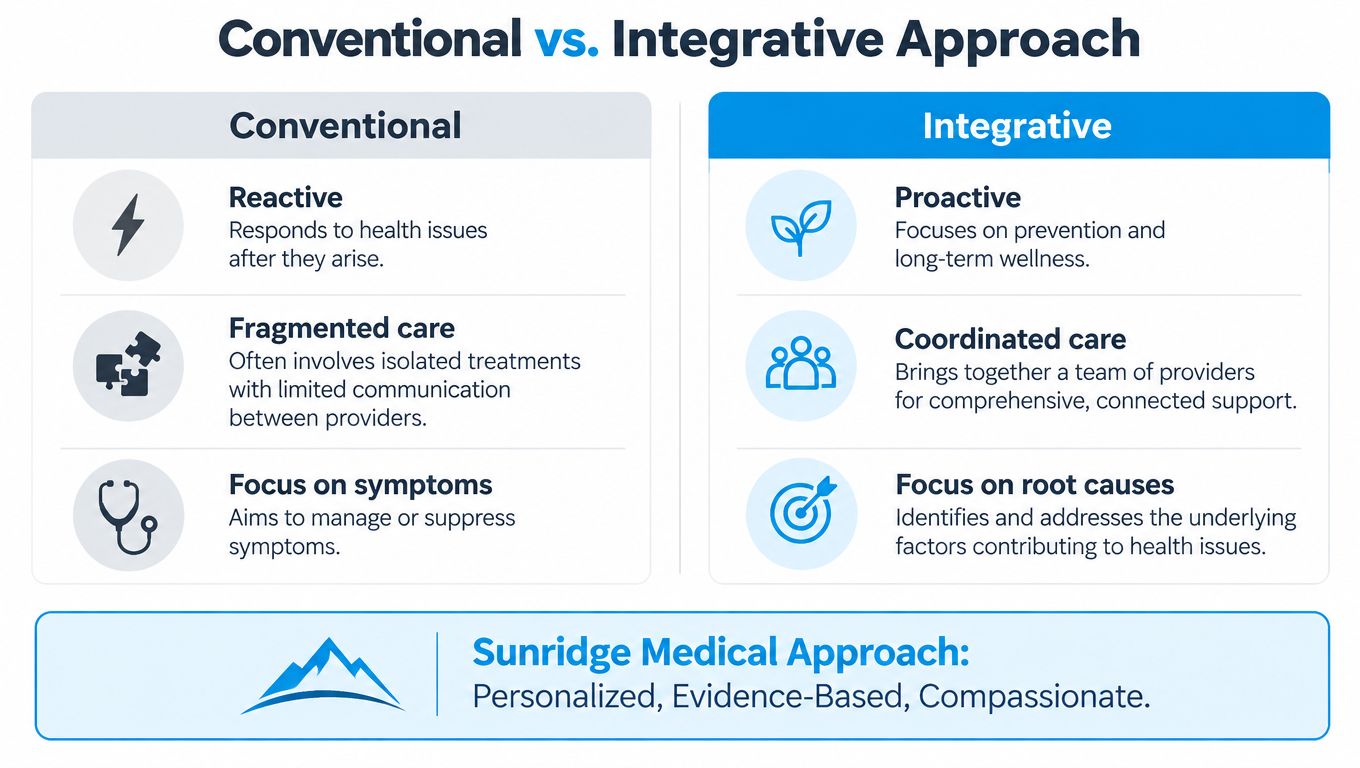
The difference between conventional and integrative medicine isn't that one treats illness while the other ignores it. Conventional medicine provides essential tools for diagnosis and disease control. Integrative medicine can broaden the assessment and add carefully selected supportive measures when they fit the patient's condition.
For example, a person with a tumor may need surgery, chemotherapy, radiation, targeted therapy, immunotherapy, or surveillance. Those decisions belong with qualified oncology professionals and depend on the cancer type, stage, pathology, prior treatment, and overall health. Integrative care may address nutrition, fatigue, sleep, stress, movement, pain, or treatment tolerance alongside that plan. It shouldn't promise to replace tumor-directed treatment.
Two models with different priorities
| Conventional medical focus | Integrative medical focus |
|---|---|
| Diagnosing and treating a defined disease | Understanding the disease and the patient's broader health context |
| Acute treatment and disease control | Disease treatment plus symptom support and functional care |
| Medication, surgery, radiation, and other standard interventions | Appropriate standard care combined with selected complementary therapies |
| Specialty-based care | Coordination across the patient's medical needs |
| Immediate clinical priorities | Immediate priorities plus prevention, recovery, and long-term support |
This comparison is a guide, not a rigid division. Conventional clinicians may provide lifestyle counseling, and integrative clinicians may use prescription medications, imaging, procedures, and referrals. Good care depends less on labels than on whether the plan is medically appropriate, transparent about uncertainty, and coordinated with existing providers.
Where the evidence is strongest
The best-supported role for many integrative therapies is symptom management and supportive care, not broad claims of cancer eradication. ASCO and the Society for Integrative Oncology support meditation, yoga, relaxation, massage, and music therapy for selected anxiety, depression, and quality-of-life outcomes. The same guidance indicates that hyperthermia evidence depends heavily on the delivery method and the clinical indication (guidance on integrative cancer treatment in Scottsdale).
That distinction protects patients from two opposite errors. One error is dismissing every complementary therapy as irrelevant. The other is assuming that a therapy is proven because it is offered in a medical setting. A thoughtful plan states what the intervention is intended to do, what evidence supports that purpose, what risks exist, and how the clinical team will decide whether to continue it.
Patients comparing care models may find this explanation of functional medicine and conventional medicine useful. The practical goal isn't to choose a label. It's to build a plan that responds to the patient's actual disease, symptoms, priorities, and safety needs.
Clinical Programs for Complex Conditions
Complex illness rarely stays inside one specialty. A patient may have pain, fatigue, digestive symptoms, medication intolerance, abnormal laboratory findings, sleep disruption, and cognitive concerns at the same time. An integrative evaluation organizes those concerns without assuming they all have one explanation.
The first step is usually to define the clinical problem. That includes reviewing prior diagnoses, treatment response, current medications, supplements, procedures, and relevant testing. The next step is to identify which concerns require conventional management, which may benefit from supportive care, and which need additional diagnostic clarification.
Oncology and cancer support
Integrative oncology may involve patients at different stages of cancer care, including those seeking a second opinion, support during standard treatment, or options after treatment has not produced the expected result. A plan may include conventional treatment coordination, nutrition counseling, IV nutritional support, symptom-focused services, and other physician-directed therapies listed by the clinic, such as oxidative medicine, hyperthermia, red light therapy, or insulin potentiation therapy.
These therapies shouldn't be presented as interchangeable. Some are used as supportive approaches, while others have more limited or indication-specific evidence. A patient should ask whether an intervention is intended to treat the tumor, reduce symptoms, support function, or address a treatment-related problem.
Lyme disease and persistent symptoms
The CDC states that many people diagnosed with Lyme disease recover completely after a 2- to 4-week course of antibiotics, while about 5% to 10% can experience prolonged symptoms such as fatigue, body aches, or difficulty thinking after treatment (CDC clinical care guidance for Lyme disease). Persistent symptoms deserve evaluation, but they don't automatically prove that an active infection remains.
The CDC also reports that careful studies conducted over the last two decades in the United States and Europe have generally found that extended antibiotic treatment is no better than placebo for curing prolonged Lyme symptoms. When symptoms continue, clinicians should evaluate other possible causes (CDC guidance on prolonged symptoms after Lyme disease). A clinical program may therefore focus on diagnostic review, symptom characterization, sleep, pain, cognition, physical function, and other health factors rather than assuming that more antibiotics are the answer.
Autoimmune, neurologic, and regenerative programs
Other programs may address autoimmune disease, multiple sclerosis, Parkinson's disease, dementia, digestive disorders, hormone concerns, environmental medicine, and complex inflammatory symptoms. Services listed by the clinic include immune-modulating and supportive approaches, IV therapies, heavy-metal chelation and medical detoxification, regenerative services such as platelet-rich plasma and prolozone therapy, peptide and hormone services, and recovery support.
The presence of a therapy on a clinic's service list isn't a guarantee that it's appropriate for every patient. Regenerative procedures, oxidative therapies, supplements, and infusion treatments require a review of medical history, contraindications, current medications, and the quality of evidence for the specific condition.
Ozone is a useful example of why route and indication matter. A 2023 systematic review mapped 26 reviews across 55 outcomes, finding many positive or potentially positive signals but also a very large number of inconclusive associations, with no serious adverse effects reported in the reviewed studies (the systematic review of ozone therapy evidence). A cancer-focused review found that clinical trials remain few, survival benefit hasn't been demonstrated, and safety differs by administration route. It specifically flags inhalation as a respiratory toxicity risk and direct intravenous ozone injections as not recommended.
Patients should ask for a condition-specific explanation rather than accepting a general claim that a therapy “boosts the immune system” or “detoxes the body.” A broader description of these programs is available in this guide to personalized medicine for chronic conditions.
What to Expect During Your Evaluation
A first visit should feel like a clinical assessment, not a sales presentation. A patient traveling to Scottsdale from Phoenix, Paradise Valley, Tempe, Mesa, Chandler, Gilbert, or another state may begin by organizing medical records, imaging reports, pathology, laboratory results, medication lists, and a timeline of symptoms and treatments.
The clinician then needs to understand what has already been tried and what remains unresolved. For someone with cancer, that may include coordination with an oncologist and review of the current treatment plan. For someone with persistent fatigue or neurologic symptoms, it may involve checking whether the original diagnosis still explains the complete pattern.
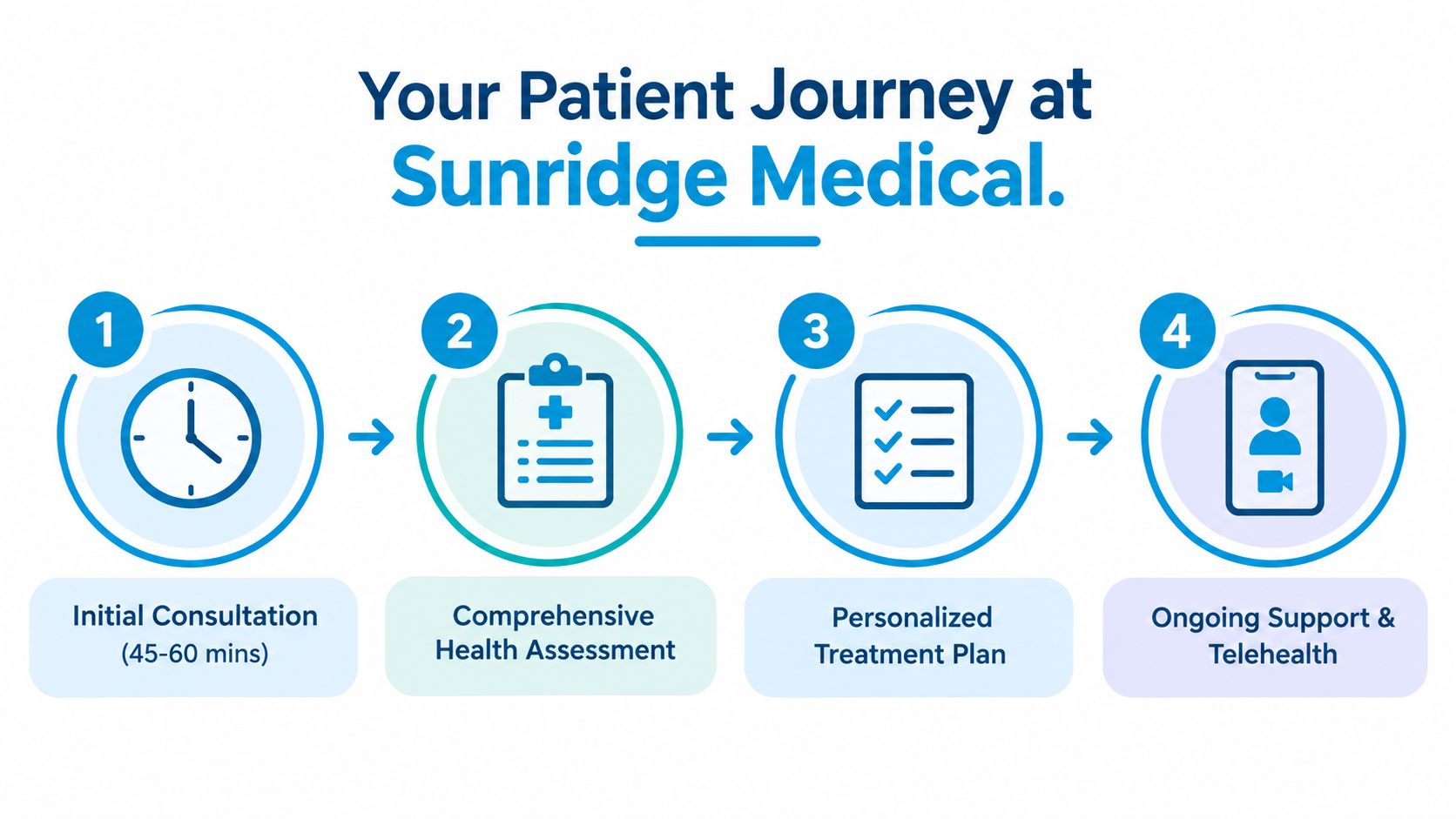
A practical patient pathway
First, define the reason for consultation. Be specific. “I'm tired” is important, but “my fatigue began after treatment, worsens after activity, and comes with sleep disruption and muscle pain” gives the clinician a more useful starting point.
Next, review the full clinical picture. The evaluation may consider symptoms, medical history, medications, supplements, nutrition, sleep, stress, environmental exposures, previous treatment, and existing test results. Additional testing should have a clinical purpose rather than being ordered merely because it's available.
Then, develop a coordinated plan. That plan may include standard treatment, referrals, supportive therapies, lifestyle changes, monitoring, or a recommendation to continue care with the patient's current physician. It should identify what happens first and what findings would change the approach.
Finally, establish follow-up. Complex conditions need reassessment. The care team may review symptoms, function, medication tolerance, laboratory results, and practical barriers to following the plan. Patients traveling from outside Scottsdale can ask in advance about scheduling, records, transportation, lodging, and whether some follow-up can occur remotely.
A systematic review found that integrative oncology interventions can improve clinical and patient-reported outcomes without increasing health-system expenditure, although cost-effectiveness evidence isn't available for every modality (the systematic review of cost and outcomes in integrative oncology). That finding shouldn't be interpreted as proof that every service is covered by insurance or worthwhile for every individual. It supports a more careful question: Which intervention has a clear purpose for this patient, and what outcome will determine its value?
Patients may also find it helpful to watch this educational overview before preparing for a consultation:
Bring a written list of goals to the appointment. Your priorities may include reducing pain, improving energy, tolerating treatment, returning to work, sleeping better, or understanding whether a proposed therapy is safe. Those goals help the clinician distinguish a reasonable supportive intervention from an intervention that doesn't fit your situation.
Safety, Coordination, and Realistic Outcomes
“Natural” doesn't mean harmless, and “integrative” doesn't mean every therapy belongs in every treatment plan. Herbs, antioxidants, IV nutrients, injections, and other adjunctive therapies can interact with prescription medications or alter how treatment works. The clinical team should review timing, dose, route, kidney and liver function, allergies, bleeding risk, and the patient's complete medication and supplement list.
For people with cancer, integrative care shouldn't delay proven treatment. Some herbs and antioxidants can change how medications work, so each proposed therapy requires an evaluation of risks and evidence quality (Sunridge Medical's FAQ on integrative care and treatment safety). Patients should be cautious about any provider who recommends stopping effective treatment, promises a cure, or treats uncertainty as proof.
Realistic outcomes may include better symptom control, improved treatment tolerance, greater functional stability, and support for quality of life. Those outcomes matter, but they aren't the same as eliminating a complex disease. A careful medical plan makes that distinction clear from the beginning.
Sunridge Medical offers physician-directed integrative evaluation for cancer, Lyme and tick-borne disease, autoimmune conditions, neurologic disorders, and other complex chronic concerns in Scottsdale. Visit Sunridge Medical to discuss whether a consultation can help clarify your options and coordinate an evidence-informed plan with your existing care team.