


If you live in Scottsdale and have fatigue, joint pain, cognitive fog, or neurologic symptoms, should the first question really be “How do I treat Lyme disease?” Or should it be “Was I likely exposed to Lyme, and what else could explain these symptoms?”
That distinction matters in Arizona. A thoughtful Lyme evaluation starts with geography, travel history, symptom timing, prior testing, and a differential diagnosis rather than assuming that every persistent inflammatory or neurologic complaint comes from an active infection. Patients looking for a Lyme disease doctor in Scottsdale deserve an approach that respects both conventional guidelines and the complexity of symptoms that can continue after treatment.
Table of Contents
- Understanding Chronic Lyme-Like Symptoms in Scottsdale
- Lyme Disease Epidemiology and Arizona Context
- Diagnostic Approaches for Lyme Evaluation
- Conventional Treatment Protocols and Duration Guidelines
- Integrative Approaches for Persistent Lyme Symptoms
- Sunridge Medical Treatment Capabilities and Services
- Choosing the Right Lyme Specialist in Scottsdale
- Patient Travel and Appointment Logistics
Understanding Chronic Lyme-Like Symptoms in Scottsdale
A middle-aged woman arrives for consultation with a folder of laboratory reports and a symptoms journal. She describes months of exhaustion, migrating joint discomfort, poor concentration, disrupted sleep, and intermittent tingling in her hands. Years earlier, she had spent time hiking in the Northeast. One clinician prescribed antibiotics, another questioned the diagnosis, and several tests seemed difficult to interpret. She's no longer sure whether she has active Lyme disease, a post-treatment syndrome, or an unrelated condition that has never been properly evaluated.

Symptoms such as fatigue, joint pain, brain fog, neuropathic sensations, and headaches can occur with Lyme disease, but they also overlap with autoimmune illness, sleep disorders, endocrine problems, medication effects, nutritional issues, post-viral syndromes, and other inflammatory or neurologic conditions. A symptom pattern can justify evaluation, but it can't establish the diagnosis by itself.
Three clinical possibilities
A careful consultation usually separates three broad situations:
- Active Lyme disease, supported by a compatible exposure, clinical findings, and appropriately interpreted testing.
- Past infection with persistent symptoms, where the original infection may have been treated but symptoms remain.
- A different primary condition, which may require another specialist, another test strategy, or a different treatment plan.
The distinction between confirmed infection and persistent symptoms after treatment is especially important. Longer or repeated antibiotic courses aren't automatically safer or more effective, particularly when there's no objective evidence of active disease. The physician's responsibility is to investigate the patient's full history without dismissing symptoms and without labeling every unexplained symptom as Lyme.
Practical rule: A useful Lyme consultation should explain both why Lyme is possible and why another diagnosis may be more likely.
For patients in Scottsdale, Phoenix, Paradise Valley, Tempe, Mesa, Chandler, Gilbert, and the greater Phoenix metropolitan area, specialized care can be valuable when symptoms are prolonged, prior treatment hasn't helped, or the diagnosis remains uncertain. The right provider should be comfortable reviewing conventional records while also considering overlapping contributors to chronic illness.
Lyme Disease Epidemiology and Arizona Context
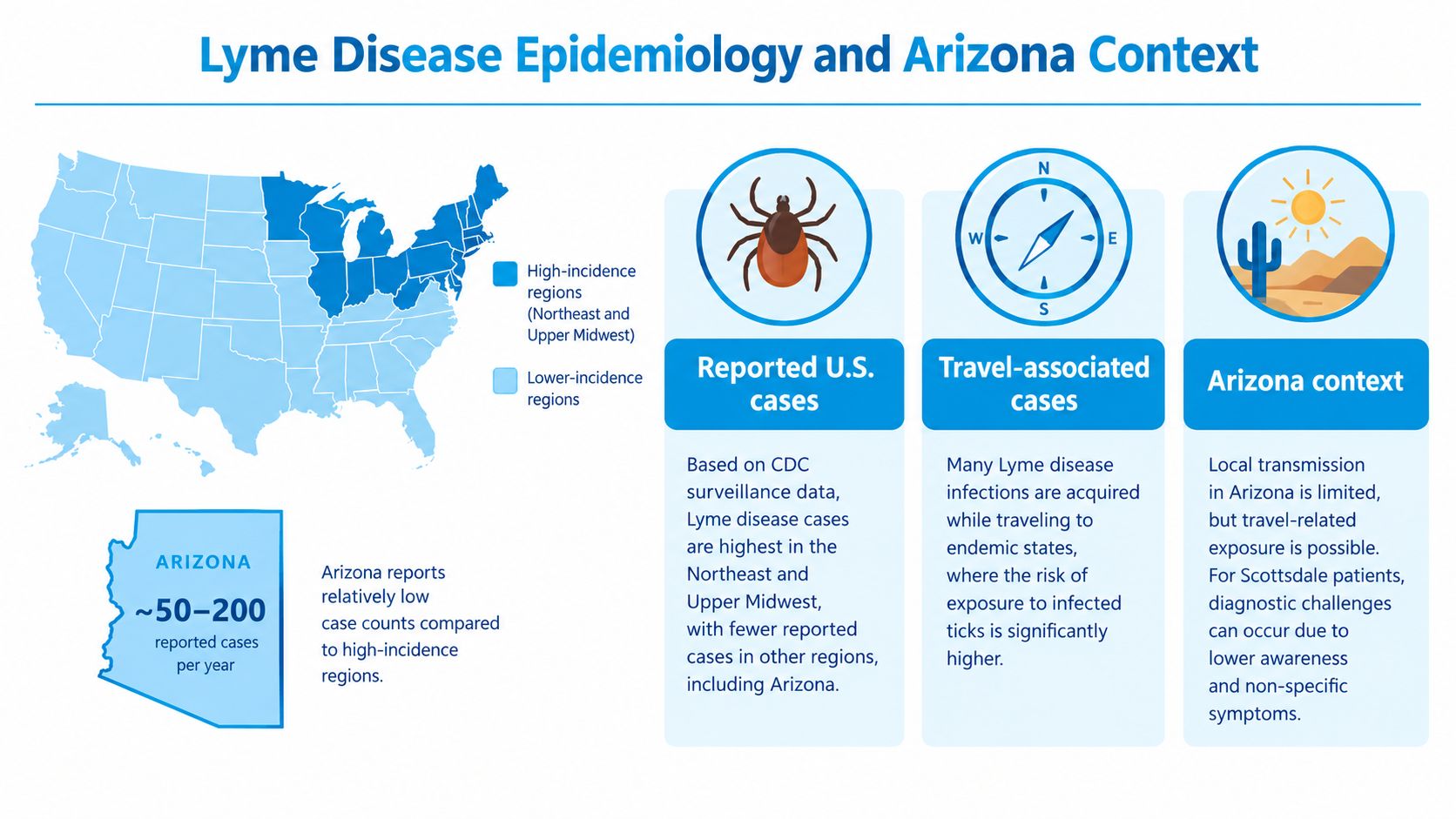
Lyme disease is not spread evenly across the United States. CDC surveillance found that about 90% of reported cases came from 15 high-incidence jurisdictions in the Northeast, mid-Atlantic, and upper Midwest. The CDC also recorded 62,551 reported cases nationwide in 2022, compared with an annual average of 37,118 cases during 2017–2019, making the 2022 total 1.7 times that earlier average (CDC surveillance analysis).
That national picture can mislead patients in Scottsdale if it is applied without regional context. Arizona is not a major endemic state, and the Arizona Department of Health Services reports that no confirmed cases have been acquired from tick bites in Arizona to date. Infections diagnosed in Arizona residents have generally been associated with travel to endemic states (Arizona Lyme disease protocol).
Why national burden still matters
Low local transmission does not mean Scottsdale patients never need Lyme evaluation. People travel for work, recreation, and family visits. A patient may have been exposed in New England, the mid-Atlantic, or the upper Midwest and later seek care in Arizona. Others come in after symptoms begin on a trip, but the initial evaluation missed the exposure history or happened too early to be useful.
The CDC estimates that approximately 476,000 people are diagnosed and treated for Lyme disease each year in the United States. That figure reflects treated cases, not confirmed infections, and it helps explain why surveillance counts alone do not show the full clinical burden. A Scottsdale patient with fatigue does not automatically have Lyme. The point is narrower, clinicians should take a credible exposure history seriously while still weighing other explanations.
A practical evaluation asks where the patient traveled, whether a compatible tick exposure occurred, when symptoms began, whether a rash or objective joint swelling appeared, and what testing was already done. In Arizona, exposure probability should shape testing and interpretation. It should never be treated as an afterthought.
Diagnostic Approaches for Lyme Evaluation
Lyme testing works best when a physician combines clinical pretest probability with FDA-cleared serologic testing. Antibodies may take several weeks to become detectable, so a negative result soon after exposure doesn't always exclude infection.
How the two-step process works
The CDC recommends a two-step algorithm:
- A first-tier EIA or IFA is performed.
- If indicated by the first result, the laboratory performs a confirmatory immunoblot or equivalent second-tier assay.
- If the first step is negative, additional testing generally isn't recommended for that specimen.
The timing of the blood draw matters. A patient tested very soon after a possible exposure may need clinical reassessment if symptoms evolve. Repeating tests without reconsidering the exposure, symptom pattern, and timing can create confusion rather than clarity.
For a detailed discussion of advanced testing choices and interpretation, patients can review this advanced Lyme diagnostic testing guide.
Why IgM interpretation changes over time
For symptoms lasting more than 30 days, CDC guidance says clinicians should disregard an isolated IgM result and rely on IgG when interpreting serology. Late IgM reactivity can increase the risk of a false-positive interpretation, particularly when the clinical picture and exposure history don't support Lyme disease (CDC diagnosis and testing guidance).
Testing shouldn't be used as a cure marker. A positive antibody result can remain positive after treatment, while an early negative result may be falsely reassuring. A Lyme-focused physician should therefore interpret laboratory findings alongside physical examination, travel history, symptom chronology, and competing diagnoses.
Conventional Treatment Protocols and Duration Guidelines
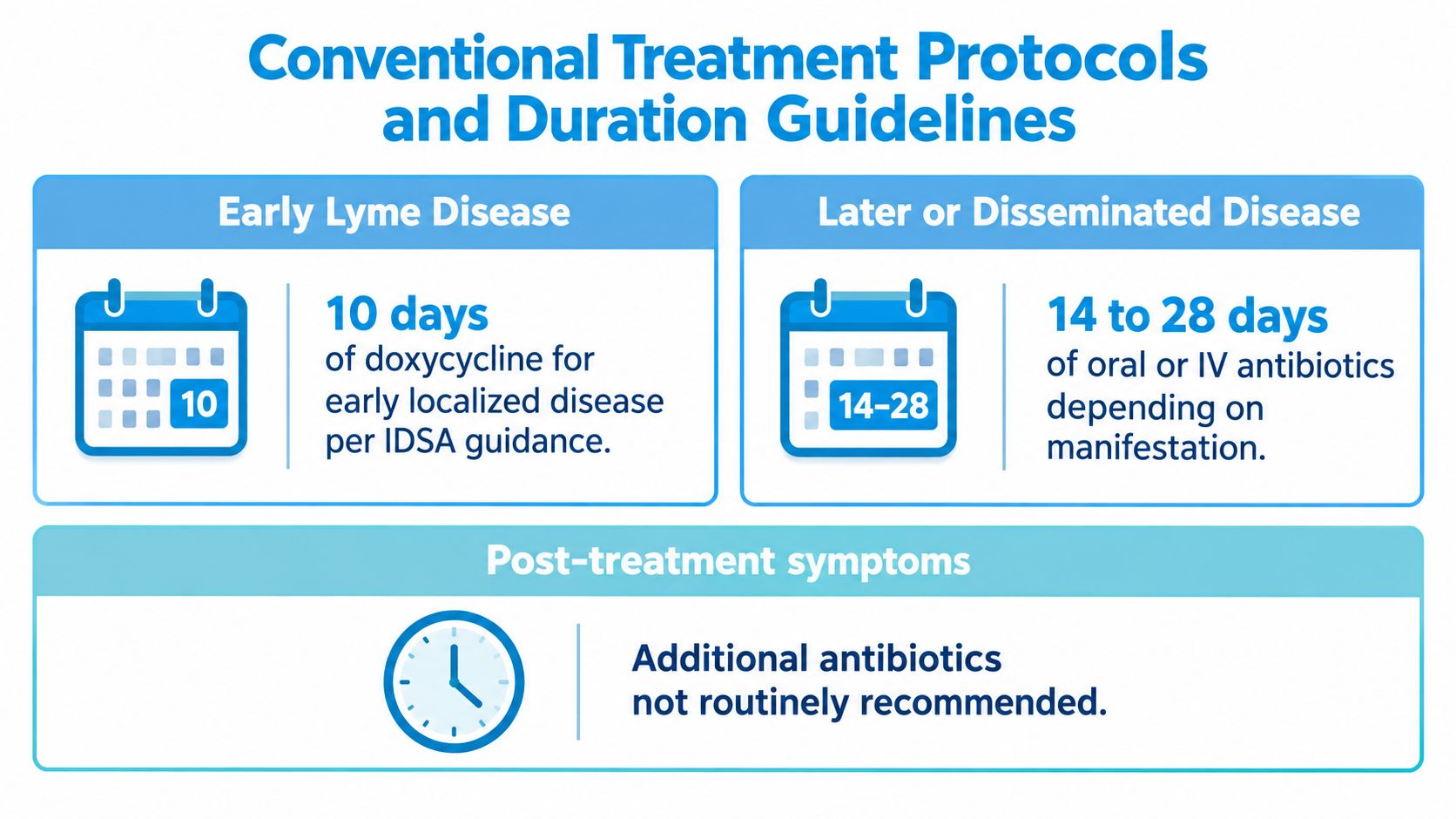
Confirmed Lyme disease should be treated according to the clinical manifestation, not according to symptom severity alone. The IDSA, AAN, and ACR guideline recommends 10 days of doxycycline or 14 days of amoxicillin or cefuroxime axetil for erythema migrans rather than longer courses (IDSA/AAN/ACR Lyme disease guideline).
Treatment duration changes when the disease affects other organ systems:
| Manifestation | Guideline-based treatment duration |
|---|---|
| Erythema migrans | 10 days of doxycycline, or 14 days of amoxicillin or cefuroxime axetil |
| Lyme carditis | 14 days |
| Neurologic Lyme disease | 14 to 21 days |
| Late Lyme arthritis | 28 days |
Hospitalized patients with Lyme carditis may initially receive IV ceftriaxone before transitioning to oral therapy. The treatment plan depends on the severity and manifestation of disease, along with the patient's clinical status.
Where integrative care fits
Evidence-based antibiotics remain the foundation for confirmed active Lyme disease. Longer therapy hasn't shown added benefit for routine erythema migrans, and additional antibiotics aren't routinely recommended for nonspecific post-treatment symptoms without objective evidence of active infection.
An integrative approach can complement, rather than replace, appropriate antimicrobial treatment. It may focus on sleep, nutrition, physical function, pain management, medication tolerance, and evaluation of other contributors to persistent symptoms. The trade-off is that complementary therapies require careful discussion of evidence, safety, interactions, and cost. They shouldn't be presented as proven substitutes for treatment of meningitis, carditis, arthritis, or another objectively established manifestation.
Patients considering local options can read about Lyme disease treatment in Scottsdale before scheduling a physician consultation.
Integrative Approaches for Persistent Lyme Symptoms
Persistent symptoms deserve attention even when further antibiotics aren't indicated. A patient may still have disabling fatigue, musculoskeletal pain, poor sleep, autonomic complaints, or cognitive difficulties after standard treatment. The next step should be a structured review of what has been confirmed, what remains uncertain, and which noninfectious factors may be sustaining the illness experience.

Building a broader plan
An integrative physician may review:
- Inflammatory and immune patterns, while avoiding the assumption that every abnormal marker proves an ongoing infection.
- Sleep, nutrition, and energy production, because poor recovery in these areas can amplify pain and cognitive symptoms.
- Medication effects and treatment tolerance, especially when previous therapies caused side effects or were stopped prematurely.
- Musculoskeletal and neurologic function, including whether rehabilitation, movement modification, or targeted pain care is appropriate.
- Coexisting conditions, such as autoimmune, endocrine, gastrointestinal, or post-viral illness.
The clinic's Lyme and tick-borne disease program uses multimodal strategies aimed at symptom reduction and functional recovery. The appropriate plan depends on the diagnosis and may include established medical care alongside traditional, complementary, or emerging approaches. Those categories aren't interchangeable. A therapy can be biologically plausible or clinically useful for symptom support without being proven to eradicate Lyme bacteria.
Patients with joint discomfort may also benefit from reviewing a science-backed arthritis relief guide, particularly when pain management and mobility are part of a broader recovery plan.
Further reading on individualized care is available in this integrative Lyme disease protocols clinical guide.
The safest integrative plans remain physician-directed. They identify which interventions are established, which are complementary, and which are investigational or off-label, then monitor the patient's response instead of promising a cure.
Sunridge Medical Treatment Capabilities and Services
Patients comparing a Lyme disease doctor in Scottsdale should ask whether the practice can coordinate the full range of care their situation may require. A clinic with broad capabilities may be able to support continuity across physician evaluation, laboratory review, infusion-based care, injections, symptom management, and follow-up planning.
Available programs at the Scottsdale clinic include:
- IV therapies, including nutritional infusions and glutathione IV, when clinically appropriate.
- Oxidative medicine, including ozone therapy, with treatment decisions based on medical history and informed consent.
- Hyperthermia and red light therapy, used as complementary modalities rather than replacements for indicated antimicrobial care.
- Regenerative medicine, including PRP and prolozone therapy, particularly when pain or tissue injury requires a separate musculoskeletal discussion.
- Environmental medicine, including heavy metal chelation and medical detoxification programs when a qualified evaluation supports their use.
- Integrative oncology care, which is a separate clinical service for patients managing cancer alongside conventional treatment.
- Lyme and tick-borne disease programs, designed for complex infectious and post-infectious presentations.
What a comprehensive provider should explain
A physician should connect each proposed therapy to a specific clinical objective. For example, an infusion may address a nutritional or supportive goal, while PRP targets a localized musculoskeletal concern. Neither automatically treats active Lyme disease.
This distinction protects patients from paying for a long menu of therapies without a clear rationale. It also makes it easier to determine whether a treatment is established, complementary, off-label, or investigational. The most useful plan is individualized, coordinated, and measurable through symptoms, function, examination findings, and appropriate follow-up.
Choosing the Right Lyme Specialist in Scottsdale
The right specialist won't begin with a predetermined protocol. They'll begin by asking whether Lyme disease is plausible, what evidence supports it, and what other diagnoses need attention.
Questions worth asking before you book
Ask the practice how the physician handles:
- Travel history: Will the evaluation distinguish Arizona exposure from travel to an endemic state?
- Testing limitations: Will someone explain early false-negative results, persistent antibodies, and late IgM interpretation?
- Treatment duration: Does the clinician follow manifestation-specific antibiotic guidance?
- Persistent symptoms: How are post-treatment complaints evaluated when there's no objective evidence of active infection?
- Comorbid illness: Can the provider consider autoimmune, endocrine, sleep, nutritional, inflammatory, and neurologic contributors?
- Safety monitoring: How will side effects, drug interactions, and response to complementary therapies be followed?
An initial consultation should include a symptom timeline, prior diagnoses, medication history, laboratory reports, imaging when relevant, and details about travel or outdoor exposure. Bring the actual records rather than relying on memory, especially if several clinicians have interpreted the same test differently.
Patients comparing general primary care with a focused integrative consultation may find this guide to choosing the right Lyme care path useful.
Compatibility matters, but reassurance shouldn't replace rigor. A trustworthy physician can acknowledge uncertainty, explain alternatives, and recommend referral or conventional infectious-disease care when the clinical situation calls for it.
Patient Travel and Appointment Logistics
A patient traveling from Phoenix, Tempe, Mesa, Chandler, Gilbert, or outside Arizona can make the first visit more productive by organizing records before contacting the clinic. Put laboratory results in date order, include the reference ranges, and note which tests were performed before or after antibiotics.
A concise timeline should include:
- When symptoms began and which symptom appeared first.
- Travel to the Northeast, mid-Atlantic, upper Midwest, or other relevant regions.
- Any known tick bite, rash, fever, joint swelling, palpitations, or neurologic change.
- Antibiotics taken, the reason for each prescription, and the response.
- Current medications, supplements, allergies, and significant diagnoses.
- The functional problems that matter most, such as difficulty working, walking, sleeping, or concentrating.
Patients coming from outside Scottsdale should ask the care team how appointments are coordinated, whether records can be reviewed before the consultation, and how follow-up is handled after returning home. Planning those details early can prevent a long trip from producing only a brief, incomplete history.
Insurance coverage varies by service and plan. Before treatment, ask about consultation fees, laboratory billing, infusion or procedure costs, payment arrangements, and which services may not be covered. A clear financial discussion is part of responsible medical planning, particularly when a proposed program includes complementary or investigational therapies.
If you're seeking a Lyme disease doctor in Scottsdale because symptoms have persisted after standard care, bring your questions and your complete history. A careful evaluation can clarify whether you need treatment for active infection, support for post-treatment symptoms, investigation of another condition, or a combination of these paths.
The Scottsdale clinic provides physician-led evaluation for Lyme and tick-borne illness, review of prior testing and treatment, and individualized integrative care for complex symptoms. Visit Sunridge Medical to contact the care team in Scottsdale and discuss whether a consultation is appropriate for your history.