


Patients with Lyme disease often recover completely after 2–4 weeks of antibiotics, but some continue to experience fatigue, body aches, or cognitive symptoms afterward. The CDC recognizes this clinical reality, which can leave Scottsdale patients wondering whether they need more antibiotics, a second opinion, or a different recovery plan.
You may have finished doxycycline, amoxicillin, or another prescribed treatment and still feel unlike yourself. Perhaps you're waking exhausted, struggling to find words during conversations, or dealing with joint pain that makes ordinary activities difficult. Those symptoms deserve careful evaluation, even when testing or follow-up visits don't provide a simple explanation.
Table of Contents
- Understanding the Lyme Disease Treatment Landscape in Scottsdale
- What Standard Lyme Disease Treatment Looks Like
- Why Some Patients Experience Persistent Symptoms After Treatment
- Integrative Treatment Approaches Available in Scottsdale
- How Sunridge Medical Approaches Complex Lyme Cases
- Choosing the Right Lyme Disease Treatment Provider in Scottsdale
- Taking the Next Step in Your Lyme Disease Recovery
Understanding the Lyme Disease Treatment Landscape in Scottsdale
A patient in Scottsdale may arrive at a consultation after a very ordinary sequence of events. They were bitten by a tick while traveling, developed symptoms after returning to Arizona, received antibiotics from a primary care clinician, and expected recovery to follow. Instead, fatigue, brain fog, sleep disruption, or migrating aches continued.
That situation doesn't automatically mean active Lyme infection remains. It also doesn't mean the symptoms aren't real. The first clinical task is to separate several possibilities, including incomplete treatment, reinfection, another tick-borne illness, an unrelated condition, medication effects, sleep problems, or symptoms that persist after the original infection has been treated.

Why Arizona changes the conversation
Scottsdale, Phoenix, Paradise Valley, Tempe, Mesa, and Chandler aren't areas where locally acquired Lyme disease is commonly expected. The Arizona Department of Health Services states that, to date, no confirmed cases of Lyme disease have been acquired from tick bites in Arizona. At the same time, the CDC estimates that about 476,000 Americans are treated for Lyme disease each year, while only about 30,000–40,000 cases are officially reported annually.
That geographic context matters. A patient in the greater Phoenix metropolitan area may have acquired the infection in another state, recognized it late, or be seeking help for persistent symptoms after standard therapy. A local clinician must consider travel history and the full timeline rather than assuming either that Lyme disease is impossible or that every symptom proves ongoing infection.
Practical rule: Persistent symptoms call for a fresh clinical assessment, not automatic dismissal and not automatic escalation to prolonged antibiotics.
Patients comparing specialized Lyme clinics with general practitioners should look for a provider who can respect established infectious-disease guidance while also evaluating sleep, nutrition, inflammation, pain, neurologic function, and other contributors to reduced quality of life.
What Standard Lyme Disease Treatment Looks Like
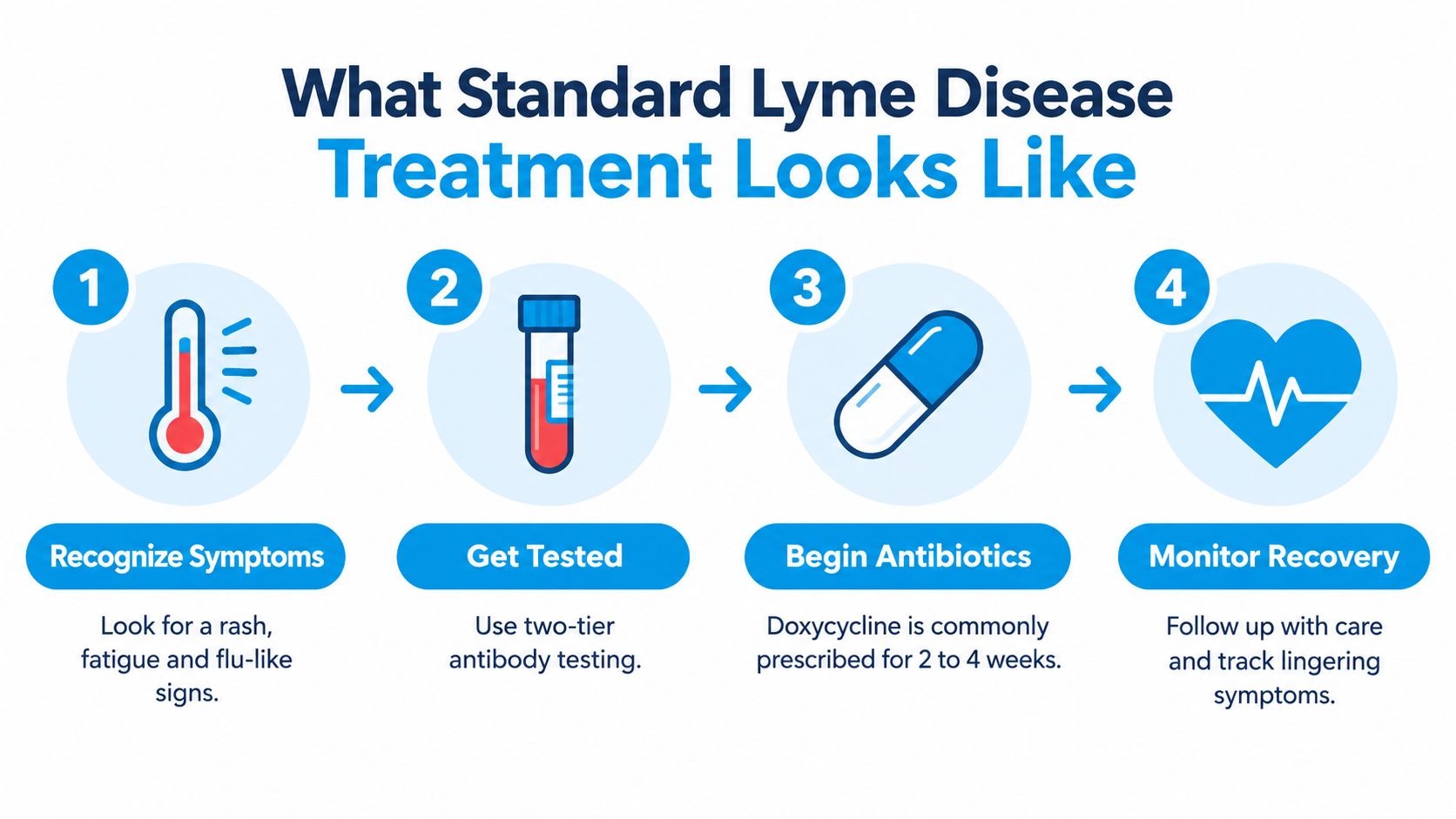
Standard care begins with a sound diagnosis. The CDC recommends a two-tier serologic pathway, using an FDA-cleared antibody screening test first. If that result is positive or equivocal, a second-step antibody test follows. If the first step is negative, further Lyme testing generally isn't recommended.
This sequence is important because symptoms such as fatigue, muscle pain, headache, and concentration problems occur in many conditions. Testing isn't a substitute for clinical judgment, but the two-step process helps reduce false-positive treatment decisions, particularly when symptoms have lasted a long time or the likelihood of exposure is uncertain.
Treatment depends on the manifestation
For early localized Lyme disease with erythema migrans, the IDSA/AAN/ACR guideline recommends 10 days of doxycycline or 14 days of amoxicillin or cefuroxime axetil, rather than longer courses. The IDSA clinician summary provides these specific durations.
More complicated manifestations are treated differently. The guideline describes treatment that is typically 14–28 days, depending on the affected system and severity. Neurologic disease may require intravenous ceftriaxone or an equivalent therapy, and hospitalized Lyme carditis may begin with IV ceftriaxone before a transition to oral treatment. The IDSA Lyme disease guideline outlines these syndrome-specific decisions.
The CDC treatment guidance identifies doxycycline, amoxicillin, and cefuroxime axetil as commonly used oral options, with treatment lasting from 10 days to 4 weeks depending on the clinical presentation.
Why more medication isn't always better
Most patients recover completely with appropriate antibiotic therapy, but some experience lingering symptoms. The CDC summary of Lyme disease notes that additional antibiotics don't have a role outside clinical studies for post-treatment Lyme disease syndrome or so-called chronic Lyme disease.
That recommendation isn't a judgment about the patient's experience. It reflects evidence that longer antimicrobial courses can create risks without demonstrating clear benefit for nonspecific symptoms in the absence of objective evidence of active infection, reinfection, or treatment failure. Patients who need IV treatment can review the clinical considerations in Sunridge Medical's information about intravenous treatment for Lyme disease, while understanding that route and duration should be physician-directed.
Why Some Patients Experience Persistent Symptoms After Treatment
The phrase “chronic Lyme disease” creates confusion because different clinicians use it to describe different situations. Mainstream guidelines generally use more specific language for persistent symptoms after recommended treatment, while patients often use the broader phrase to describe fatigue, pain, poor concentration, sleep disruption, or reduced stamina that continue after the infection was addressed.
The symptoms can be functionally limiting even when there isn't evidence of ongoing infection. A person may be unable to work at their previous pace, exercise normally, or manage family responsibilities. Validation and diagnostic caution can exist together.
Active infection and post-treatment symptoms aren't identical
The key clinical question is whether current findings indicate active Lyme disease. Objective evidence might include a new compatible manifestation, reinfection, or treatment failure that requires a different medical response. In contrast, prolonged nonspecific symptoms alone don't establish that bacteria remain active.
The CDC evidence summary in StatPearls describes carefully conducted studies in which extended antibiotic treatment wasn't better than placebo for prolonged nonspecific symptoms after standard therapy. The IDSA/AAN/ACR guidance therefore recommends against additional antibiotics for ongoing fatigue, pain, or cognitive symptoms unless objective evidence supports reinfection or treatment failure.
Possible contributors to persistent symptoms may include inflammatory signaling after infection, altered sleep, deconditioning, pain sensitization, medication effects, nutritional problems, or another diagnosis that was present all along. These are clinical possibilities to investigate, not conclusions that can be made from symptoms alone.
A broader recovery plan
An integrative evaluation can ask questions that a short infection-focused visit may not have time to address. How restorative is sleep? Has activity dropped because of pain? Are headaches, dizziness, digestive symptoms, or mood changes part of the same pattern? Could thyroid disease, anemia, autoimmune disease, migraine, or another neurologic condition explain some of the presentation?
The clinical evidence surrounding persistent Lyme symptoms helps patients understand why symptom-directed care may be more appropriate than repeated antimicrobial courses. The aim is not to replace infectious-disease care, but to build a safer plan around what the patient is experiencing now.
Integrative Treatment Approaches Available in Scottsdale
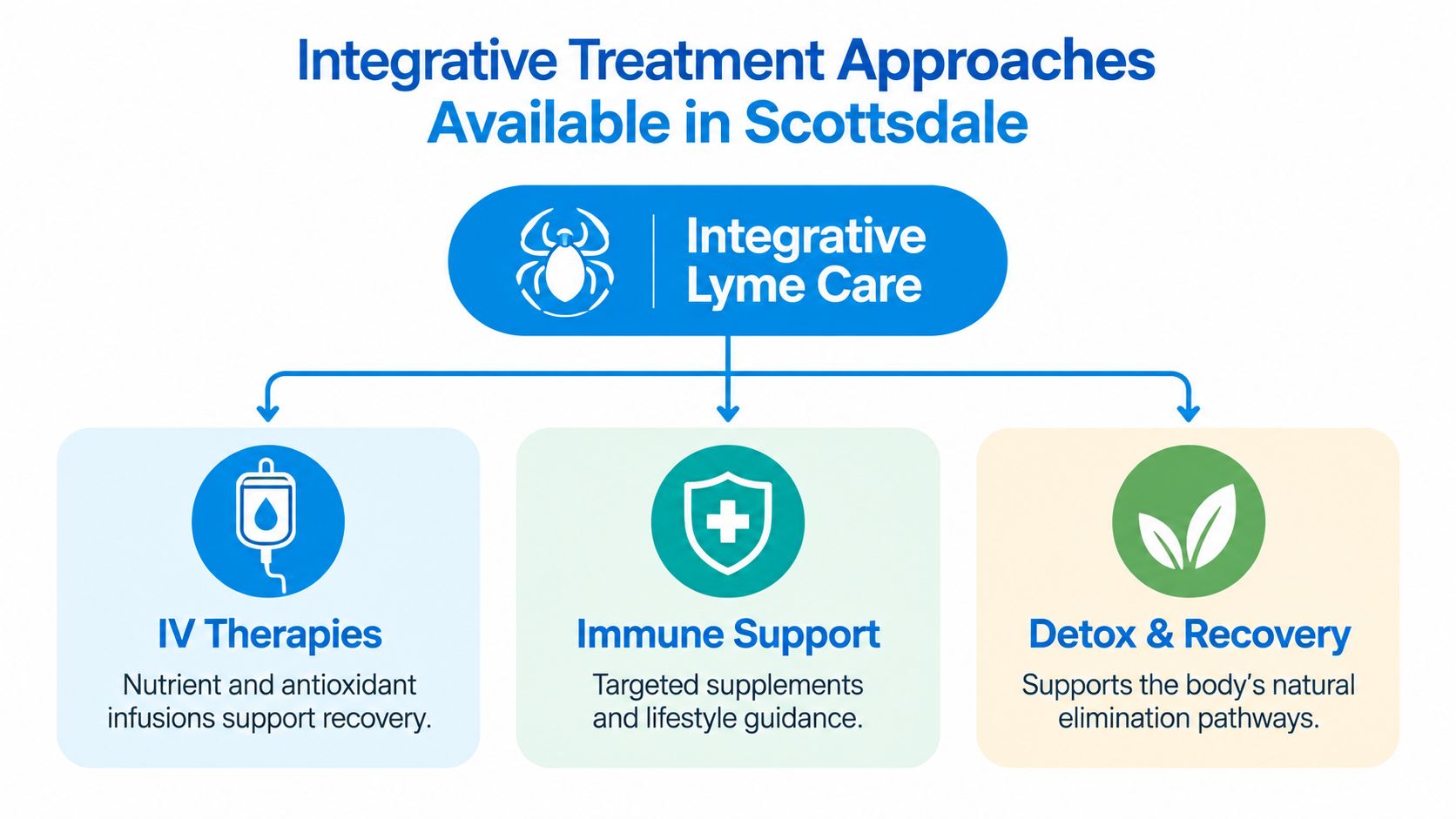
Integrative care works best when each therapy has a defined purpose. An infusion may address a nutritional or hydration concern. Rehabilitation may restore tolerance for activity. Sleep treatment may improve concentration and pain coping. None of these approaches should be presented as a proven way to eradicate Lyme disease after standard treatment.
Matching tools to the clinical problem
IV nutritional support and glutathione may be considered when a clinician identifies a nutritional, hydration, or recovery-related reason for infusion therapy. These treatments are supportive, not established replacements for antibiotics in acute Lyme disease, and they should be reviewed alongside medications, kidney function, allergies, and other health conditions.
Ozone therapy and other oxidative medicine approaches are offered by some integrative practices. Their proposed use involves influencing redox and inflammatory pathways, but they shouldn't be described as proven Lyme eradication treatments. A careful consultation should explain uncertainty, potential risks, and why a particular route would be considered.
Hyperthermia and red light therapy may be discussed as supportive modalities for comfort, circulation, tissue recovery, or general rehabilitation. Evidence and appropriate patient selection vary. These approaches belong within a broader plan, not as stand-alone promises.
PRP and prolozone therapy are local regenerative or injection-based approaches that may be considered for selected musculoskeletal complaints. They don't diagnose Lyme disease and don't treat systemic infection. Their relevance depends on whether a specific tendon, joint, or soft-tissue problem has been identified.
Environmental medicine and chelation require particular restraint. Heavy-metal testing should have a clinically meaningful rationale, and chelation isn't a general detox solution for unexplained fatigue. If exposure is documented, a physician can discuss whether treatment is appropriate and how to monitor safety.
Immune and lifestyle support
Immune-modulating strategies, targeted supplements, nutrition, pacing, sleep support, and carefully graded rehabilitation may help address the systems that keep symptoms active or disabling. Supplements can interact with prescriptions, affect bleeding, or stress the liver and kidneys, so “natural” doesn't mean risk-free.
A physician may also reassess whether symptoms fit an autoimmune, neurologic, endocrine, sleep-related, or pain condition. That diagnostic humility protects patients from spending time and money on increasingly complex protocols without a clear clinical target.
An integrative clinical guide to Lyme disease recovery can help patients prepare questions about goals, monitoring, expected benefits, alternatives, and stopping rules before beginning any complementary therapy.
How Sunridge Medical Approaches Complex Lyme Cases
A complex Lyme consultation should begin with the patient's complete story, not with a menu of treatments. The clinician reviews the original exposure, symptom onset, test results, antibiotic name and duration, response to treatment, new symptoms, prior diagnoses, medications, and relevant specialty opinions.
Sunridge Medical is an integrative medical clinic in Scottsdale that combines conventional medicine, traditional therapies, and alternative modalities when developing individualized plans for complex chronic conditions. Its programs include Lyme and tick-borne disease care alongside IV therapies, oxidative medicine, regenerative services, environmental medicine, and autoimmune support.

A physician-directed review
The value of an integrated model is coordination. A patient may need infectious-disease input for an acute manifestation, a neurologist for cognitive or sensory symptoms, physical therapy for deconditioning, or sleep evaluation for unrefreshing rest. Complementary therapies should fit around those decisions rather than compete with them.
A responsible plan may include:
- Diagnostic clarification: Reviewing whether the original diagnosis and current findings support Lyme disease, another infection, reinfection, or a noninfectious condition.
- Medication safety: Checking prescriptions, supplements, allergies, organ function, and possible interactions before adding an infusion or injectable treatment.
- Symptom mapping: Connecting fatigue, pain, cognition, sleep, digestion, mood, and exercise tolerance instead of treating each complaint in isolation.
- Progress monitoring: Defining functional goals and reassessment points so the plan can change when the evidence changes.
The clinic's approach is particularly relevant when symptoms involve several body systems or when prior care addressed infection but not the patient's continuing functional limitations. It doesn't mean every patient needs an extensive protocol. It means treatment intensity should follow the clinical picture.
Patients who already work with oncology, neurology, infectious-disease, or other specialty teams should bring those records to the discussion. Coordination reduces contradictory recommendations and makes it easier to identify which intervention is helping, which is neutral, and which may be causing problems.
Choosing the Right Lyme Disease Treatment Provider in Scottsdale
Start with qualifications and diagnostic discipline, not a promised cure. The provider should be able to explain the difference between an active infection, a post-treatment symptom pattern, and another condition that can look similar.
Questions worth asking
- What is the working diagnosis? Ask what findings support Lyme disease and what alternative explanations remain.
- Which tests are needed? A provider should explain why each test could change management, especially when specialized testing is proposed.
- What is the purpose of each therapy? Ask whether an intervention treats infection, supports symptoms, addresses a confirmed deficiency, or remains investigational.
- How will safety be monitored? Discuss medication interactions, laboratory monitoring, adverse effects, and when treatment will be paused.
- How will progress be measured? Functional targets such as walking tolerance, sleep quality, concentration, or ability to complete daily tasks are more useful than vague promises.
- Who coordinates conventional care? Clarify whether the provider communicates with existing physicians when treatment overlaps with specialty care.
A thoughtful initial evaluation may involve records review, a detailed timeline, physical examination, and decisions about targeted testing. Treatment planning may happen immediately for straightforward needs, while complex presentations often require time to review records and clarify priorities.
Out-of-town patients from Phoenix, Tempe, Mesa, Chandler, Gilbert, and elsewhere in Arizona should ask about scheduling, records transfer, follow-up visits, and which parts of care can be coordinated remotely. Patients traveling to Scottsdale from beyond Arizona may also need practical guidance about appointment timing and continuity after returning home.
Ask for a plan you can understand: What are we treating, why this option, how will we measure it, and what will we do if the response is limited?
Taking the Next Step in Your Lyme Disease Recovery
The right next step depends on where you are in the illness. Someone newly diagnosed may need prompt, guideline-concordant antibiotics. Someone with new neurologic or cardiac symptoms may need urgent conventional evaluation. Someone who completed treatment months ago and still feels unwell may need a structured review of persistent symptoms rather than another automatic antibiotic course.
Bring your test reports, antibiotic history, travel and exposure timeline, symptom notes, medication and supplement list, and records from infectious-disease or specialty visits. Write down the activities you can no longer do comfortably. That information helps a clinician evaluate function, not just a list of symptoms.
For patients in Scottsdale and the broader Phoenix metropolitan area, an integrative consultation can provide a setting to examine infection history, current symptoms, treatment safety, and supportive options together. It may also clarify when a conventional referral, additional evaluation, rehabilitation, sleep care, or symptom-focused treatment deserves priority.
There isn't one protocol that fits every person. The most credible approach is individualized, evidence-informed, transparent about uncertainty, and willing to change direction when new information appears.
Sunridge Medical offers physician-directed evaluation and integrative options for patients in Scottsdale who have Lyme disease, persistent post-treatment symptoms, or complex chronic health concerns. Visit Sunridge Medical to request information about a consultation, share your treatment history, and discuss whether an individualized evaluation is appropriate.