

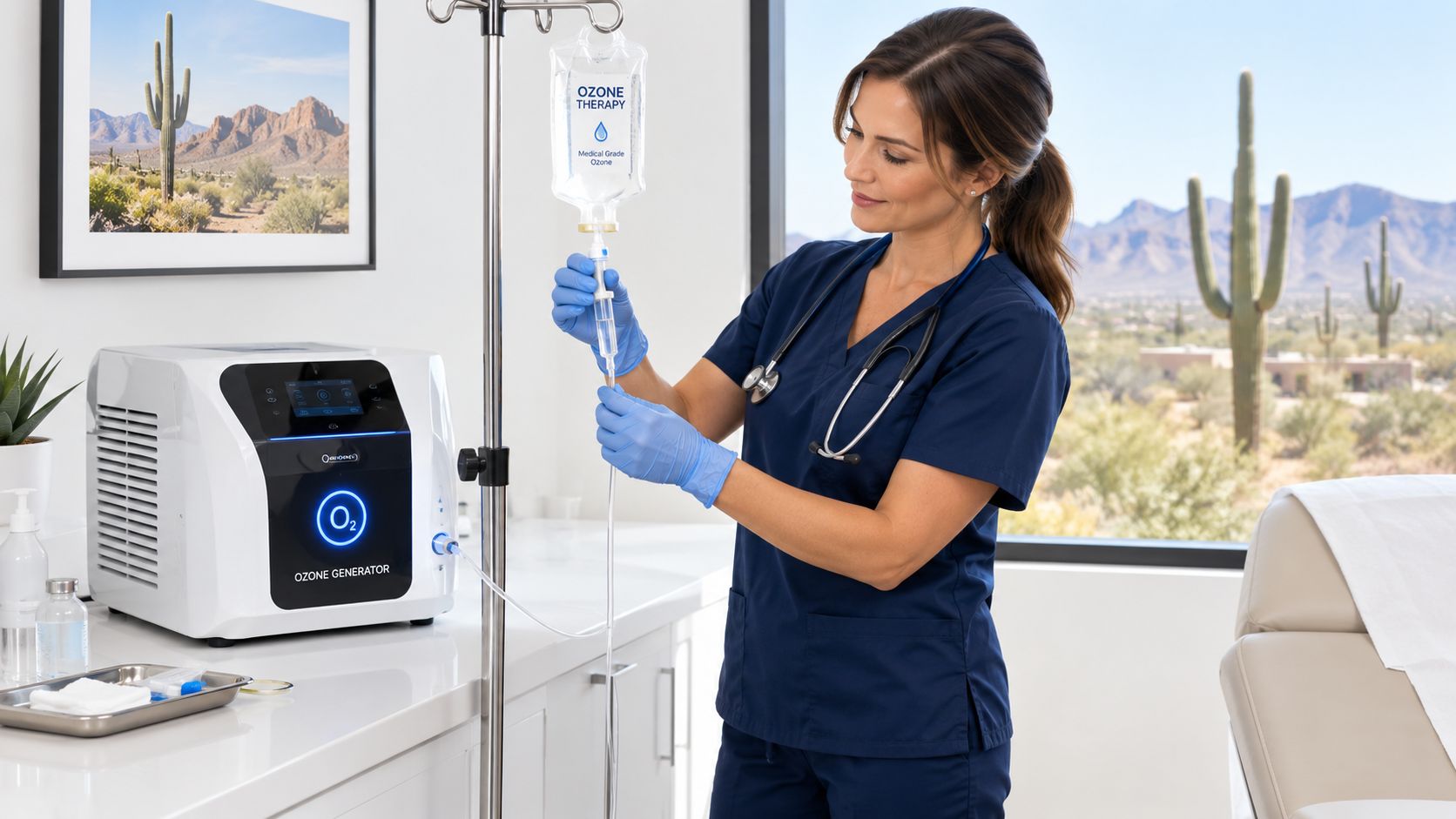
You may be in Scottsdale after months of conventional appointments, persistent symptoms, or a cancer diagnosis that has left you looking beyond standard treatment alone. Local wellness pages can make ozone therapy sound simple, broadly useful, and nearly risk-free. A responsible medical discussion is more demanding: what does ozone therapy do, where is the evidence strongest, and could it be unsafe for your health history?
For patients considering ozone therapy in Scottsdale, those questions matter more than a quick booking. Medical ozone is an investigational or adjunctive modality, not a proven cure and not a substitute for urgent evaluation, oncology care, antibiotics, surgery, or other established treatment. The appropriate decision depends on your diagnosis, medications, laboratory findings, treatment goals, and the route and dose under consideration.
Table of Contents
- Understanding Ozone Therapy in Integrative Medicine
- The Biological Mechanism of Hormetic Redox Signaling
- Evaluating the Clinical Evidence and Adjunctive Uses
- Safety Protocols, Contraindications, and Risk Management
- Treatment Modalities and Administration Routes
- The Sunridge Medical Approach and Patient Logistics
- Frequently Asked Questions About Ozone Therapy
Understanding Ozone Therapy in Integrative Medicine
A patient with chronic pain may arrive after physical therapy, medication trials, and injections have offered incomplete relief. Another may be managing cancer while seeking supportive options that can fit alongside oncology care. Someone traveling from Paradise Valley, Phoenix, Tempe, Mesa, or farther across the greater Phoenix metropolitan area may just want a careful second opinion before paying for a series of treatments.
In each situation, the first step is evaluation, not a package recommendation. Ozone therapy uses a controlled mixture of ozone and oxygen in a selected clinical route. Depending on the protocol, treatment may involve blood-based administration, localized injections, or topical or rectal applications. The purpose and risk profile change with the route.
Medical ozone has a historical arc of more than 150 years. Historical reviews describe ozone being used to disinfect drinking water before the turn of the last century, and Nikola Tesla patented the first ozone generator in the United States in 1896. A later milestone came in 2010, when the Madrid Declaration on Ozone Therapy helped unify protocols and the International Scientific Committee of Ozone Therapy, ISCO3, was founded as an independent scientific body. These historical developments show sustained interest, not proof that every modern claim is established. (Historical review of ozone therapy)
What ozone therapy can and cannot mean
In integrative medicine, ozone may be considered as one component of a broader plan for selected pain, wound, vascular, inflammatory, or recovery-related concerns. It shouldn't be presented as a general solution for “detox,” immune enhancement, cancer eradication, or every chronic symptom.
The U.S. Food and Drug Administration classifies ozone as a toxic gas and states that it has no proven medical utility for specific, adjunctive, or preventive therapy. The FDA hasn't approved ozone therapy for any medical or therapeutic indication. (FDA warning letter and ozone classification)
Practical rule: A clinic should be able to explain the intended indication, the route, the alternatives, the risks, and the way progress will be assessed before treatment begins.
That standard is especially important for complex chronic disease and integrative oncology. Ozone may be discussed as an adjunct in carefully selected circumstances, but the plan must remain coordinated with conventional clinicians and grounded in realistic goals.
The Biological Mechanism of Hormetic Redox Signaling
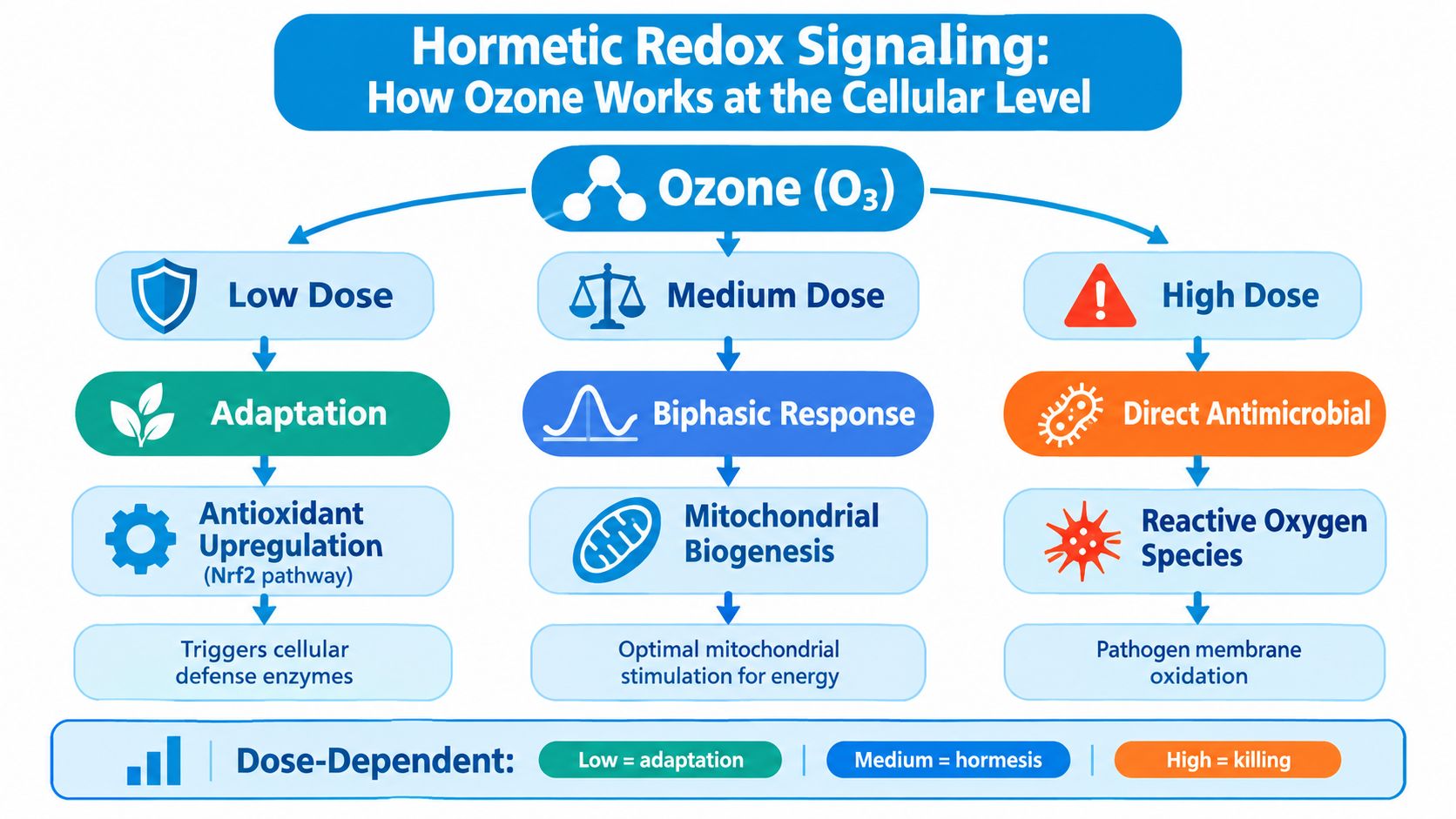
Ozone therapy doesn't “add oxygen to the blood.” Medical ozone is a reactive oxidant, and its proposed biological effect depends on a controlled, dose-dependent redox signal. In a carefully selected protocol, ozone reacts with blood components and produces reactive oxygen species and lipid ozonation products that can influence antioxidant defenses, inflammatory signaling, and cellular metabolism.
The concept resembles exercise. A suitable training stimulus challenges the body and can promote adaptation. Excessive stress, however, can cause injury. Ozone follows a similar principle, which clinicians often describe as hormesis. Low, controlled exposure may activate Nrf2-linked defenses, including glutathione peroxidase, heme-oxygenase-1, and superoxide dismutase. The desired effect is a regulated cellular response, not unrestricted oxidative damage.
Why protocol precision matters
The same chemistry that may trigger adaptive signaling can injure tissue when concentration, exposure, equipment, or route is poorly controlled. More ozone isn't better. Clinical effect depends on concentration, timing, administration route, patient physiology, and the quality of the generator and materials.
A responsible protocol therefore considers:
- Dose and concentration: The clinician must select exposure appropriate to the intended route and the patient's condition.
- Administration pathway: A localized injection, topical application, rectal insufflation, and blood-based procedure don't create the same clinical or safety considerations.
- Equipment quality: Certified ozone generators and ozone-resistant materials reduce the risk of contamination, degradation, and uncontrolled exposure.
- Patient response: Symptoms, vital signs, laboratory findings, and treatment tolerance should guide whether a protocol continues, changes, or stops.
The biological rationale remains more developed than the clinical proof for many uses. A mechanistic explanation can show how a therapy might act, but it can't establish that the therapy improves outcomes for every diagnosis. For a more detailed clinical discussion, review Sunridge Medical's oxidative therapy clinical guide for chronic disease.
Evaluating the Clinical Evidence and Adjunctive Uses
The evidence for ozone therapy isn't uniform. The most defensible clinical position is indication-specific: some musculoskeletal applications have a stronger signal, while many broad wellness and complex-disease claims remain uncertain.
A 2022 pain-medicine review reported that six systematic reviews and meta-analyses published from 2018 to 2020 supported ozone for knee osteoarthritis at a high evidence level. An updated review also described the strongest evidence as involving knee osteoarthritis and lumbar disc herniation, with a recommendation level B under SIGN/GRADE criteria. The same review said evidence for most other indications is low and suggested ozone only after conventional treatments have failed or in compassionate settings. (Updated review of ozone therapy evidence)
Where adjunctive use may be considered
Recent reviews have reported statistically significant but generally modest benefits for chronic radicular low back pain caused by disc herniation, chronic wounds including diabetic foot ulcers, and peripheral arterial disease. Those findings commonly carry low-to-moderate certainty, with small or methodologically limited primary studies. This means a positive signal deserves further study, not a promise of recovery.
| Clinical context | Reasonable interpretation |
|---|---|
| Knee osteoarthritis | One of the better-supported areas, but treatment still requires individualized assessment and comparison with established options. |
| Lumbar disc herniation | Evidence is more developed than for many other indications, yet outcomes and patient selection remain important. |
| Chronic wounds and vascular disease | Some reviews report modest benefits, but certainty and study quality vary. |
| Cancer and complex chronic disease | Ozone should be considered investigational or supportive, never a replacement for disease-directed care. |
For patients researching ozone in integrative oncology, the central question isn't whether ozone “treats cancer” in the abstract. It's whether a carefully defined adjunct could fit safely within the person's oncology plan, current medications, nutritional status, organ function, and treatment goals. Sunridge Medical addresses that distinction in its information on cancer and ozone therapy.
A 2026 umbrella review concluded that randomized-trial evidence is inconsistent, methodologically fragile, and largely low or very low certainty. It stated that routine clinical use isn't justified until better trials are completed. Patients should therefore be cautious about claims involving cancer, autoimmune disease, chronic infection, or sweeping “immune reset” promises. (2026 umbrella review of ozone therapy)
Safety Protocols, Contraindications, and Risk Management
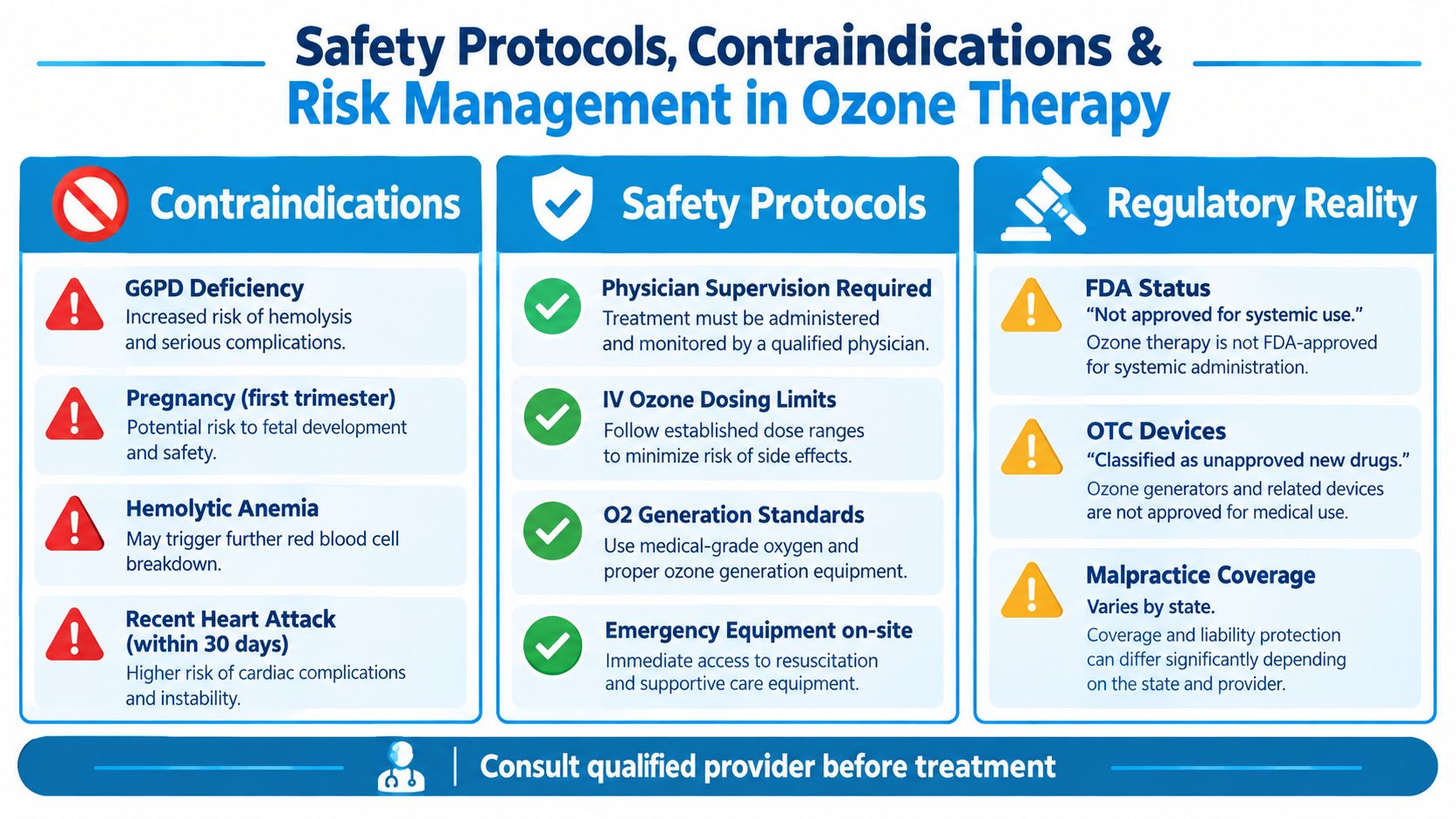
A Scottsdale clinic should begin with medical screening, not a wellness promise. Ozone exposure can be inappropriate for patients with red-cell vulnerability, thyroid disease, pregnancy, bleeding risk, cardiovascular instability, or other conditions that change the risk calculation. Because ozone is not an FDA-approved treatment, informed consent should identify its investigational status before a first session, explain route-specific risks, and distinguish complementary care from established treatment.
Screening before treatment
The proposed route and the patient's diagnosis determine the appropriate workup. Published safety discussions commonly identify these concerns:
- Severe G6PD deficiency: Oxidative exposure may contribute to red-cell injury.
- Pregnancy: The first trimester is listed as a contraindication in published clinical discussions, and pregnancy requires individualized medical review.
- Hyperthyroidism: Uncontrolled disease is a relative contraindication.
- Severe anemia or hemolytic risk: Reduced red-cell reserve changes the safety calculation.
- Bleeding and platelet disorders: Active bleeding, thrombocytopenia, and selected clotting problems may make treatment unsuitable.
- Cardiovascular instability and seizure states: These conditions require physician assessment before a systemic protocol.
A clinician should review medical history, medications, previous reactions, laboratory results, oxygenation concerns, thyroid status, and glucose or metabolic findings when relevant. Screening must also identify symptoms that need conventional or emergency care instead of ozone treatment. A patient should know who will respond to a complication, what monitoring will occur, and when treatment will be stopped.
Understanding the risk range
Even controlled administration may cause temporary pain flare, abdominal distension, sensory symptoms, fatigue, lightheadedness, or IV-site discomfort. Patients should report concerning symptoms rather than being told to continue through them. More serious harms have been associated with systemic misuse and unsafe blood-based techniques, including hemolysis, thrombosis, stroke, myocardial infarction, and fatal gas embolism.
A 2026 umbrella review found that systematic safety monitoring is largely absent and long-term safety data remain limited. (Umbrella review of safety and evidence quality) That evidence gap matters when local marketing presents ozone as broadly restorative or consistently safe.
Clinics need physician supervision, sterile technique, validated oxygen generation, appropriate emergency equipment, and documented escalation procedures. Providers can consult practical safety advice for clinics, while recognizing that operational guidance does not replace medical judgment or applicable regulations. Patients may also review ozone therapy side effects before consultation and ask which risks apply to the proposed route.
Treatment Modalities and Administration Routes
The physical procedure matters as much as the label “ozone therapy.” Different routes expose different tissues and require different equipment, training, and risk controls.
Major autohemotherapy
In major autohemotherapy, a clinician draws blood into a sterile system, exposes it outside the body to a measured ozone-oxygen mixture, and reinfuses the treated blood through an IV. The goal isn't to inject a pocket of ozone gas directly into the bloodstream. The intended interaction occurs in the blood outside the body before reinfusion.
The process generally requires:
- Venous access and collection: Blood is collected into a sterile, compatible container.
- Controlled ozone generation: Ozone is produced from medical oxygen by a certified generator.
- External exposure: The clinician mixes the blood with a precisely selected concentration under controlled conditions.
- Reinfusion: The treated blood returns through the IV while the patient is monitored.
Ozone-resistant materials matter because ordinary equipment may degrade or interact unpredictably with ozone. Sterility, bag compatibility, gas handling, dosing records, and staff training aren't optional technical details.
Localized approaches
Prolozone therapy involves injecting an ozone-containing solution and other substances into a selected joint or painful region. It may be considered for musculoskeletal complaints, but the clinician must confirm the diagnosis and distinguish a localized procedure from systemic treatment.
Topical ozone applications may be discussed for selected dermatological concerns. Rectal insufflation is another route used in some integrative settings for gastrointestinal or systemic protocols. Each route has a different evidence base, contraindication profile, and practical risk. A patient shouldn't assume that evidence for knee osteoarthritis automatically transfers to cancer, autoimmune disease, fatigue, or gastrointestinal symptoms.
The right route is determined by the clinical question, not by the availability of a device or a preselected treatment package.
The Sunridge Medical Approach and Patient Logistics
A thoughtful ozone consultation begins with the patient's full medical picture. That may include pathology, imaging, prior treatments, medications, cancer history, laboratory data, nutritional status, and the specific outcome the patient hopes to influence. Ozone shouldn't be selected just because symptoms have persisted.

Building a coordinated plan
For a patient with cancer, an integrative evaluation may consider how supportive therapies fit alongside oncology treatment rather than asking the patient to choose between them. Depending on the case, the broader discussion may include IV therapies, hyperthermia, red light therapy, or insulin potentiation therapy. These options require their own indications, risks, and coordination.
For chronic disease, the clinician may first clarify whether fatigue, pain, neuropathy, inflammation, or poor recovery reflects an untreated diagnosis, medication effect, anemia, endocrine issue, sleep disorder, infection, or another contributor. Only after that review can ozone become a rational option to consider.
Patients traveling from Phoenix, Paradise Valley, Tempe, Mesa, Chandler, Gilbert, or outside Arizona should ask about records, laboratory timing, transportation, follow-up, and what happens if treatment isn't appropriate after evaluation. A clinic's care team can help organize appointments, but patients shouldn't book travel around an assumed series before medical candidacy is established.
This clinical guide to a first IV therapy session can help prospective patients understand why intake, medication review, hydration planning, and observation are part of a medically supervised visit.
A short educational video may also help you understand how an integrative consultation fits into broader care planning.
Sunridge Medical is one Scottsdale option for patients seeking an individualized integrative evaluation involving oxidative therapies, conventional coordination, and complex chronic or cancer care. The appropriate plan may be no ozone treatment at all, or a carefully limited adjunct after screening.
Frequently Asked Questions About Ozone Therapy
How many ozone therapy sessions will I need?
There isn't a medically reliable universal session count. The answer depends on the indication, route, baseline health, response, adverse effects, and whether the treatment has a measurable objective. A clinician may recommend a limited trial with defined reassessment points rather than an open-ended package.
For pain, assessment might focus on function, mobility, and symptom change. For complex disease, the plan may require laboratory or clinical markers chosen for the individual case. No response, worsening symptoms, or a new safety concern should prompt reassessment rather than automatic continuation.
Can ozone be combined with chemotherapy or targeted therapy?
Possibly, but only after review by clinicians who understand the patient's oncology regimen. Drug interactions, treatment timing, blood counts, organ function, infection risk, clotting risk, and the reason for considering ozone all matter. Ozone shouldn't delay chemotherapy, radiation, surgery, targeted therapy, immunotherapy, or urgent evaluation.
Patients should bring the names and schedules of all cancer treatments, prescriptions, supplements, and recent test results to the consultation. A clinic can't responsibly approve combination treatment from a diagnosis label alone.
What testing may be needed before treatment?
Testing depends on the route and medical history. A clinician may consider a complete blood count, assessment for anemia, G6PD testing when indicated, thyroid evaluation, kidney and liver function, glucose or metabolic markers, and review of coagulation or platelet concerns. These aren't automatic requirements for every patient, and normal results don't eliminate all risk.
The key question is whether the planned treatment is appropriate for your physiology and diagnosis. Screening should be individualized, documented, and repeated when your health status or medications change.
Is ozone therapy proven to treat cancer or autoimmune disease?
No. Current evidence doesn't justify presenting ozone as a proven cure for cancer, autoimmune disease, chronic infection, or other complex conditions. It may be discussed as an investigational adjunct in selected situations, but realistic care requires disease-directed treatment, informed consent, monitoring, and coordination with qualified physicians.
When seeking ozone therapy in Scottsdale, contact Sunridge Medical for an individualized review of your diagnosis, medications, laboratory needs, and treatment goals. The Scottsdale team can help determine whether an integrative consultation is appropriate and whether ozone belongs in your plan at all, using the Sunridge Medical website to begin the conversation.