
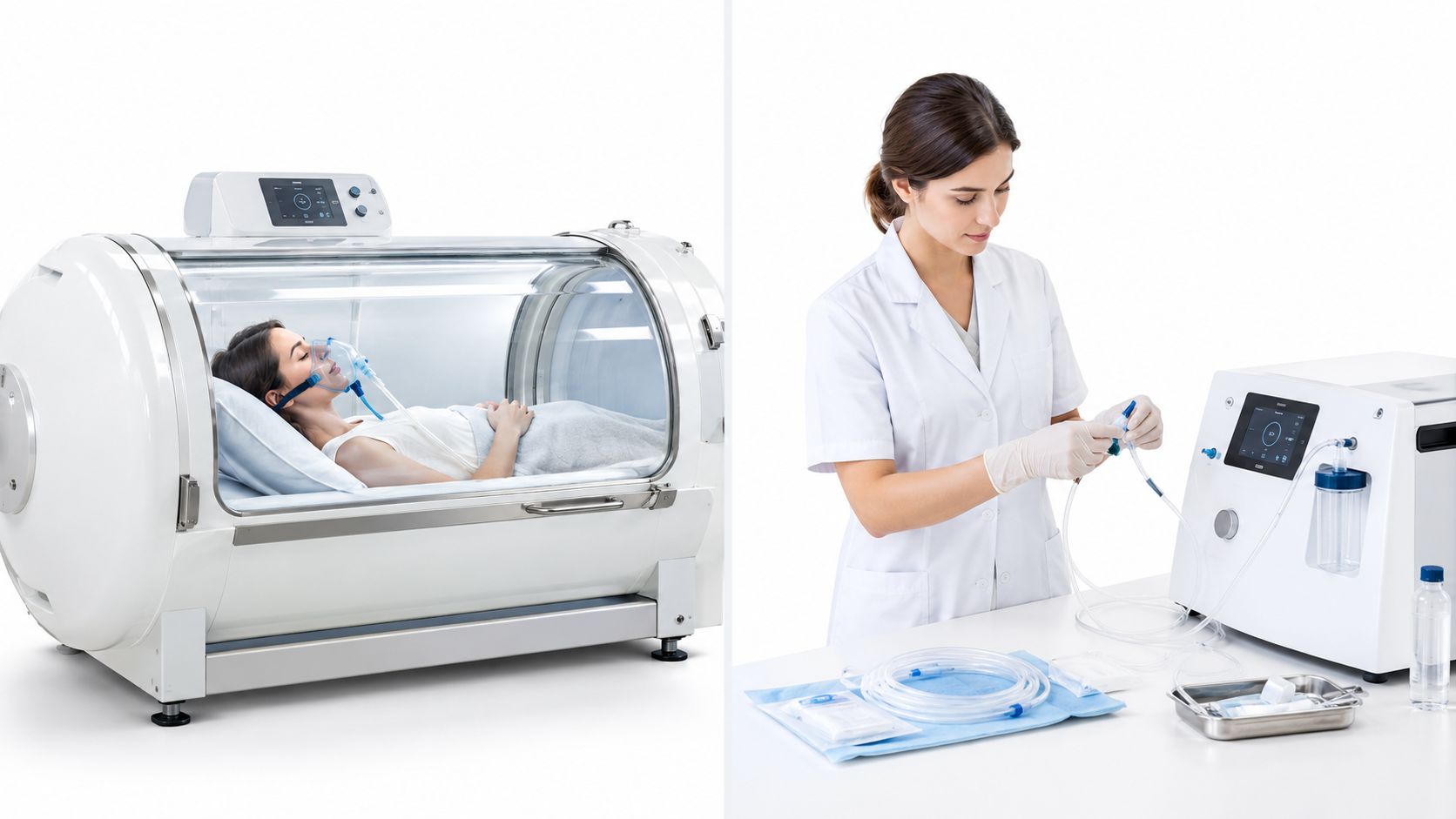
You may be comparing ozone therapy with hyperbaric oxygen therapy after conventional treatment hasn't addressed the problem as fully as you hoped. Both are often described using the language of oxygen, healing, or cellular support, but that shared vocabulary can make two very different medical interventions sound interchangeable. The right question isn't which therapy sounds more powerful. It's which treatment, if either, matches your diagnosis, goals, risks, and existing medical care.
For patients in Scottsdale, Phoenix, and the surrounding communities, understanding the distinction can make an integrative consultation more productive. Ozone therapy changes how tissues are exposed to a reactive oxygen mixture, while HBOT changes pressure and oxygen availability in a controlled chamber. Their mechanisms, protocols, evidence, and safety considerations are different.
Table of Contents
- Understanding Ozone Therapy and Hyperbaric Oxygen
- Mechanism Differences Between Ozone and Hyperbaric Oxygen
- Evidence Base and Clinical Recognition
- Safety Profiles and Contraindications
- Clinical Indications and Appropriate Use Cases
- Patient Selection and Decision Framework
- Consultation and Next Steps at Sunridge Medical
Understanding Ozone Therapy and Hyperbaric Oxygen
A patient recovering from radiation treatment might search for ways to support damaged tissue. Another person with a problem wound may be looking for a treatment that improves oxygen delivery. A third may have encountered ozone therapy through an integrative clinic and hyperbaric oxygen through a wound-care program. All three may arrive at the same question: are these just two versions of oxygen treatment?
They aren't. Ozone therapy and hyperbaric oxygen therapy are very different interventions, and their evidence bases are not interchangeable. Ozone therapy exposes blood, tissues, or wounds to ozone-oxygen mixtures through route-specific protocols. Hyperbaric oxygen therapy, commonly called HBOT, places a patient in a pressurized chamber to breathe high-concentration oxygen. This distinction is described in the evidence-and-gap map of ozone treatment.

The same word does not mean the same treatment
Ozone is a reactive gas. Depending on the protocol, clinicians may apply it to a wound, use it in a route-specific procedure, or expose blood to an oxygen-ozone mixture outside the body before returning it through a closed system. The clinical effect depends on factors such as concentration, exposure time, route, equipment, and patient selection.
HBOT is a pressure-based intervention. The patient breathes oxygen inside a chamber while ambient pressure rises above normal atmospheric pressure. The treatment can therefore be described through engineering and treatment parameters, including chamber pressure, oxygen concentration, time at pressure, number of sessions, and the indication being treated.
| Feature | Ozone therapy | Hyperbaric oxygen |
|---|---|---|
| Primary exposure | Oxygen-ozone gas mixture | High-concentration oxygen under increased pressure |
| Delivery | Route-specific, including topical, injection-based, or extracorporeal approaches | Pressurized chamber |
| Main biological focus | Oxidative products and signaling responses | Increased dissolved oxygen and tissue diffusion |
| Protocol variability | Concentration, route, schedule, and device can vary | Pressure, oxygen fraction, duration, and session schedule can be recorded |
| Evidence interpretation | Indication-specific and often uncertain | More established for recognized indications, but not a universal treatment |
Patients who want an overview of possible ozone treatment options may find it helpful to compare the specific route and intended goal rather than treating all ozone procedures as identical. A clinical evaluation should also distinguish supportive care from treatment intended to control a disease.
For Scottsdale patients considering an integrative consultation, ozone therapy in Scottsdale should be discussed alongside the diagnosis, current medications, oncology plan when relevant, and the quality of evidence for the proposed use.
Mechanism Differences Between Ozone and Hyperbaric Oxygen
The central difference in ozone therapy vs hyperbaric oxygen is what creates the biological stimulus. HBOT uses pressure to increase oxygen availability. Ozone therapy uses a reactive oxygen-ozone mixture, with proposed effects mediated by short-lived oxidation products and signaling responses rather than chamber pressure.
HBOT commonly uses treatment pressures of 2.0 to 2.5 atmospheres absolute, or ATA, according to the technical review of HBOT delivery and mechanisms. The patient breathes oxygen in a pressurized chamber, which increases dissolved oxygen in plasma and supports diffusion into oxygen-deprived tissue. In specific emergencies, pressure can also reduce gas-bubble volume, promote inert-gas diffusion out of bubbles, improve ischemic-tissue oxygenation, and reduce central nervous system edema, as described by the Undersea and Hyperbaric Medical Society.
Ozone follows a different pathway. The gas reacts rapidly with biological materials, producing short-lived oxidation products that may influence signaling and redox responses. That doesn't mean ozone “adds oxygen” to the body in the same manner as HBOT. It means the proposed therapeutic effect depends on the chemical interaction and the protocol used.

Mechanism comparison
| Feature | Ozone therapy | Hyperbaric oxygen |
|---|---|---|
| What the patient receives | An oxygen-ozone mixture applied through a specific route | High-concentration oxygen inside a pressurized chamber |
| Main physical variable | Ozone concentration, exposure time, route, and device control | Chamber pressure, oxygen fraction, time at pressure, and session schedule |
| Proposed biological action | Short-lived oxidation products and signaling responses | Increased dissolved plasma oxygen and diffusion into oxygen-deprived tissue |
| Reproducibility challenge | Protocols vary across routes and indications | Chamber parameters provide a clearer technical record |
| Clinical interpretation | Requires indication-specific evidence and careful safety review | Must be matched to an established indication and appropriate pressure protocol |
The distinction matters for patients exploring cancer oxygen therapy. Neither therapy should be described as a replacement for surgery, chemotherapy, radiation, immunotherapy, or other indicated oncology care. The mechanism may support a research question or a supportive-care discussion, but it doesn't establish anticancer effectiveness.
A low-pressure wellness chamber also shouldn't automatically be treated as equivalent to medical HBOT. The Undersea and Hyperbaric Medical Society distinguishes medical hyperbaric treatment from lower-pressure exposures because pressure influences the oxygen gradient and downstream effects. Patients should ask exactly what pressure, oxygen concentration, session duration, and clinical indication a program uses.
Evidence Base and Clinical Recognition
Evidence quality is where the difference between these treatments becomes especially important. A therapy may have plausible biological mechanisms and still lack reliable evidence for a particular diagnosis. Conversely, a recognized treatment may be appropriate only for defined indications, not for every condition associated with inflammation, fatigue, cancer, or chronic illness.
A 2023 evidence-and-gap map identified 26 systematic reviews of ozone treatment. Using the AMSTAR assessment framework, 9 were rated high quality, 3 moderate, 11 low, and 3 critically low in methodological reliability, as reported in the review of ozone evidence. The distribution shows substantial variation. It doesn't support treating all ozone research as equally dependable.
An umbrella review also found low or very low certainty for all evaluated outcomes, inconsistent adverse-event reporting, and no reliable basis for routine clinical use across the conditions assessed. For diabetic foot ulcers, the pooled estimate did not establish superiority for ulcer healing, with a risk ratio of 1.69 and a 95% confidence interval of 0.90 to 3.17 in the cited review. A statistical signal in one endpoint therefore shouldn't be presented as proof of dependable clinical healing.
How HBOT differs
HBOT has a more established clinical and regulatory framework for specific conditions. The Undersea and Hyperbaric Medical Society recognizes 14 indications, including decompression sickness, arterial gas embolism, carbon-monoxide poisoning, selected diabetic or problem wounds, radiation tissue injury, refractory osteomyelitis, necrotizing soft-tissue infection, compromised grafts and flaps, severe anemia when transfusion cannot be used, intracranial abscess, acute traumatic ischemia, and certain burns. The UHMS indication materials provide the relevant framework.
That recognition doesn't turn HBOT into a general treatment for cancer, fatigue, or wellness. A 2025 U.S. military medical review states that HBOT is first-line for only decompression sickness and arterial gas embolism, while it serves as an adjunct to standard care for the remaining listed indications. The same review notes that the FDA hasn't cleared HBOT for traumatic brain injury, as explained in the 2025 hyperbaric oxygen and TBI review.
For patients exploring cancer and ozone therapy, the practical conclusion is cautious. Ozone may be discussed as complementary or investigational when appropriate, but neither ozone nor HBOT should replace evidence-based cancer treatment.
Safety Profiles and Contraindications
Safety comparisons require more than asking which treatment is “gentler.” HBOT has known pressure and oxygen-related risks that clinicians can screen for and monitor. Ozone has less consistent safety reporting across protocols, which makes route, concentration, equipment, training, and informed consent especially important.
HBOT commonly causes ear discomfort or middle-ear barotrauma because pressure changes affect the ears and sinuses. Pooled evidence identifies greater risk at pressures above 2.0 ATA and in treatment courses longer than 10 sessions, according to the reviewed safety literature. A separate review reported otologic adverse events in 15% of 18,284 treated patients, with older age, head-and-neck disease, neurological conditions, and difficulty equalizing ear pressure identified as relevant risk factors. These findings are detailed in the review of HBOT adverse events.
What screening should address
Before HBOT, a clinician should review the patient's ability to equalize ear pressure, pulmonary history, seizure risk, anemia, implanted devices, pregnancy status, medications, and any condition that could make pressure exposure unsafe. Serious but uncommon complications include oxygen-toxicity seizures, pneumothorax, and pressure-related trauma.
Ozone shouldn't automatically be assumed safer because it may be delivered without a chamber. Evidence reports rare serious events including stroke, myocardial infarction, thrombosis, and hemolysis, while long-term safety remains inadequately characterized. Improperly administered ozone gas can also create serious risk, and ozone must not be inhaled.
Practical rule: Ask for the exact route, concentration, exposure time, equipment controls, contraindication screening, and emergency procedures before agreeing to an ozone protocol.
The ozone therapy side-effects information can help patients prepare questions, but online education can't replace a medical review of individual risk. A responsible clinician should document adverse events, explain uncertain benefits, and make clear which aspects of a proposed treatment are established, complementary, or investigational.
Clinical Indications and Appropriate Use Cases
Treatment selection should begin with the diagnosis, not with the word “oxygen.” HBOT has recognized uses for defined medical problems, while ozone research spans wounds, dentistry, musculoskeletal disorders, infections, and other conditions with uneven evidence.
HBOT may be considered within established clinical pathways for conditions such as:
- Decompression sickness and arterial gas embolism: These are the two indications identified as first-line in the 2025 U.S. military review.
- Carbon-monoxide poisoning: HBOT may be used in appropriate emergency settings.
- Radiation tissue injury: Treatment can be considered for selected radiation-related tissue damage.
- Selected wounds and infections: Recognized indications include certain diabetic or problem wounds, refractory osteomyelitis, necrotizing soft-tissue infection, compromised grafts and flaps, and certain burns.
- Other defined conditions: The UHMS list includes intracranial abscess, acute traumatic ischemia, and severe anemia when transfusion cannot be used.
These indications don't justify using HBOT for every chronic symptom or as a routine cancer treatment. Coverage and authorization may also depend on the diagnosis, documentation, facility, and payer policy. Patients should ask which recognized indication applies and what outcome the clinician is measuring.
Where ozone may fit
Ozone therapy has been studied through different routes and for different conditions, but the evidence isn't consistent enough to treat it as a universal therapy. A wound-area improvement in one study or a change in a laboratory measure doesn't necessarily demonstrate complete healing, improved survival, or better quality of life.
Cancer patients should view either modality as a possible supportive discussion, not as an anticancer substitute. A consultation may address symptom support, treatment tolerance, wound or radiation injury, and coordination with oncology, while preserving the role of proven cancer therapy.
Patients researching regenerative or complementary options may also encounter discussions such as Dream Body Clinic on MSC therapy. That material represents a different treatment category and shouldn't be used to infer that ozone or HBOT has the same mechanism, evidence, or regulatory status.
Patient Selection and Decision Framework
The best choice between ozone therapy and HBOT depends on four questions: What is the diagnosis? What is the treatment goal? What risks apply? How will the therapy coordinate with conventional care? A patient seeking support for radiation tissue injury may need a different discussion from someone considering ozone for a complex chronic condition with no established indication.
HBOT is easier to describe technically because pressure and oxygen exposure can be recorded. Ozone requires closer review of route, concentration, exposure time, device control, schedule, and monitoring. The technical comparison is therefore not a simple head-to-head contest. It is a comparison between a relatively parameterized oxygen-delivery platform and a more heterogeneous oxidative intervention, as outlined in the technical review of ozone and hyperbaric treatment.
Questions for an HBOT consultation
Ask the clinician:
- Indication: Which diagnosis or treatment complication supports HBOT?
- Pressure: What ATA level will be used?
- Oxygen exposure: What oxygen concentration and time at pressure are planned?
- Monitoring: How will ear, lung, neurological, and oxygen-toxicity risks be assessed?
- Outcome: What functional or patient-centered endpoint will determine whether treatment is helping?
Questions for an ozone consultation
Ask different questions:
- Route: Is ozone being applied topically, injected, or used in an extracorporeal blood procedure?
- Dose control: What concentration, exposure time, and device specifications define the protocol?
- Evidence: What randomized or indication-specific evidence supports this use?
- Safety: How are anemia, seizure risk, pregnancy, medications, and other contraindications reviewed?
- Consent: Which benefits are established, uncertain, complementary, or investigational?
A credible plan should explain what the treatment is expected to do, what it cannot do, and how the team will respond if the patient doesn't improve.
For cancer and complex chronic illness, the decision should also account for current chemotherapy, radiation, surgery, immunotherapy, antibiotics, anticoagulants, and other therapies. A treatment should add clarity to the care plan, not create conflicting instructions or delay necessary treatment.
Consultation and Next Steps at Sunridge Medical
A thoughtful consultation starts with records, not a device. Patients in Scottsdale, Phoenix, Paradise Valley, Tempe, Mesa, Chandler, Gilbert, and the greater Phoenix metropolitan area may bring imaging, pathology, laboratory results, medication lists, oncology notes, prior treatment summaries, and a clear description of their goals.
The clinical review should establish:
- The primary diagnosis and treatment objective. Is the goal wound support, recovery from radiation injury, symptom management, treatment tolerance, or evaluation of an investigational option?
- The current standard of care. Which treatments are underway, planned, or recommended, and could the proposed therapy interfere with them?
- Risk and eligibility. Does the patient have pressure-related risks, pulmonary or ear concerns, bleeding risks, anemia, seizure risk, pregnancy, medication interactions, or other contraindications?
- A measurable follow-up plan. Which symptoms, functional measures, examination findings, or disease-specific outcomes will be monitored?
- Clear communication with other clinicians. Integrative care works more safely when the primary physician, oncologist, surgeon, or specialist understands the proposed plan.
Sunridge Medical is an integrative medical clinic in Scottsdale that evaluates conventional, traditional, and alternative approaches for cancer and complex chronic conditions. Its care discussions may include ozone therapy, hyperbaric-oriented approaches, intravenous therapies, oxidative medicine, and other supportive options, but treatment selection should remain individualized and evidence-informed.
Out-of-town patients from Phoenix and other Arizona communities may benefit from organizing records before travel and clarifying how many visits, monitoring steps, and follow-up contacts a proposed plan may require. Patients should also ask whether a service is intended as established treatment, adjunctive support, off-label care, or investigation.
For cancer, the boundary is especially important. Neither ozone therapy nor HBOT should be presented as a substitute for proven oncology treatment. A responsible integrative plan keeps conventional cancer care central when indicated, evaluates supportive options according to the patient's diagnosis and risks, and avoids promises of cure.
If you're unsure whether either therapy is appropriate, a consultation can help separate a plausible treatment question from a marketing claim. The most useful appointment leaves you with a defined diagnosis, a specific goal, documented risks, an evidence discussion, and a plan for communicating with the rest of your medical team.
Sunridge Medical offers individualized integrative evaluations in Scottsdale for patients considering ozone therapy, hyperbaric-oriented care, and other supportive options alongside conventional treatment. Visit Sunridge Medical to request a consultation and discuss whether an evidence-informed evaluation fits your diagnosis, goals, and current care plan.