
What if the most effective way to address a complex diagnosis isn’t choosing between conventional and alternative medicine, but rather architecting a bridge that utilizes the precision of targeted biological science? For many, the standard healthcare experience feels impersonal and rigid, leaving patients to navigate debilitating side effects without a clear sense of direction. You deserve more than a one-size-fits-all approach that treats you like just another number in a crowded waiting room. When you begin building an integrative cancer treatment plan, you’re reclaiming your agency by prioritizing a strategy that is as unique as your own genetic and cellular profile.
It’s understandable to feel overwhelmed by the lack of clear guidance regarding which therapies actually offer clinical value. This article provides a sophisticated clinical framework for 2026, moving beyond basic lifestyle changes into targeted, research-based protocols. We’ll show you how to construct a roadmap that incorporates advanced IV therapies and individualized physician evaluations designed to improve your quality of life. By the end of this guide, you’ll understand how to access advanced biological protocols that offer a level of precision and care often unavailable in standard hospital settings.
Key Takeaways
- Understand the evolution from basic supportive care to active clinical management using sophisticated biological protocols.
- Learn the foundational steps for building an integrative cancer treatment plan, starting with comprehensive physician evaluations and metabolic testing.
- Discover the clinical rationale for using customized intravenous (IV) therapies and therapeutic injections to target specific biological pathways.
- Identify how addressing modifiable factors like hormone optimization and environmental stressors creates a more resilient foundation for healing.
- Gain a clear roadmap for implementing professional oversight when combining advanced alternative protocols with your existing care team.
What is an Integrative Cancer Treatment Plan?
An integrative cancer treatment plan is far more than a collection of wellness habits used alongside chemotherapy. It represents a sophisticated medical strategy that bridges the gap between conventional precision and advanced alternative protocols. While many institutions view “integrative” care as purely supportive, we define it as active clinical management. This approach moves beyond simply “adding on” therapies; it involves a deliberate, research-based synthesis of biological treatments designed to target the unique mechanisms of your pathology. It’s a departure from the passive role many patients feel forced into within the standard healthcare system.
Standard hospital models often rely on “one-size-fits-all” pathways. While these protocols work for some, they frequently fail patients with complex or advanced-stage cases who require a higher degree of customization. When you are building an integrative cancer treatment plan, the focus shifts from the disease’s name to the individual’s biological landscape. A dedicated medical director oversees this multi-faceted protocol, ensuring that every therapy, from intravenous infusions to metabolic support, works in synergy rather than in isolation. This high-level oversight is what transforms a list of treatments into a cohesive, goal-oriented strategy for recovery.
The Core Components of a Clinical Integrative Plan
The foundation of a professional plan is a physician-led evaluation. Unlike self-guided wellness routines found on the internet, these evaluations utilize advanced diagnostics to identify underlying metabolic imbalances and environmental triggers. We integrate advanced alternative medicine with a deep respect for research-based evidence, ensuring your care isn’t just “alternative” but a precise application of leading-edge science. This model prioritizes individualized care over the “packaged” routines common in large hospital settings, allowing for adjustments as your body responds to the protocol.
Moving Beyond Supportive Care to Active Intervention
Many patients are told that “integrative” means eating better or practicing mindfulness. While these are valuable, nutritional advice alone is insufficient for aggressive pathologies. Active intervention requires biological treatments that directly address underlying mechanisms like cellular toxicity or immune suppression. A comprehensive plan also addresses the “therapeutic burden” of standard oncology. By utilizing targeted protocols, we aim to mitigate the systemic damage caused by conventional treatments, helping you maintain the strength and resilience necessary for a sustained recovery. This proactive stance is essential for those who haven’t seen progress with standard methods alone.
The Diagnostic Foundation: How to Build Your Plan
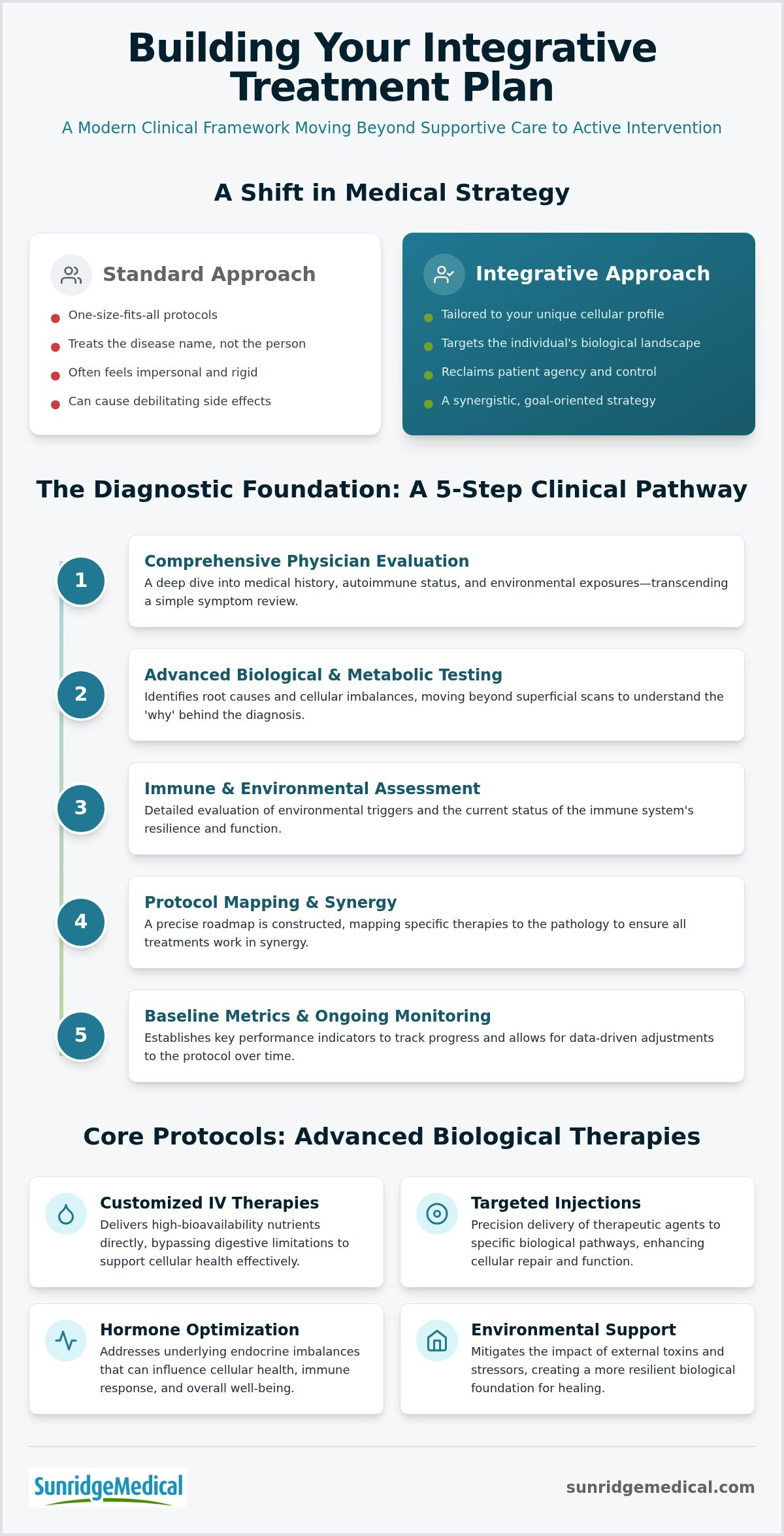
A precise medical strategy begins with data, not assumptions. When building an integrative cancer treatment plan, the diagnostic phase is the most critical period for ensuring long-term success. Standard protocols often rely on superficial scans that overlook the metabolic and environmental context of the individual. Our approach replaces this generalized model with a rigorous, five-step framework designed to uncover why the body’s internal defenses have been compromised.
The process follows a logical progression of clinical discovery:
- Step 1: A comprehensive physician evaluation that transcends a simple symptom review.
- Step 2: Advanced biological and metabolic testing to identify root causes and cellular imbalances.
- Step 3: Detailed assessment of environmental triggers and current immune system status.
- Step 4: Mapping the protocol to the specific stage and pathology of the disease.
- Step 5: Establishing baseline metrics for ongoing patient monitoring and protocol adjustment.
Comprehensive Physician Evaluations
A 15-minute consultation is fundamentally inadequate for managing complex disease. True clinical advocacy requires a deep dive into your medical history, including autoimmune status and historical environmental exposures that may have influenced your current health. This comprehensive evaluation serves as the clinical blueprint for all subsequent IV and biological therapies. By understanding the patient’s unique journey, we can move away from “packaged” care toward a specialized attention that respects the individual human experience. If you feel your history has been overlooked, speaking with a specialist can help clarify these missing pieces.
Advanced Testing and Biomarker Analysis
Standard blood panels often miss the nuances of cellular health. We look beyond basic markers to analyze metabolic and immune signatures that indicate how the body is responding to the disease. Identifying underlying environmental illnesses or chronic infections is essential, as these factors can act as roadblocks to recovery. This level of detail allows us to tailor interventions based on the specific progression of the condition. For more information on how these diagnostics vary by diagnosis, see our Integrative Cancer Treatment by Stage: A Clinical Reference Guide (2026). This precision ensures that no aspect of your biological landscape is left to chance.
Advanced IV and Biological Therapies: The Core Protocol
While lifestyle adjustments provide a necessary foundation, the active phase of building an integrative cancer treatment plan requires direct, biological intervention. This stage moves beyond passive support into a realm of clinical precision where therapies are designed to influence cellular behavior directly. The core of this protocol involves a sophisticated combination of customized intravenous (IV) infusions and targeted biological treatments. These are not generic wellness applications; they are physician-led interventions that address the specific metabolic and immune deficiencies identified during your diagnostic evaluation.
Professional monitoring is the hallmark of a high-level integrative strategy. Every infusion and injection must be administered in a clinical setting where a medical team can observe your physiological response and adjust dosages in real time. This ensures that the protocol remains both safe and effective, providing a level of care that respects the complexity of your health journey while maintaining a steady hand on the path toward restoration.
Customized Intravenous Protocols
Customized intravenous protocols represent a cornerstone of active clinical management. Unlike oral supplements, which are often limited by gastrointestinal absorption rates and digestive limitations, IV delivery ensures 100% bioavailability. This is particularly vital for individuals whose systems are already taxed by aggressive pathologies or the side effects of standard treatments. By bypassing the gut, we can deliver high-dose nutrients and oxidative therapies directly into the bloodstream to address cellular dysfunction at its source.
Oxidative therapies work within this integrative framework to manage complex chronic conditions by supporting the body’s natural oxidative-reductive balance. When you are building an integrative cancer treatment plan, these protocols are tailored to your specific lab results. We don’t use standardized “packages.” Instead, we refine the concentration and frequency of each infusion to match your body’s unique rate of recovery and tolerance, ensuring the intervention is as precise as possible.
Targeted Biological Treatments
Biological treatments go a step beyond nutritional support by utilizing specific medications to modulate the immune system. These therapies are designed to support the body’s internal defenses, helping to create a biological environment that is less hospitable to disease. There is a profound synergy between IV therapies and systemic biological support; while the IVs provide the necessary cellular building blocks, the biological treatments provide the “instructions” for immune system modulation.
This multi-faceted approach is essential for patients who feel stuck or overlooked by conventional systems. For those who are also managing underlying immune challenges, our IV Therapy for Autoimmune Disease: 2026 Guide offers further insight into how these protocols stabilize the immune landscape. By integrating these advanced biological tools, we provide a more comprehensive lens than standard practices, focusing on the possibility of real progress through scientific advocacy.
Addressing Modifiable Factors and Synergistic Support
Attacking a pathology is only one half of a successful clinical strategy. Building an integrative cancer treatment plan requires a dedicated focus on the “biological terrain,” which is the internal environment that either supports or hinders your recovery. A body burdened by hormonal imbalances or environmental toxins lacks the metabolic reserves necessary to respond effectively to advanced protocols. We treat these modifiable factors as non-negotiable pillars of long-term wellness, ensuring that your system is optimized to work in harmony with your treatment rather than against it.
This comprehensive lens allows us to address the “whole person” without sacrificing the clinical rigor required for complex disease management. By stabilizing the underlying systems that govern immune response and cellular repair, we create a more resilient foundation. This proactive stance is particularly vital for patients who feel their progress has stalled under the weight of standard, unmanaged side effects.
Hormone Optimization and Environmental Health
The link between endocrine balance and immune function is well-documented but frequently ignored in standard oncology settings. Your hormones act as chemical messengers that dictate how your immune cells behave; when these signals are crossed due to thyroid dysfunction or adrenal fatigue, your body’s natural defenses may falter. For those managing multiple health challenges, our Hormone Optimization for Autoimmune Disease: 2026 Guide provides a detailed look at how we stabilize these critical systems. This stabilization is essential for maintaining the stamina required for a multi-faceted recovery journey.
Simultaneously, we must identify environmental toxins that may be complicating your clinical picture. Heavy metals, chemical sensitivities, and chronic environmental illnesses can create a state of persistent inflammation that exhausts your immune resources. By systematically identifying and managing these environmental stressors, we remove the biological roadblocks that often lead to treatment plateaus. This level of thoroughness is what distinguishes a professional integrative plan from a generic wellness routine.
Clinical Nutrition and Immune Support
Therapeutic dietary strategies represent a significant step up from simple “healthy eating” advice. We implement precise nutritional interventions designed to support cellular health and enhance the efficacy of your biological treatments. This process involves more than just selecting better foods; it’s about using nutrition as a metabolic tool to nourish healthy tissue while addressing the metabolic needs of the body. Supporting the microbiome is a key part of this strategy, as a balanced gut environment is vital for reducing the systemic side effects of conventional therapies.
Physician-supervised supplementation is the final piece of this synergistic puzzle. Many patients inadvertently hinder their progress by taking unvetted supplements that may interact poorly with their primary care. We provide a structured, evidence-based regimen that ensures every nutrient you ingest is working toward your specific goals. If you are ready to see how a truly customized approach can change your trajectory, consult with our medical team to explore your modifiable risk factors.
Implementation and Professional Guidance
Transitioning from a diagnosis to a structured, active protocol is a defining moment in your health journey. It marks the shift from being a passive recipient of care to an active participant in your recovery. Building an integrative cancer treatment plan is not a static event; it’s a dynamic process that requires continuous monitoring and frequent protocol adjustments based on your body’s real-time response. This phase demands a level of clinical precision that cannot be achieved through self-guided research or generic wellness routines found online. Professional oversight ensures that your strategy remains agile, responding to biomarkers and metabolic shifts as they occur.
The Necessity of Professional Oversight
The risks of “DIY” alternative medicine are significant, particularly when managing complex pathologies. Without clinical guidance, patients may inadvertently choose therapies that conflict with their conventional treatments or fail to address the underlying biological mechanisms of their disease. Physician-led monitoring ensures both safety and efficacy, allowing for the precise calibration of IV dosages and biological interventions. Our integrative specialists act as dedicated advocates, collaborating with your broader medical team to ensure that every aspect of your care is synchronized and goal-oriented. This professional bridge provides the security you need to focus entirely on your healing, knowing that a steady hand is navigating the technical complexities of your protocol.
Taking the First Step Toward a Comprehensive Plan
Initiating this process starts with identifying your personal priorities. Whether your primary focus is on maintaining a high quality of life during standard treatments or pursuing aggressive biological intervention, your plan must reflect those specific goals. We believe that a supportive, optimistic medical environment is just as critical as the treatments themselves. This sanctuary of care provides the calm determination necessary to navigate complex health decisions with confidence and clarity. It is a departure from the cold, clinical atmosphere many patients have grown to expect from traditional systems.
The first step in building an integrative cancer treatment plan is a thorough assessment of your current biological landscape. This evaluation moves beyond standard hospital models to provide a more comprehensive lens on your health, uncovering the metabolic and environmental factors that standard scans might miss. If you are ready to move past the status quo and explore a more targeted, research-based approach, Contact Sunridge Medical at 1-800-923-7878 to schedule your comprehensive evaluation. Our team is prepared to act as your scientific guide, providing the specialized attention and clinical authority you deserve.
Empowering Your Path to Restoration
Reclaiming control over your health requires a departure from the standardized pathways that often leave patients feeling unheard. By building an integrative cancer treatment plan, you’re choosing a strategy rooted in over 20 years of clinical expertise and advanced alternative cancer treatment protocols. We’ve explored how a rigorous diagnostic foundation and targeted biological interventions move you beyond basic supportive care into active, individualized physician-led care. This multi-faceted approach addresses the pathology while simultaneously optimizing the hormonal and environmental factors that govern your body’s innate ability to heal.
If you’re ready to transition from a diagnosis to a structured, research-based protocol, the next step is a professional consultation. Schedule a Physician Consultation at Sunridge Medical to begin your individualized journey toward well-being. Progress is possible when you have a dedicated advocate by your side. You don’t have to navigate this complex journey alone; a steady hand is ready to guide you every step of the way.
Frequently Asked Questions
Is an integrative cancer treatment plan scientifically supported?
Evidence-based guidelines from the Society for Integrative Oncology (SIO) and the American Society of Clinical Oncology (ASCO) support this approach. These organizations have published joint clinical practice guidelines for fatigue (2024), pain management (2022), and anxiety (2023). When building an integrative cancer treatment plan, you are following a framework backed by a growing body of peer-reviewed research. This ensures your care is both innovative and clinically grounded.
Can I use alternative protocols alongside chemotherapy?
Alternative protocols are frequently used alongside chemotherapy to enhance the body’s resilience and manage systemic toxicity. Professional oversight is critical to ensure that these treatments don’t interfere with the efficacy of standard oncology drugs. By coordinating these efforts, we can address the therapeutic burden of standard care. This helps you maintain the strength necessary to complete your conventional treatment schedule without unnecessary delays.
How do I know if I need a specialized IV therapy protocol?
Specialized IV therapy is often necessary when oral supplements are insufficient due to digestive limitations or poor absorption. If you’ve reached a treatment plateau or are struggling with severe side effects, direct intravenous delivery ensures 100% bioavailability of critical nutrients. This method allows for higher therapeutic concentrations that are impossible to achieve through diet alone, providing the metabolic support your cells need during aggressive pathologies.
What is the difference between holistic and integrative cancer care?
Holistic care generally emphasizes lifestyle factors like diet and stress, while integrative care involves the active clinical management of the disease. Integrative medicine bridges the gap by combining conventional precision with advanced alternative protocols. It isn’t just about wellness; it’s a structured medical strategy that uses biological treatments to target underlying mechanisms while simultaneously supporting the individual’s overall human experience.
Does an integrative plan work for Stage 4 or advanced cancer?
An integrative strategy is particularly valuable for Stage 4 or advanced cases where standard options may be limited. These protocols focus on improving quality of life and providing advanced biological support that standard hospitals may not offer. By addressing the metabolic environment and immune status, we aim to stabilize the clinical picture even in complex scenarios where a one-size-fits-all approach has failed to produce progress.
How long does it take to see results from an integrative approach?
The timeline for visible results varies based on the specific pathology and the individual’s baseline metabolic health. Many patients report improvements in energy levels and symptom management within the first few weeks of starting a structured protocol. However, cellular and biological shifts often require a longer period of consistent intervention to achieve lasting stability. Your medical team will use baseline metrics to monitor your progress.
Will insurance cover alternative cancer treatment protocols?
Most alternative cancer treatment protocols are not covered by standard health insurance. While some hospital-based supportive services might have limited reimbursement, advanced biological treatments are typically out-of-pocket expenses. For 2026, the ACA out-of-pocket maximum is $10,600 for individuals, which highlights the importance of financial planning. We recommend reviewing your specific policy to understand what clinical evaluations or diagnostic tests might qualify for coverage.
What should I bring to my first integrative oncology consultation?
You should bring your complete medical history, including recent imaging reports, pathology results, and a detailed list of all current medications and supplements. It’s also helpful to document your environmental exposure history and any autoimmune conditions. This data allows your physician to conduct a more thorough evaluation, which serves as the essential blueprint for building an integrative cancer treatment plan tailored to your unique biological landscape.