


You've finished surgery or chemotherapy in Scottsdale, yet you still feel exhausted, mentally foggy, nauseated, or uncertain about what comes next. Perhaps you're newly diagnosed, managing recurrence, traveling from Phoenix for another opinion, or trying to rebuild your health during survivorship. Searching for alternative cancer treatment Scottsdale options often reflects a desire for more support, not necessarily a wish to abandon proven oncology care.
The safest way to evaluate integrative cancer care is to separate therapies that may support symptoms and quality of life from treatments that claim to replace cancer treatment. Standard care, including surgery, radiation, chemotherapy, immunotherapy, and targeted therapy, remains the foundation for many cancers. Complementary approaches should be reviewed alongside your treating oncologist, with clear attention to evidence, interactions, timing, and personal goals.
Table of Contents
- When Standard Care Is Not the Whole Story
- Integrative Versus Alternative Oncology
- Therapies Commonly Offered in Scottsdale Clinics
- What an Integrative Evaluation Actually Looks Like
- Questions Worth Asking Any Alternative Clinic
- Practical Guidance for Out-of-Town Patients
- Misconceptions That Can Lead Patients Astray
- Talking With a Sunridge Medical Physician
When Standard Care Is Not the Whole Story
A Scottsdale resident recently diagnosed with breast or colorectal cancer may leave the hospital with a clear treatment protocol but few answers about sleep, nutrition, fatigue, anxiety, neuropathy, or the practical strain of repeated appointments. Another patient may have completed chemotherapy and radiation, only to discover that returning to ordinary life feels harder than expected. These concerns are real, even when the primary treatment is medically appropriate.
The same uncertainty affects people at different points in the cancer journey. Newly diagnosed patients want to understand every reasonable option. Patients in active treatment may need help tolerating side effects. Someone facing recurrence may be considering a second opinion, while a survivor may be looking for structured support after treatment ends.
An integrative oncology visit should begin by protecting the essentials:
- Confirm the diagnosis and treatment goal. The pathology, imaging, stage, biomarkers, and intent of treatment should be understood before adding therapies.
- Map the current burden. Fatigue, pain, appetite changes, sleep disruption, mood symptoms, neuropathy, and digestive problems may each require a different strategy.
- Review interactions. Supplements, infusions, restrictive diets, and procedures can affect surgery, chemotherapy, radiation, anticoagulants, or immunotherapy.
- Define what success means. A reasonable goal might be improved nausea, function, sleep, or treatment tolerance, not an unsupported promise of cure.
For people dealing with advanced disease, a second opinion can help clarify sequencing and additional options without delaying time-sensitive care. This guide to stage 4 cancer second opinions and integrative options can help frame the questions to bring to your oncology team.
Practical rule: An adjunctive therapy should make your overall plan clearer and safer, not replace the clinician responsible for treating the cancer.
Integrative Versus Alternative Oncology
The words integrative and alternative are often used as though they mean the same thing. Clinically, they describe different decisions.
Integrative oncology combines conventional cancer treatment with complementary approaches that may support symptoms, function, coping, and quality of life. The 2023 Society for Integrative Oncology and ASCO guideline reviewed 110 studies, including 30 systematic reviews and 80 randomized controlled trials, and recommended selected approaches such as meditation, yoga, massage, and acupuncture for certain cancer-related symptoms and treatment side effects. The guideline does not present complementary care as a replacement for oncology treatment. The SIO and ASCO guideline is available through PubMed.
Alternative oncology means using a therapy instead of conventional treatment. That distinction matters because delaying surgery, radiation, systemic therapy, or a biomarker-directed treatment can remove an option that may have a stronger evidence base. A clinic may use “alternative cancer treatment” in its marketing while delivering a mixture of supportive, investigational, and conventional services, so patients should read the consent forms and ask how the practice defines its model.

Why the label affects your care
Terminology can affect communication with your medical oncologist, documentation, insurance discussions, and expectations about outcomes. A nutrition consultation or acupuncture session aimed at nausea is different from a drug or infusion promoted as a tumor cure. The first may be a supportive intervention. The second may be investigational, off-label, or unsupported.
Patients should also be cautious with repurposed drugs marketed online as cancer cures. A 2026 ASCO clinical notice stated that there's no peer-reviewed clinical evidence showing that ivermectin or fenbendazole is safe or effective for treating any human malignancy, and it warned against using either outside a registered clinical trial because of toxicity and drug-interaction risks. The ASCO-related safety notice is summarized by Smart Cancer.
A careful practice will state what a therapy is intended to do, what remains uncertain, how it could interact with treatment, and when the therapy shouldn't be used. That transparency is more important than whether the clinic calls itself conventional, complementary, alternative, or integrative. A broader discussion of the field appears in this reference on the role of integrative oncology in modern cancer care.
Therapies Commonly Offered in Scottsdale Clinics
Clinics in Scottsdale and the greater Phoenix area may offer a wide range of services. The useful question isn't whether a therapy sounds natural or advanced. Ask what role it plays, how strong the evidence is, and who needs to coordinate it.
Evidence-informed adjuncts
Acupuncture may help some patients manage cancer pain, nausea, vomiting, and fatigue. The National Center for Complementary and Integrative Health identifies acupuncture, mindfulness-based stress reduction, and yoga as approaches that may help manage cancer symptoms and treatment side effects, while emphasizing that no complementary approach has been shown to prevent or cure cancer. NCCIH's cancer symptom guidance explains these boundaries.
Exercise planning, nutrition counseling, sleep support, meditation, yoga, and massage can also fit into a coordinated care plan. Their purpose is usually to support function, coping, recovery, or symptom control. They aren't substitutes for tumor-directed treatment.
Preliminary or investigational options
Intravenous vitamin C has been studied as an adjunct in oncology. A systematic review described 39 human reports across 37 studies, with doses ranging from 1 gram to more than 200 grams per infusion, typically given two to three times weekly. The review found no signal that intravenous vitamin C increased toxicity or interfered with gemcitabine and erlotinib or paclitaxel and carboplatin, but it also concluded that the evidence remained preliminary. The review is indexed in PubMed.
High-dose vitamin C requires medical screening, especially for kidney disease and G6PD deficiency. Mistletoe therapy, hyperthermia, ozone, hydrogen peroxide, and insulin potentiation therapy also require careful discussion of evidence, regulation, risks, and treatment coordination. Mistletoe isn't FDA-approved as a cancer treatment in the United States, and investigational status should appear clearly in the consent process.
Supportive and symptom-focused services
Hyperbaric oxygen may be considered for selected radiation-related injuries. Red light and photobiomodulation may be used for certain treatment-related tissue problems, such as oral mucositis, while IV hydration and micronutrient repletion may address documented needs rather than serve as general cancer cures.
PRP may have a tissue-support role in selected settings, but it isn't a proven treatment for eliminating cancer. Chelation has a specific medical purpose. Peer-reviewed literature describes chelating agents as approved for heavy-metal poisoning, including lead poisoning, rather than as broad wellness or cancer therapy. This medical review discusses the approved role of chelation.
| Therapy | Evidence category | Typical use | Coordination needed |
|---|---|---|---|
| Acupuncture, meditation, yoga, massage | Evidence-informed supportive care | Pain, nausea, fatigue, mood, coping | Oncology team and symptom history |
| Exercise and nutrition counseling | Supportive care | Function, strength, intake, recovery | Cancer type, surgery, medications |
| IV vitamin C | Preliminary adjunct | Investigational supportive protocols | Oncologist, kidney function, G6PD screening |
| Mistletoe and hyperthermia | Preliminary or investigational | Selected integrative protocols | Oncology team and written consent |
| Hyperbaric oxygen, red light, photobiomodulation | Symptom or tissue support | Radiation injury or mucositis in selected cases | Radiation history and treating specialists |
| IV hydration and micronutrient repletion | Supportive care | Documented hydration or nutrient needs | Medication and laboratory review |
| PRP | Procedure-specific tissue support | Selected regenerative applications | Cancer history and procedural safety |
| Ozone, hydrogen peroxide, and IPT | Investigational | Protocol-dependent use | Explicit risk discussion and oncology coordination |
| Chelation | Clinically indicated treatment | Confirmed heavy-metal toxicity | Laboratory confirmation and medical supervision |
Patients considering hyperthermia should review treatment planning for hyperthermia before assuming it belongs in their care plan.
What an Integrative Evaluation Actually Looks Like
A credible evaluation starts with records, not a preselected infusion. The physician should review the original pathology report and, when appropriate, request the biopsy slides or tissue for independent review. Treatment decisions depend on the exact cancer type, grade, stage, receptor status, and other pathological details.
The next step is a chronological treatment map. Bring operative reports, chemotherapy names and dates, radiation fields, immunotherapy or targeted therapy records, hospitalizations, allergies, and every supplement or over-the-counter product. “Natural” doesn't mean interaction-free, and an oncology team can't assess a supplement it doesn't know about.
Building the clinical picture
A biomarker review may include conventional markers such as CEA or CA 19-9 when relevant to the cancer type. An integrative physician may also discuss functional information, including inflammatory cytokines, vitamin D status, nutritional markers, or gut microbiome findings when available and clinically meaningful. These tests should answer a specific question. More testing isn't automatically better.
The physician then separates needs into practical categories:
- Immediate safety: symptoms requiring urgent conventional evaluation, such as fever, dehydration, uncontrolled pain, or neurological changes.
- Treatment support: nutrition, sleep, movement, nausea management, fatigue support, and medication review.
- Potential adjuncts: therapies with a plausible role but incomplete evidence that require coordination and informed consent.
- Unreasonable substitutions: approaches that ask the patient to stop or delay proven care.
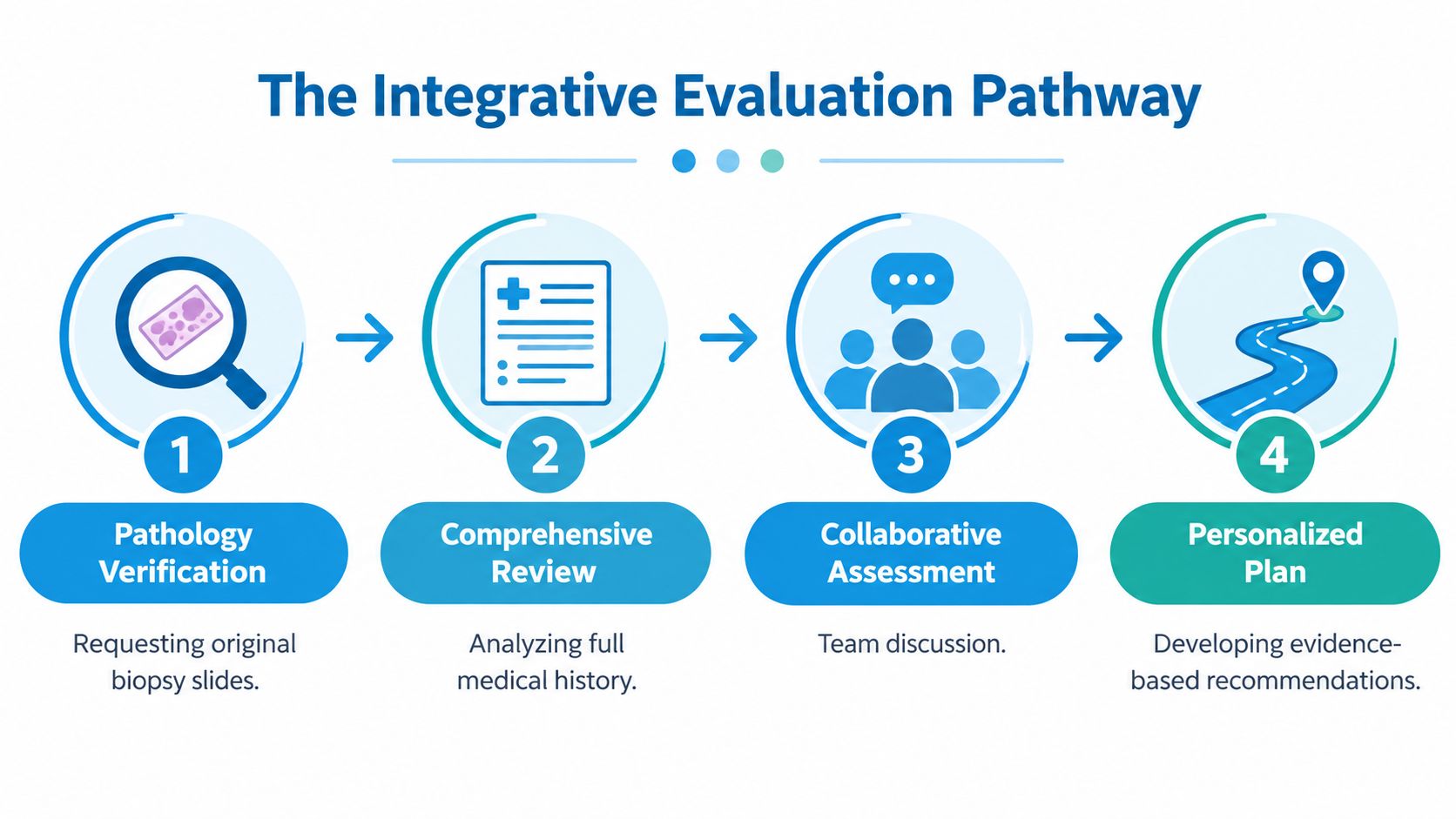
The output should be a written plan, not a vague wellness prescription. It should identify the purpose of each therapy, expected monitoring, warning signs, timing around chemotherapy or procedures, and communication responsibilities. Patients seeking a structured consultation can also use this clinical evaluation checklist for finding an integrative oncologist.
Questions Worth Asking Any Alternative Clinic
Bring a notebook or use your phone to record the answers. A trustworthy clinic won't treat basic questions as a challenge to its authority.
Credentials and clinical responsibility
Ask who will evaluate you, what licenses and board certifications they hold, and whether the clinician is licensed to practice in Arizona. Ask who is responsible for reviewing your pathology, medications, kidney function, allergies, and treatment history.
You should also know who handles complications. If you develop an infusion reaction, severe dehydration, chest pain, fever, or another urgent symptom during or after treatment, ask whether the clinic has an emergency protocol and where you'll be directed.
Evidence and expectations
For every proposed therapy, ask:
- What is the intended purpose? Is it for nausea, fatigue, pain, tissue injury, treatment tolerance, or tumor control?
- What evidence supports it? Request published references that the clinician can explain in plain language.
- What remains uncertain? A responsible answer may include “we don't know.”
- What are the risks and interactions? Ask about chemotherapy, radiation, surgery, anticoagulants, kidney disease, G6PD deficiency, and other conditions.
- How will you measure response? Clarify whether the clinic tracks symptoms, function, laboratory findings, imaging, tumor markers, or another defined outcome.
Ask for the distinction in writing: Standard supportive care, off-label treatment, clinical-trial treatment, and investigational therapy shouldn't be presented as interchangeable.
Coordination and cost
Ask whether the clinic sends notes to your medical oncologist, whether it will communicate with your permission, and who updates the treatment list. If the practice won't coordinate with your oncology team, ask why.
Request an itemized estimate. Find out whether consultations, laboratory tests, supplements, IV infusions, procedures, and follow-up visits are billed separately. Ask for written consent documents before paying for a course of treatment.
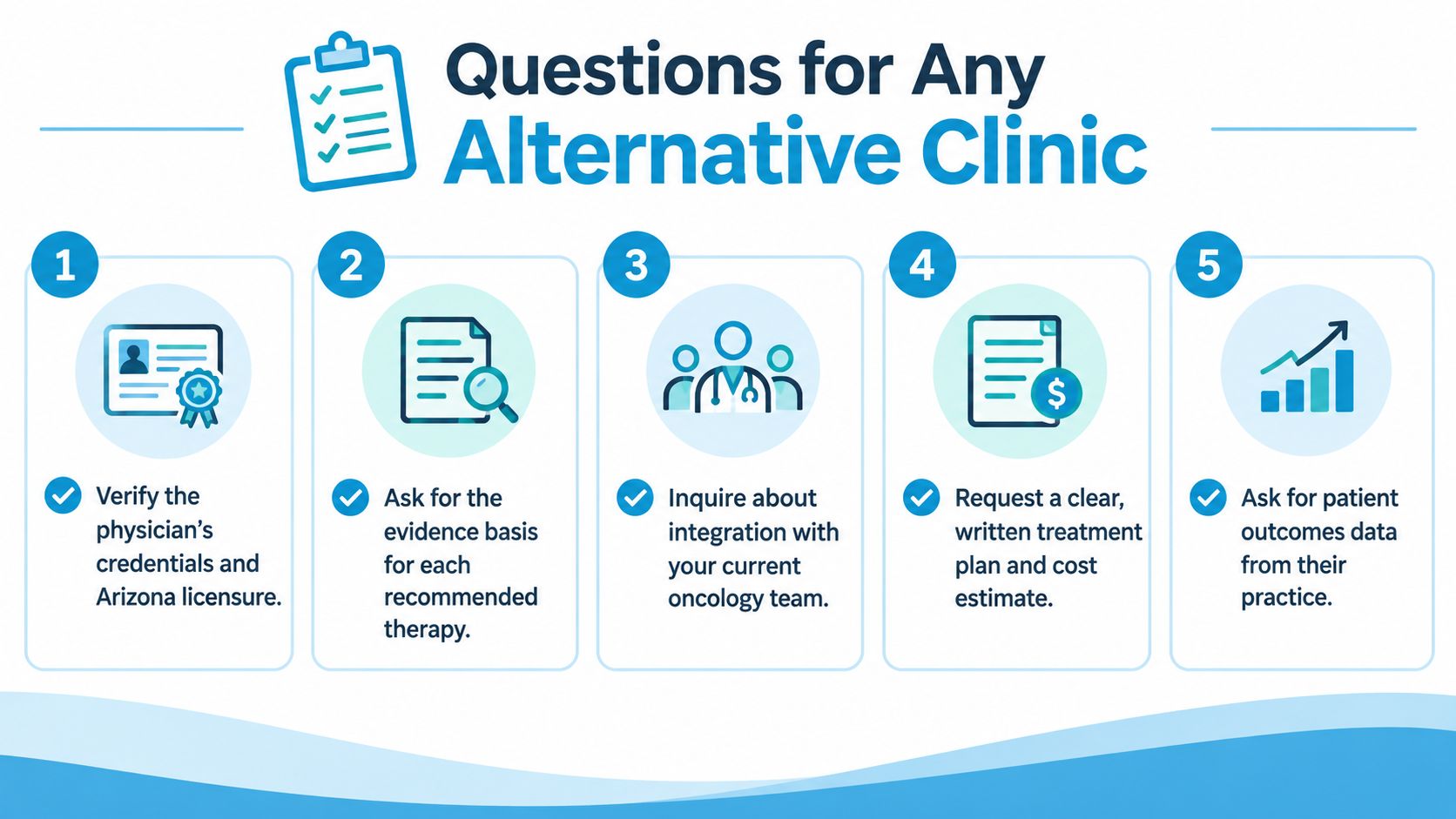
A practice earns trust by answering directly, sharing documentation, and referring patients elsewhere when a request exceeds its scope. It shouldn't guarantee a cure or use testimonials as a substitute for clinical evidence.
Practical Guidance for Out-of-Town Patients
Patients often travel to Scottsdale from Phoenix, Paradise Valley, Tempe, Mesa, Chandler, Gilbert, and other parts of the metropolitan area. Phoenix Sky Harbor is the usual airport for domestic commercial flights, while Scottsdale Airport may be useful for private or regional travel. Choose transportation and lodging based on how you'll feel after treatment, not only on distance.
Some protocols may involve multiple visits per week over two to four weeks, so an extended-stay hotel or furnished rental can be more practical than changing rooms repeatedly. Ask the clinic whether it has relationships with medical lodging providers near the Shea Boulevard and Thompson Peak corridor. If an infusion suite is available on-site, staying nearby may reduce daily driving.
Prepare the records early
Request pathology blocks or slides, imaging CDs, radiology reports, operative reports, laboratory results, medication lists, and supplement lists at least two weeks before the first appointment whenever possible. Early delivery gives the physician time to identify missing records and decide whether additional information is needed.
Designate one local family member or patient navigator to manage prescriptions, pharmacy calls, transportation, and follow-up questions during the visit window. Keep a shared medication list so your Scottsdale clinician and home oncology team are working from the same information.
Travel planning also includes the environment where you'll recover. If you're comparing home-service providers before leaving, Scottsdale air duct cleaning cost may help you understand local maintenance pricing, although it isn't a medical service or cancer treatment resource.
Misconceptions That Can Lead Patients Astray
Misconception one: integrative care means abandoning conventional treatment. The SIO and ASCO guideline supports selected complementary therapies for symptoms and treatment side effects alongside oncology care. It doesn't recommend replacing surgery, radiation, chemotherapy, immunotherapy, or targeted therapy with unproven methods. The National Center for Complementary and Integrative Health likewise states that no complementary approach has been shown to prevent or cure cancer.
Misconception two: more therapies must produce better results. Stacking IV infusions, supplements, restrictive diets, and metabolic protocols can create interactions, cost, confusion, and treatment delays. A long list of interventions doesn't demonstrate that any one therapy improves survival or tumor control.
Misconception three: IV vitamin C cures solid tumors. It hasn't been shown to cure solid tumors. The available human literature describes preliminary adjunctive research, including possible effects on quality of life and treatment-related symptoms, but those findings don't establish a cure or a replacement for cancer-directed therapy. The dose, route, kidney function, G6PD status, cancer type, and concurrent drugs all matter.
Misconception four: a testimonial proves effectiveness. A patient may improve because of standard treatment, natural disease variation, symptom-focused care, changes in several therapies at once, or factors that weren't measured. Testimonials can describe an experience, but they can't replace pathology, imaging, biomarker tracking, controlled research, or transparent adverse-event reporting.
Misconception five: repurposed drugs are automatically safe because they're familiar. The 2026 ASCO notice specifically raised concerns about ivermectin and fenbendazole, including the absence of strong evidence for human malignancy and risks from toxicity or drug interactions. A medication approved for another condition isn't automatically appropriate for cancer.
Before committing time or money, ask what the treatment is approved to do, what published trials show, whether it's being offered through a registered clinical trial, and how your oncologist views the interaction risk. Evidence-informed supportive care can be valuable, but unsupported remission claims deserve skepticism.
Talking With a Sunridge Medical Physician
The first conversation should help you sort options before you commit to treatment. At Sunridge Medical, the initial physician call is described as a 30-to-45-minute review of pathology reports, imaging, prior oncology timelines, current medications and supplements, and relevant biomarkers. Bring a recent pathology report or slide information, operative reports, imaging records, and a complete list of active prescriptions.
The physician can then explain which options are adjunctive, investigational, or supportive, and discuss how each may fit around your existing oncology plan. If you give permission, coordination with your medical oncologist can help reduce duplicated testing and identify possible interactions.
A consultation doesn't obligate you to begin treatment. You should receive a written summary of recommendations, including any needed laboratory review, proposed monitoring, treatment-planning steps, and scheduling considerations. Local patients from Scottsdale, Phoenix, Paradise Valley, Tempe, Mesa, Chandler, and Gilbert may need different appointment logistics than people traveling from outside Arizona, so ask about the expected timeline before arranging lodging or transportation.
If you're facing a new diagnosis, recurrence, difficult side effects, or uncertainty after standard treatment, prepare your records and write down your priorities before the call. The most productive discussion is specific: what symptom needs attention, what treatment is being considered, what evidence supports it, what risks apply, and how your oncology team will stay informed.
Sunridge Medical offers physician-directed integrative cancer evaluations in Scottsdale, with individualized review of conventional treatment, supportive therapies, and selected investigational options. Contact Sunridge Medical to discuss whether a consultation is appropriate and bring your pathology, imaging, treatment timeline, medication list, and supplement list to the first conversation.