


What if the debilitating fatigue and mental haze you’re experiencing aren’t just “lingering symptoms,” but a profound systemic shift in your body’s biological landscape? With more than 476,000 Americans diagnosed annually, the reality of lyme disease long term consequences remains a daily struggle for many who find that standard antibiotic cycles are only the beginning of their journey. You know that the brain fog, joint pain, and cognitive decline you feel are real, even when conventional labs suggest you’re healthy. It’s deeply frustrating to be met with medical skepticism when your quality of life is clearly compromised.
We believe you deserve a more precise explanation for why your body hasn’t returned to its baseline. This guide explores the complex immune dysregulation and cellular toxicity that drive chronic complications. You’ll gain a deeper understanding of the biological mechanisms behind your symptoms and discover the specialized diagnostic frameworks used to identify them. By looking beyond the status quo, we’ll outline the advanced integrative treatment paths designed to restore your well-being and offer a definitive, clinical way forward.
Key Takeaways
- Recognize that lyme disease long term consequences stem from complex biological shifts, including stealth mechanisms used by the bacteria to survive initial treatments.
- Identify how persistent inflammation triggers widespread issues, ranging from cognitive decline and “brain fog” to cardiovascular risks like Lyme carditis.
- Understand the limitations of standard two-tier testing in chronic cases and the clinical importance of screening for co-infections like Babesia and Bartonella.
- Discover how moving beyond symptom management toward addressing underlying biological mechanisms facilitates a more comprehensive path to recovery.
Understanding the Landscape of Lyme Disease Long Term Consequences
For many patients, the completion of a standard antibiotic course does not signal the return of health. Instead, it marks the beginning of a confusing and often isolating journey. Lyme disease long term consequences are a multi-systemic physiological shift where the body remains in a state of heightened immune reactivity or unresolved infection. This transition from an acute infection to a chronic condition suggests that the initial medical intervention didn’t fully address the complexity of the pathogen’s impact on human biology.
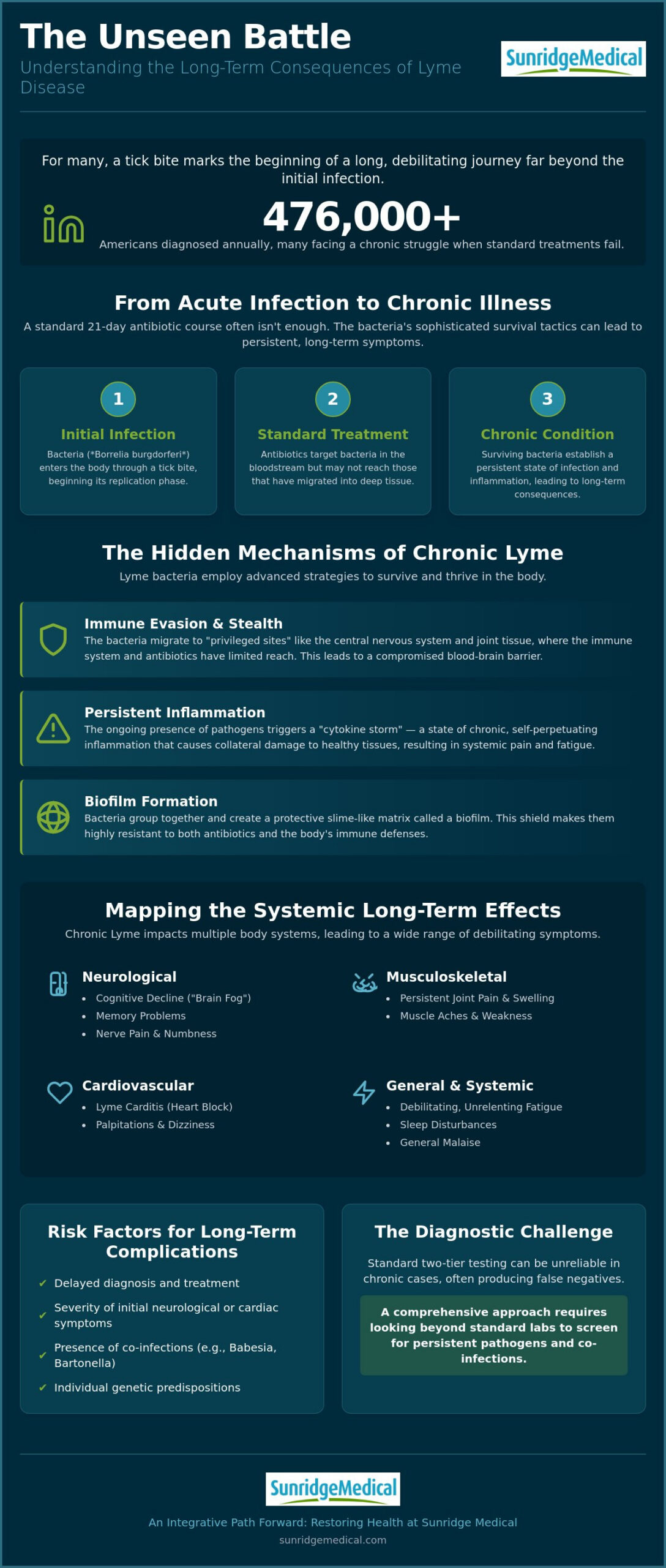
Standard 21-day antibiotic protocols are designed to target the bacteria during its initial replication phase. These treatments often fail to prevent long term complications because they don’t account for the bacteria’s ability to migrate into deep tissues, such as the central nervous system or joint capsules, where antibiotic penetration is limited. When the infection isn’t fully eradicated or the immune system isn’t properly supported, the body enters a state of persistent dysfunction that requires a more sophisticated, individualized approach than conventional “one size fits all” care. To see how personalized primary care can bridge these gaps, check out John Abroon M.D.
Terminology Matters: PTLDS vs. Chronic Lyme Disease
Conventional medical systems often use the term Post-Treatment Lyme Disease Syndrome (PTLDS) to describe symptoms that persist for six months or longer after treatment. This terminology frequently implies that the infection itself is gone, leaving only “residual damage” or an autoimmune echo. However, an integrative perspective considers the reality of bacterial persistence and sophisticated immune evasion. For many, the label of PTLDS can become a barrier to specialized care, as it may lead providers to dismiss ongoing symptoms as untreatable. Reviewing a Lyme disease overview reveals that while the acute stage is clinically defined, the chronic phase remains a complex frontier where terminology significantly impacts a patient’s access to advanced diagnostics. For patients and clinicians alike who are asking is chronic lyme disease real, the clinical evidence of bacterial persistence and systemic inflammation provides a compelling answer that goes far beyond the limitations of standard testing.
Risk Factors for Developing Long-Term Complications
Not every individual who contracts the infection will face lyme disease long term consequences. Several critical factors influence whether a patient recovers or develops chronic complications. The most significant risk is a delayed diagnosis; missing the early “window of opportunity” allows the bacteria to disseminate throughout the body. Other factors include:
- The severity of initial neurological or cardiac symptoms, which suggests higher bacterial load or systemic involvement.
- Individual genetic predispositions that may hinder the body’s natural detoxification and inflammatory control pathways.
- The presence of underlying stressors or co-infections that tax the immune system’s resilience.
At Sunridge Medical, we recognize that these risk factors demand a clinical strategy that goes beyond standard management. We focus on identifying these unique variables to build a path toward restoration.
The Biological Mechanisms Behind Persistent Lyme Symptoms
The persistence of symptoms following initial treatment is not a failure of the patient’s will, but rather a reflection of the sophisticated survival strategies employed by Borrelia burgdorferi. Understanding the biological drivers of lyme disease long term consequences requires looking beneath surface-level blood work and into the cellular environment. When the bacteria enters the body, it doesn’t just circulate in the blood; it actively seeks out “privileged sites” like joint tissue and the central nervous system where it can evade the immune system. This migration often leads to a compromised blood-brain barrier, allowing inflammatory markers to enter the brain and trigger the persistent fog and cognitive decline so common in chronic cases.
Beyond simple evasion, the presence of these pathogens triggers a “cytokine storm,” a state of chronic, self-perpetuating inflammation. This immune overreaction causes collateral damage to healthy host tissues, leading to the systemic pain and malaise that characterize the condition. Clinicians often categorize these systemic issues as Late-Stage Lyme Disease Complications, highlighting the need for advanced intervention that goes beyond standard care. At Sunridge Medical, we focus on identifying these specific cellular blockages to create a targeted path toward recovery.
Biofilm Formation and Bacterial Persistence
Borrelia burgdorferi is a master of adaptation. When threatened by antibiotics or the immune system, it can transition into “persister” cells or protective cyst forms. These bacteria create biofilms, which are complex extracellular matrices that act as biological shields. Standard antibiotics often struggle to penetrate these barriers, leaving dormant bacteria protected. Once the treatment ends, these persister cells can reactivate, leading to the frustrating cycle of relapse and remission that many patients experience. The science of bacterial persistence in chronic lyme disease demonstrates precisely why these biofilm-protected organisms can survive standard treatment protocols and continue to drive systemic dysfunction long after the initial infection.
Oxidative Stress and Chronic Immune Activation
The toll of a prolonged immune response on healthy tissues is significant. Chronic activation leads to high levels of oxidative stress, which effectively “ages” the immune system and depletes cellular resources. This environment often triggers secondary autoimmune-like responses, where the body begins to attack its own structures. This biological chaos is further compounded by mitochondrial dysfunction. When the mitochondria, the power plants of your cells, are damaged by inflammation, the result is a profound cellular energy crisis. This is why “Lyme fatigue” feels so different from normal tiredness; it’s a fundamental breakdown in your body’s ability to produce the energy required for daily function. If you’ve been wondering is lyme disease permanent, understanding these mechanisms is the first step toward recognizing that targeted intervention can reverse what feels like an irreversible state.
Mapping Systemic Long-Term Effects Across the Body
The transition from an acute tick bite to a chronic state involves the dissemination of pathogens into diverse physiological systems. Unlike many infections that resolve with standard care, lyme disease long term consequences often manifest as a multi-systemic breakdown. This isn’t just a collection of random symptoms; it’s a map of how persistent infection and inflammation degrade specific tissues over time. When the bacteria migrates out of the bloodstream, it settles into deep tissues, creating a complex web of neurological, cardiovascular, and musculoskeletal complications that require specialized clinical attention.
Cognitive Decline and Neurologic Complications
Patients frequently report a terrifying loss of mental clarity that goes far beyond simple tiredness. This cognitive decline often involves significant executive function deficits and memory impairment, making daily tasks feel insurmountable. For seniors who find that brain fog makes technology difficult to navigate, 55 Plus Computer Help LLC provides specialized support to help them stay connected. We often find that small fiber neuropathy is a major contributor to chronic nerve pain, manifesting as burning or tingling sensations that standard neurological exams may overlook. The medical root cause of persistent brain fog is typically neuroinflammation, where the immune system’s attempt to clear the brain of perceived threats leads to collateral damage in neural pathways and a disruption of neurotransmitter balance.
Lyme Carditis and Autonomic Dysfunction
The heart is another primary target for persistent infection. Lyme carditis occurs when the bacteria enters heart tissue, specifically disrupting the electrical conduction system that regulates your heartbeat. This can lead to heart block or irregular rhythms that require careful, long-term monitoring. We also frequently see a strong relationship between Lyme and Postural Orthostatic Tachycardia Syndrome (POTS). This form of autonomic dysfunction prevents the body from properly regulating heart rate and blood pressure when moving from a seated to a standing position, leading to dizziness and fainting. Understanding these cardiovascular risks is essential for a comprehensive recovery plan.
Beyond the heart and brain, the bacteria targets collagen-rich tissues, leading to persistent Lyme arthritis and the gradual degradation of connective tissue in the joints. These musculoskeletal impacts are often accompanied by significant psychiatric manifestations. Sudden onset mood disorders, anxiety, and depression aren’t just emotional reactions to a chronic illness; they’re often direct biological results of the infection’s impact on brain chemistry and the neuroendocrine system. Recognizing these systemic lyme disease long term consequences as interconnected biological events is the first step toward reclaiming your health through a more targeted, integrative approach.
Beyond Standard Testing: A Comprehensive Diagnostic Framework
The greatest hurdle for many patients is the diagnostic vacuum created by standard medical testing. Conventional two-tier systems, including the ELISA and Western Blot, were originally designed for surveillance rather than clinical diagnosis of chronic states. These methods often fail to account for the complexity of lyme disease long term consequences because they rely on an antibody response that may be suppressed or absent in late-stage patients. In fact, research as recent as 2026 indicates that standard testing methods can miss between 64% and 78% of early infections, a gap that often leads to the delayed treatment and subsequent chronic complications seen in our clinic.
We recognize that a negative test result doesn’t always mean the absence of a problem. To provide a truly personalized path to recovery, lyme disease specialists utilize expanded diagnostic panels that look far beyond the presence of antibodies to assess the body’s total biological health. This includes evaluating your “Total Toxic Burden,” which accounts for heavy metal toxicity and mold exposure. These environmental factors often overlap with or exacerbate Lyme symptoms, creating a compounded stress on your system that standard protocols simply don’t address.
The Role of Co-infections in Chronic Illness
Bartonella and Babesia are not merely secondary concerns; they are primary drivers of treatment resistance. These stealth pathogens utilize different survival mechanisms than Borrelia and often require entirely unique clinical protocols to eradicate. Babesia targets red blood cells, while Bartonella often affects the lining of the blood vessels and the nervous system. When these co-infections are missed by standard labs, they complicate the clinical picture and significantly delay recovery. We utilize specialized laboratory testing to identify these specific pathogens, ensuring that every element of your infection is addressed simultaneously.
Evaluating Immune Function and Nutritional Status
A comprehensive framework must also assess how your body is responding to the internal stress of infection. We monitor specific markers such as CD57+ Natural Killer cell counts, as low levels are frequently a reliable indicator of chronic Lyme activity and immune suppression. Identifying deep-seated nutritional deficiencies is equally vital, as these gaps hinder your cells’ ability to repair the damage caused by prolonged inflammation. By integrating hormone optimization, we help restore the systemic balance required for your body to finally sustain progress. To move beyond the limitations of standard labs, you can request a comprehensive diagnostic consultation to uncover the true root of your persistent symptoms.
An Integrative Path Forward: Restoring Health at Sunridge Medical
True recovery from the complex lyme disease long term consequences requires a clinical shift from merely suppressing symptoms to aggressively addressing the underlying biological drivers. At Sunridge Medical, our philosophy is rooted in the understanding that your body is a sophisticated system that has been pushed out of its natural equilibrium. We don’t believe in the “one-size-fits-all” approach that often leaves chronic patients feeling stuck or overlooked. Instead, we act as a scientific guide, utilizing a model of care that prioritizes your unique physiological data to build a definitive path toward restoration. Led by Medical Director Dr. Steven S. Isaacman, our center has been a sanctuary for those navigating complex health journeys since 2003.
The path forward involves more than just identifying the presence of a pathogen; it requires a deep dive into how that pathogen has altered your internal environment. We focus on the possibility of progress by combining clinical authority with a compassionate, individualized perspective. By moving beyond standardized care packages, we provide the specialized attention necessary to uncouple the cycle of chronic inflammation and cellular dysfunction. This targeted methodology ensures that every aspect of your health, from immune resilience to metabolic stability, is supported through a cohesive and multi-faceted plan.
Advanced Protocols for Chronic Lyme Recovery
Our clinical strategy utilizes research-based alternative protocols designed to reach the deep-seated “persister” cells and biofilms that standard treatments often miss. We apply specialized IV therapies for precise immune modulation, helping to calm the “cytokine storm” while simultaneously strengthening the body’s natural defenses. These protocols are not static; they are part of a dynamic, individualized care plan that we constantly monitor and adjust based on your real-time response. This level of precision is essential for overcoming the persistent neurological and systemic impacts of lyme disease long term consequences.
Holistic Support and Environmental Health
Restoring the body’s sanctuary also means addressing the external and internal stressors that hinder recovery. We integrate sophisticated detoxification strategies to reduce your total toxic burden, clearing the way for cellular repair. Many patients with chronic illness also suffer from significant endocrine disruptions, which is why hormone optimization therapy is often a critical pillar of our management strategy. By balancing these systemic layers, we create an environment where the body can finally sustain its own well-being. If you are ready to move beyond management and toward a comprehensive biological solution, the next step is to schedule a detailed physician evaluation to begin your personalized journey to health.
Reclaiming Your Health and Vitality
You’ve explored how lyme disease long term consequences aren’t just a collection of symptoms, but a complex biological shift involving stealth pathogens and systemic inflammation. We’ve discussed the critical need to look beyond standard two-tier testing and address the total toxic burden that often stalls recovery. At Sunridge Medical, we move beyond the status quo by providing physician-led clinical monitoring and advanced protocols for chronic illness. We don’t believe you should have to manage a “new normal” of pain and fatigue when a more precise, individualized path is available.
Our team is dedicated to acting as your scientific guide, utilizing specialized IV therapies and immune modulation to restore your body’s equilibrium. It’s time to transition from a state of frustration to one of calm determination. Please contact Sunridge Medical for a personalized chronic Lyme evaluation and take the first step toward a comprehensive restoration of your well-being. We’re here to help you find the clarity and health you deserve.
Frequently Asked Questions
Is Lyme disease permanent if it is not treated early?
Lyme disease is not necessarily permanent if missed early, but the complexity of treatment increases significantly as the bacteria disseminates. When the initial window for treatment is missed, the infection often transitions into a chronic state that requires a more sophisticated, multi-systemic approach to resolve. While the damage can be extensive, advanced integrative protocols focus on halting the inflammatory cycle and restoring cellular health to facilitate recovery. For a deeper clinical perspective on this question, explore our detailed analysis of whether lyme disease is permanent and what modern integrative medicine can offer.
What are the most common long term effects of Lyme’s disease?
The most frequent lyme disease long term consequences include persistent cognitive impairments, chronic musculoskeletal pain, and profound fatigue. Many patients also experience neurological complications such as small fiber neuropathy or cardiovascular issues like Lyme carditis. These effects are rarely isolated; they often manifest as a systemic breakdown where multiple physiological systems are compromised simultaneously due to persistent immune activation and bacterial presence.
Can Lyme disease cause permanent brain damage or cognitive decline?
Chronic Lyme can lead to significant executive function deficits and memory impairment, though many of these changes are reversible with targeted neuroinflammatory treatment. While the term “permanent” is concerning, the brain possesses remarkable plasticity. By addressing the underlying infection and reducing the cytokine storm in the central nervous system, we can often help patients regain mental clarity and restore cognitive function that was previously thought to be lost.
Why do symptoms sometimes return after a successful course of antibiotics?
Symptoms often return because standard antibiotics primarily target actively replicating bacteria and may miss dormant “persister” cells or those protected within biofilms. These biological shields allow the bacteria to survive initial treatment and reactivate once the antibiotic course is complete. This cycle of relapse is a hallmark of chronic infection, suggesting that the underlying bacterial load was never fully eradicated, only suppressed temporarily.
Is there a link between chronic Lyme disease and autoimmune disorders?
Yes, there is a documented link between chronic infection and the development of secondary autoimmune-like responses. Prolonged immune activation and oxidative stress can cause the immune system to lose its ability to distinguish between pathogens and host tissues. This results in the body attacking its own structures, such as joint cartilage or neural pathways, creating a complex clinical picture that involves both persistent infection and autoimmunity.
How long does it take to recover from the long term consequences of Lyme?
Recovery timelines are highly individualized and depend on the duration of the infection, the presence of co-infections, and the patient’s overall toxic burden. There is no “one size fits all” schedule for healing from lyme disease long term consequences. Some patients see significant progress within months of starting specialized protocols, while others with more disseminated disease may require a longer, more phased approach to fully restore systemic balance.
Can integrative medicine help when conventional treatments have failed?
Integrative medicine is often the most effective path forward when conventional 21-day antibiotic courses fail to provide lasting relief. By combining clinical authority with research-based alternative protocols, we can address aspects of the disease that standard care overlooks, such as mitochondrial dysfunction and heavy metal toxicity. This comprehensive lens allows us to treat the whole person rather than just managing a list of isolated symptoms.
What should I do if my doctor says my Lyme tests are negative but I still feel sick?
If your standard tests are negative but your symptoms persist, you should seek a specialized diagnostic framework that utilizes more sensitive testing methods. Standard two-tier testing misses a significant percentage of cases, particularly in the chronic phase. We recommend looking for markers like CD57+ Natural Killer cell counts and screening for co-infections like Babesia and Bartonella, which often drive persistent illness even when standard Lyme tests appear normal.