
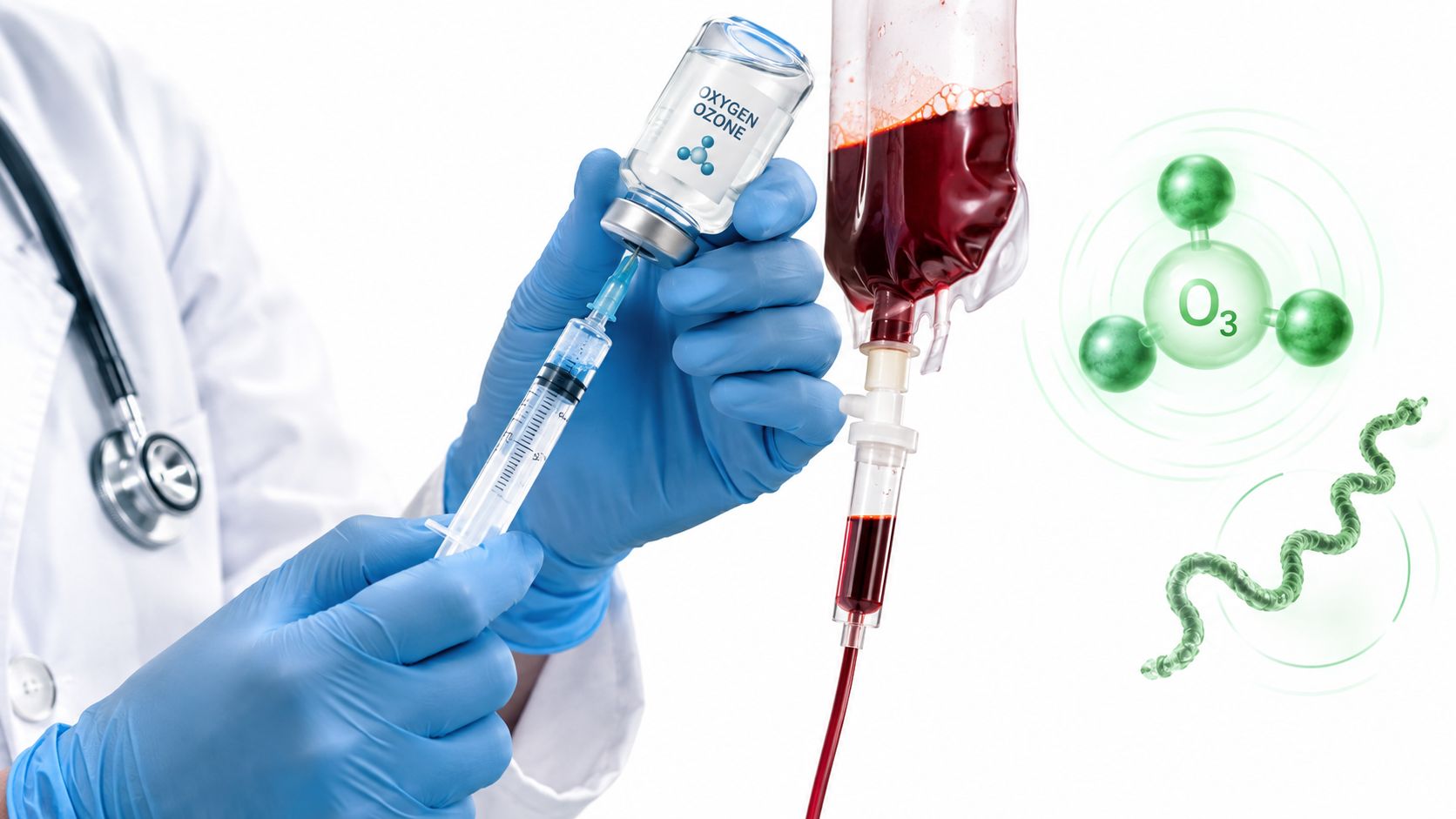
If you've finished Lyme treatment and you're still waking up exhausted, dragging through the day with brain fog, or feeling joint pain move around your body, it's normal to start looking for something beyond the standard playbook. In Scottsdale and across the Phoenix area, ozone therapy comes up often in those conversations, usually because a friend mentioned it, a podcast praised it, or a clinic suggested it as an add-on when recovery stalled. Patients who are trying to make sense of lingering symptoms can also find helpful context in brain fog help from Yuve, especially if fatigue and concentration problems are the main issue.

At the same time, this is a point where caution matters most. Ozone lyme treatment is not a proven cure for Lyme disease, and the safety questions depend heavily on how it's delivered. If you're considering it, the right first step is not to ask whether ozone is “natural.” It's to ask whether your Lyme diagnosis has been reviewed carefully, whether your current symptoms fit a post-treatment pattern, and whether any proposed therapy is being framed as a complement to medical care rather than a replacement.
For patients who want a structured, integrative review of persistent Lyme symptoms, Sunridge Medical's integrative Lyme disease treatment is one place to start.
Table of Contents
- When Lyme Symptoms Linger and Patients Look for Ozone Therapy
- What Ozone Therapy Actually Is and How It Is Delivered
- The Evidence Gap for Ozone in Lyme Disease
- What a Typical Ozone Protocol Looks Like
- How Ozone Compares With Other Integrative Lyme Options
- Real Safety Concerns and When Ozone Should Be Avoided
- Who should be screened carefully
- Questions to Ask Before Agreeing to Ozone Therapy
- How Sunridge Medical Approaches Ozone Evaluation
When Lyme Symptoms Linger and Patients Look for Ozone Therapy
A patient comes in saying the same thing in different words. “I finished antibiotics, but I'm still tired. My joints ache, I can't think straight, and I'm sleeping badly.” That's the point where people start searching for ozone lyme treatment, especially if they've already been told there's not much else to do.
The search is understandable. Persistent symptoms after recommended Lyme treatment are real, but they don't automatically mean the infection is still active. The CDC notes that the cause of those lingering symptoms remains unknown, and additional prolonged antibiotics generally haven't improved outcomes over placebo in controlled studies. That leaves many patients looking for options that sound more biologically active than another short office visit and a watch-and-wait plan.
Why the ozone question comes up
In practical terms, ozone enters the conversation when patients are stuck between two unsatisfying options. One option is to keep assuming every symptom comes from Borrelia. The other is to be told the Lyme is “gone” without any real plan for what happens next.
A responsible integrative clinic in Scottsdale treats that moment as a diagnostic checkpoint, not a sales pitch. Ozone may be discussed, but only after the clinician reviews the original diagnosis, current symptom pattern, co-infections, medication effects, sleep problems, inflammation, and other conditions that can mimic post-treatment Lyme symptoms.
Practical rule: if a therapy is offered before anyone rechecks the diagnosis, it's being treated like a shortcut, not medicine.
The best patients in this situation ask a better question. Not, "Does ozone work?" but, "What problem are we trying to solve, what are the risks, and what would success look like?" That's the mindset behind any serious discussion of ozone lyme treatment in Phoenix, Paradise Valley, Tempe, Mesa, Chandler, or Gilbert.
What Ozone Therapy Actually Is and How It Is Delivered

Medical ozone is an oxygen-ozone gas mixture used in controlled settings. It should never be inhaled directly. The practical idea behind it is simple, ozone creates a brief oxidative signal that some clinicians compare to a mild hormetic stressor, similar in concept to exercise. That analogy helps explain why practitioners use it, but it is not proof that ozone improves Lyme outcomes in people.
The delivery route changes everything
In U.S. integrative practice, the main routes are major autohemotherapy, minor autohemotherapy, rectal insufflation, intravenous ozone, and ozone sauna or topical exposure. Each route changes the risk profile, the intensity of exposure, and the kind of monitoring a clinic should use.
Major autohemotherapy is the version most patients hear about first. Blood is drawn, exposed to a measured ozone-oxygen mixture, then reinfused. A careful clinic should be able to explain the exact route, the intended concentration, the reason for choosing it, and what symptoms or objective markers will be tracked. For a patient reading up on procedure options, the Longevity Medical Institute ozone therapy guide offers a general overview of how practitioners talk about this modality.
Clinical point: laboratory antimicrobial activity is not the same as clinical benefit in confirmed Lyme disease.
That distinction matters because proposed mechanisms often sound persuasive. Ozone may be described as something that can affect microbes, alter immune signaling, or shift oxidative stress. Those ideas are biologically plausible in a broad sense, but they are not the same as showing that ozone lyme treatment improves fatigue, relieves neurologic symptoms, or prevents relapse in real patients.
For a broader clinic perspective on the procedure itself, Sunridge Medical's IV ozone therapy page is relevant to patients who want to understand how the route is used in practice.
The Evidence Gap for Ozone in Lyme Disease
A patient with persistent fatigue, pain, or neurologic symptoms may hear confident claims about ozone before hearing how limited the research remains. That order matters. The evidence gap should shape the conversation before any clinic discusses a protocol.
A 2015 review of unorthodox Lyme treatments reported that no human study of ozone therapy for Lyme disease had been published at that time. There were no randomized trials, validated response rates, or reliable long-term outcome statistics establishing ozone as a treatment for Lyme disease in people. Later evidence appraisals continue to describe ozone as investigational or adjunctive, rather than validated.
Why that matters clinically
Laboratory plausibility does not guarantee patient benefit. Symptoms that continue after antibiotic treatment can have several possible explanations, and the CDC says their cause remains unknown. Controlled studies have generally not shown that additional prolonged antibiotics outperform placebo. Ozone therefore should not be presented as a replacement for guideline-supported care.
A 2025 clinic analysis offers context about availability, not effectiveness. Among 117 standalone Lyme clinics in Lyme-endemic U.S. states, 15 offered ozone-based therapy, or 13%. The analysis also reported herbs or supplements in 45% of clinics, nonantibiotic intravenous therapy in 26%, unspecified antibiotics in 22%, and hyperbaric oxygen in 15%. These figures describe what clinics offer. They do not show that any option works.
The practical conclusion is straightforward: ozone lyme treatment has no defensible percentage for cure, symptom improvement, relapse prevention, or superiority over recommended care. A provider who implies otherwise is making a claim the evidence cannot support.
For a clinician-oriented discussion of ozone alongside chronic infections, Sunridge Medical's clinical guide to ozone therapy for chronic infections provides context, but patients should still ask what is known, what is uncertain, and how safety will be assessed before treatment.
What a Typical Ozone Protocol Looks Like
A thoughtful protocol should never feel vague. Because there's no standardized Lyme protocol, a clinic that offers ozone ought to spell out the route, dose, frequency, and reassessment plan in writing. If it can't, that's a warning sign.
Major autohemotherapy in practice
In a typical major autohemotherapy session, a clinician draws a measured volume of blood, mixes it with a defined ozone-oxygen concentration, and then reinfuses it over a short visit. A transparent clinic should also document what's being monitored, whether the patient is on concurrent antibiotics or other therapies, and what would make the plan change.
The proposed appeal is often to repeated low-level oxidative signaling rather than a one-time effect. Some patients describe ozone as part of a broader “redox” strategy, but that language should never be allowed to blur the evidence gap. The protocol may be carefully delivered and still remain unproven for Lyme disease.
What variations can look like
- Minor autohemotherapy: a small blood sample is treated and then returned, usually as a simpler exposure model.
- Rectal insufflation: ozone is introduced through the rectum, often discussed as a non-IV option.
- Ozone sauna or topical use: ozone is applied externally, which changes both intensity and safety considerations.
- IV-based ozone routes: these require careful sterile technique, exact concentration records, and close oversight.
A patient should expect the provider to say why one route is being chosen over another. If the answer is just “we use ozone for everything,” that's not individualized care. It's a menu.
For patients comparing options, this is also where a protocol discussion becomes practical. What matters is not only what a therapy sounds like, but whether the clinician can explain what happens after session three, session ten, or if symptoms worsen instead of improving.
How Ozone Compares With Other Integrative Lyme Options
Patients often compare ozone with other non-antibiotic approaches because they're trying to answer the same question in different ways, what can help without pretending there's a miracle cure? The honest answer is that these options sit on different parts of the evidence spectrum, and none of them should be described as FDA-authorized Lyme cures.
| Option | Proposed mechanism | Evidence depth for Lyme | Key safety flag |
|---|---|---|---|
| Guideline-supported antibiotics | Direct antimicrobial treatment for confirmed Lyme disease | Stronger than the alternatives discussed here | Side effects, allergy, and the need for correct diagnosis |
| Herbal regimens | Botanical antimicrobial or anti-inflammatory effects | Limited, variable, and highly practitioner-dependent | Drug interactions and inconsistent product quality |
| Hyperbaric oxygen therapy | Increased oxygen exposure in a pressurized chamber | Limited for Lyme-specific use | Pressure-related risks and access burden |
| IV nutrient support | Supportive care for hydration, micronutrients, and tolerance | Supportive, not Lyme-specific | Line-related complications and overpromising |
| Ozone therapy | Oxidative signaling and proposed antimicrobial effects | Investigational, not validated for Lyme | Route-specific injury risk and lack of clinical proof |
The key distinction is that some modalities are meant to support recovery, while others are sometimes presented as substitutes for treatment. That's where patients get into trouble. If a clinic frames ozone as a way to skip antibiotics in confirmed Lyme disease, that's not integrative care, it's a detour from guideline-supported medicine.
A better conversation sounds like this. “What is being treated here, active infection, residual symptoms, inflammation, sleep disruption, or all of the above?” Once that's clear, a clinician can decide whether ozone belongs anywhere in the plan, or whether the better move is to focus on targeted antibiotics, symptom management, or another supportive therapy.
Real Safety Concerns and When Ozone Should Be Avoided
A patient may arrive exhausted, frustrated, and ready to try ozone after months of symptoms. That urgency does not make every route reasonable. Systemic ozonated autohemotherapy has been associated with rare but severe complications, including fatal gas embolism and possible bloodborne infection transmission (published safety review). Ozone's oxidative activity can also affect cellular membranes, proteins, and lipids.
The main route-specific risks
- Bloodstream contamination: Blood handling creates infection risk when sterile technique fails.
- Gas embolism: Gas entering the circulation incorrectly can cause a medical emergency.
- Hemolysis and vascular complications: Improper delivery or dosing may injure red blood cells and blood vessels.
- Inhalation injury: Breathing ozone can severely irritate the lungs and contribute to respiratory injury.
The U.S. FDA classifies ozone as a toxic gas without proven medical utility for specific medical indications. This does not establish that every supervised exposure causes harm, but it supports a cautious, route-specific assessment. Ozone should never be inhaled or self-administered. A responsible clinic should explain the evidence gap, document consent, and identify safer alternatives when the potential risk outweighs uncertain benefit.
Who should be screened carefully
A clinic should screen for pregnancy, G6PD deficiency, active cardiovascular instability, severe anemia, bleeding disorders, and any concurrent condition that hasn't been properly evaluated. It should also document the route, the concentration, the consent discussion, and the emergency plan before treatment starts.
For readers who want a more detailed look at adverse effects, Sunridge Medical's ozone therapy side effects page is a useful reference point. A responsible clinic should also tell you when ozone is not the right choice, especially if the concern is severe neurologic disease, carditis, or another urgent manifestation that needs conventional medical assessment first.
Questions to Ask Before Agreeing to Ozone Therapy
The best way to protect yourself is to turn the consultation into a checklist, not a sales conversation. If you're considering ozone lyme treatment in Scottsdale or Phoenix, bring a list of questions that forces specificity.
Diagnosis and treatment goals
- Was my Lyme diagnosis confirmed with accepted clinical and laboratory criteria?
- Are my current symptoms more consistent with active infection or post-treatment symptoms?
- What outcome are we trying to improve, fatigue, pain, cognition, sleep, or function?
Protocol details
- Which route are you recommending, and why that one?
- What concentration, frequency, and duration are you planning?
- What milestone would make you reassess or stop?
Safety and coordination
- What contraindications do you screen for before starting?
- How do you maintain sterile handling and monitor for side effects?
- Will you coordinate with my primary care clinician or infectious disease clinician?
If you want a consumer-friendly way to think about asking hard questions before spending money on any wellness service, the Maximum Health Products wellness buying guide is a useful reminder to evaluate claims, ingredients, and risk with the same skepticism you'd use for supplements.
Ask for a stopping rule before you ask for a schedule.
That one step separates a thoughtful plan from an open-ended protocol. It also helps patients avoid drifting into months of treatment without objective improvement.
How Sunridge Medical Approaches Ozone Evaluation
At Sunridge Medical, the first step is a careful review of the Lyme diagnosis, prior treatment, co-infections, sleep disruption, immune patterns, and overlapping contributors such as toxin exposure or other chronic illness drivers. If ozone is considered, it's discussed as one part of a broader plan that may also include IV nutritional support, detoxification strategies, immune modulation, and communication with the patient's other physicians.
Ozone lyme treatment is not presented as a cure or a replacement for guideline-supported antibiotics. It's only considered when the diagnosis, risk profile, and treatment goals make sense together, and when the patient understands the trade-offs clearly.
If you're dealing with persistent Lyme symptoms and want an evidence-aware review of whether ozone belongs anywhere in your care plan, contact Sunridge Medical in Scottsdale. The clinic can help you sort out diagnosis, safety, and realistic next steps before you commit to any integrative protocol.