

You've finished a conventional course of doxycycline or amoxicillin, yet the migrating joint pain, cognitive fog, and profound fatigue haven't fully resolved. That experience can leave patients in Scottsdale, Phoenix, and throughout the greater Phoenix metropolitan area wondering whether persistent Lyme symptoms reflect ongoing infection, post-treatment Lyme disease syndrome, another tick-borne illness, or a combination of problems.
Whole-body hyperthermia is an intensive, emerging therapy that some integrative clinicians consider alongside antimicrobial treatment. The biological rationale comes from laboratory research showing that heat can stress Borrelia and increase its susceptibility to certain antibiotics. The clinical evidence, however, doesn't establish hyperthermia as a standalone cure, and the treatment requires careful screening, physiological support, and continuous monitoring.
This guide explains what hyperthermia treatment for Lyme disease involves, what the evidence supports, who may not be an appropriate candidate, and how a responsible integrative plan may use it without losing sight of established medical care.
Table of Contents
- When Standard Lyme Treatment Falls Short
- How Heat Affects Borrelia Spirochetes
- What a Whole-Body Hyperthermia Session Involves
- What the Outcome Data Actually Shows
- Safety Considerations and Patient Selection
- Integrating Hyperthermia Into Multimodal Lyme Care
- Evaluating Your Options at Sunridge Medical
When Standard Lyme Treatment Falls Short
A patient may arrive after completing standard antibiotics with a confusing pattern of symptoms. The original rash and acute illness may be long gone, but joint pain shifts from one area to another, concentration feels unreliable, and ordinary activity produces disproportionate exhaustion. Before considering an intensive intervention, a clinician has to revisit the diagnosis, prior treatment, co-infections, medication effects, autoimmune conditions, sleep, nutrition, and other explanations for persistent symptoms.
Lyme disease can be clinically complicated, particularly when symptoms involve several body systems. A review of babesiosis and Lyme disease can help patients understand why co-infections matter during evaluation. Persistent symptoms don't automatically prove that viable bacteria remain, and they shouldn't be used to justify indefinite or escalating antibiotics without a careful medical rationale.
Why hyperthermia enters the discussion
Some integrative practitioners explore physical therapies because antibiotics may not distribute evenly through every tissue, and laboratory models suggest that Borrelia biology changes under environmental stress. Researchers have described dormant or round-body forms and organisms associated with biofilm-like structures, often discussed in connection with reduced metabolic activity and altered antimicrobial susceptibility. These findings provide a reason to investigate adjunctive approaches, but they don't establish that heat reliably eliminates protected organisms inside a human body.
That distinction is central. Hyperthermia should be considered an adjunct, not a replacement for appropriate antimicrobial treatment or diagnostic reassessment. It may be discussed when symptoms persist despite conventional care, but the patient still needs an individualized plan that addresses whether active infection is documented, whether another condition better explains the symptoms, and whether the person can tolerate a demanding procedure.
Patients researching broader regenerative options may also encounter a guide to stem cells for Lyme. That resource represents a different category of intervention, and it shouldn't be treated as interchangeable with whole-body hyperthermia. Each approach has its own evidence base, risks, and selection criteria.
Clinical perspective: Persistent symptoms deserve a broader evaluation, not an automatic assumption that one more treatment will solve everything.
How Heat Affects Borrelia Spirochetes
The rationale for hyperthermia begins with a foundational laboratory study published in 1996. In vitro experiments found that higher temperature meaningfully suppressed growth among different Borrelia strains. Growth was inhibited at 39°C to 40°C, a bactericidal effect appeared at 41°C for two strains, and bactericidal effects appeared at 42°C for all tested strains. The study also found that susceptibility to penicillin and ceftriaxone increased by up to 16-fold when temperature rose from 36°C to 38°C (foundational laboratory study on temperature and Lyme spirochetes).
Those findings support two possible mechanisms. Heat may directly stress the spirochete, while a more modest temperature increase may make the organism more vulnerable to antimicrobial exposure. A public explanation of the same in vitro evidence describes temperature-sensitive growth and increased susceptibility to penicillin and ceftriaxone, while emphasizing the proposed cause-and-effect relationship between heat and antibiotic activity (temperature sensitivity and antibiotic susceptibility in Borrelia).
What the laboratory findings do, and don't, prove
The data are biologically important, but they're not human outcome data. A petri dish can expose bacteria to a uniform temperature for a controlled duration. A person has blood flow, organs with different heat tolerance, immune responses, medication distribution, and safety limits that make whole-body treatment far more complex.
The evidence also doesn't prove that heat forces every dormant or round-body form to revert to an antibiotic-sensitive spirochetal state. That hypothesis is clinically interesting, but it remains a proposed explanation rather than a demonstrated treatment pathway in routine human care. Similarly, laboratory observations involving biofilm-associated organisms shouldn't be translated into a claim that whole-body heating removes biofilms in patients.
| Temperature | Duration | Observed effect | Study context |
|---|---|---|---|
| 39°C to 40°C | Not specified in the verified summary | Growth of different Borrelia strains was inhibited | In vitro laboratory study |
| 41°C | Not specified in the verified summary | Bactericidal effect appeared for two strains | In vitro laboratory study |
| 42°C | Not specified in the verified summary | Bactericidal effects appeared for all tested strains | In vitro laboratory study |
| 36°C to 38°C | Not applicable | Penicillin and ceftriaxone susceptibility increased by up to 16-fold | In vitro laboratory study |
The practical conclusion is measured: heat provides a plausible biological rationale for combination treatment, but not proof of clinical cure. Any protocol that attempts to reproduce laboratory thermal conditions in a human must balance antimicrobial goals against cardiovascular, renal, neurological, and thermoregulatory safety.
What a Whole-Body Hyperthermia Session Involves
Whole-body hyperthermia isn't comparable to sitting in a sauna. In a medical setting, the team must control the rate of warming, measure core temperature continuously, manage fluids and electrolytes, and respond quickly if the patient develops intolerance. Public-facing clinical descriptions note that some treatments may occur under sedation with monitoring similar to intensive care, which reflects the procedure's physiological demands.
Before warming begins
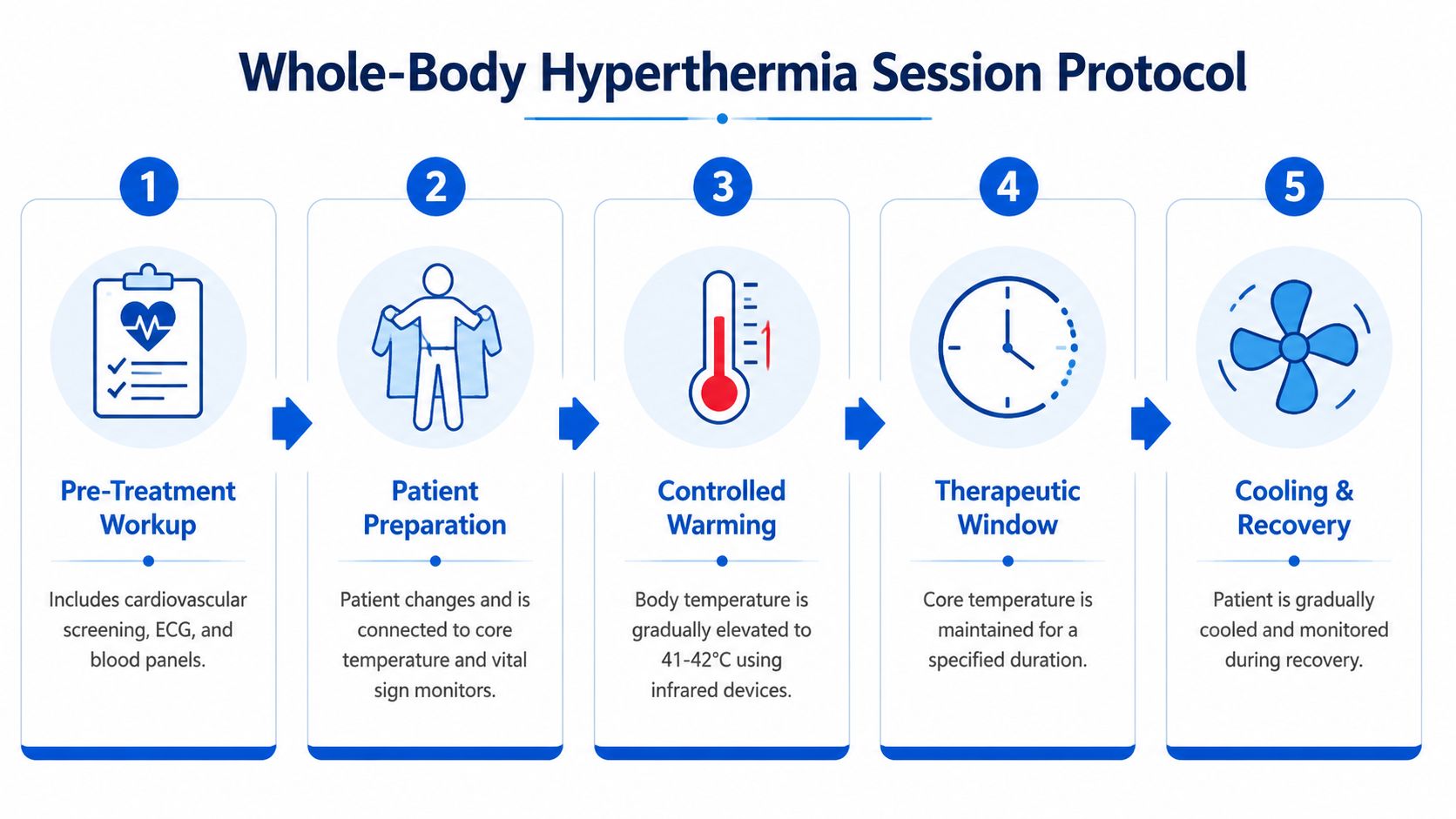
A responsible protocol starts with a medical review rather than a heat chamber. The clinician evaluates the Lyme history, previous antibiotics, current medications, cardiovascular history, kidney function, neurological status, hydration, and relevant laboratory findings. Depending on the patient, cardiovascular screening may include an ECG or additional testing, while blood panels help identify abnormalities that could increase procedural risk.
The patient is then connected to continuous vital-sign monitoring. Core temperature may be measured with an esophageal or rectal probe, and the team establishes a controlled warming plan rather than relying on the patient's subjective sense of heat.
During and after thermal exposure
The patient may be placed in a specialized infrared heating chamber or wrapped in thermal blankets. Protocol descriptions commonly discuss a target core temperature in the 41°C to 42°C range, maintained for a defined period such as 60 to 120 minutes, but the actual prescription must be determined by the treating medical team. IV fluids and electrolyte management may be used, and some protocols include mild sedation for discomfort, anxiety, or the difficulty of remaining still during treatment.
Antibiotics may be timed around the thermal exposure. Ceftriaxone or doxycycline are commonly discussed examples, but the choice depends on the diagnosis, prior treatment, allergies, organ function, and the clinician's treatment rationale. The aim is to coordinate antimicrobial availability with the period when heat may increase bacterial stress or drug susceptibility. That timing is a clinical hypothesis informed by laboratory work, not a guarantee that more heat produces a better result.
The cooling phase is gradual. Staff continue monitoring the patient after temperature returns toward baseline, watching for changes in blood pressure, heart rhythm, neurological status, hydration, and symptoms. A complete session may occupy four to six hours, and some protocols use multiple sessions spaced over several weeks. Patients considering heat-based medical therapies can also review how hyperthermia treatment is discussed in other clinical contexts, while recognizing that cancer protocols and Lyme protocols aren't automatically equivalent.
What the Outcome Data Actually Shows
The most difficult part of evaluating hyperthermia for Lyme disease is separating biological plausibility from dependable patient outcomes. Publicly available summaries describe inconsistent results. One source summarizes approximately 45% improvement, while another cites about three-quarters of patients having a “very good” or “good” outcome (discussion of whole-body hyperthermia for Lyme disease). Those figures can't be treated as interchangeable because they may reflect different patient groups, definitions, protocols, and follow-up methods.
Why reported outcomes vary
Clinic-reported experiences can be useful for generating questions, but uncontrolled observations have important limitations. Patients may receive antibiotics, nutritional support, detoxification care, symptom management, and repeated clinical attention at the same time as hyperthermia. Without a comparison group, it's difficult to determine how much improvement came from heat, antimicrobial therapy, recovery over time, supportive treatment, or changes in the original diagnosis.
The 2022 review chapter on whole-body hyperthermia describes a chronic Lyme protocol attributed to Douwes that used extreme whole-body hyperthermia up to 41.6°C combined with antibiotics, citing temperature-sensitive Borrelia behavior as the rationale (2022 review chapter on whole-body hyperthermia). The description helps explain how protocols developed, but it doesn't resolve whether the approach improves long-term outcomes compared with carefully selected antimicrobial care alone.
| Source or study type | Reported outcomes | Limitations | Evidence quality |
|---|---|---|---|
| Foundational laboratory research | Heat suppressed Borrelia growth and increased susceptibility to selected antibiotics | In vitro findings don't establish human benefit | Biological plausibility |
| Public clinical summaries | Approximately 45% improvement in one summary, and about three-quarters reporting a “very good” or “good” outcome in another | Different definitions and clinical settings make comparison difficult | Fragmented observational evidence |
| 2022 review chapter | Describes a protocol using heat up to 41.6°C with antibiotics | Descriptive protocol evidence doesn't provide a controlled comparison | Limited clinical certainty |
| Comparative clinical evidence | No strong recent independent comparative data identified in the available public literature | Lack of standardized randomized comparisons | Insufficient to establish efficacy |
A realistic expectation is therefore neither dismissal nor enthusiasm without qualification. Hyperthermia may help selected patients, but the available evidence doesn't tell us reliably who will benefit, how durable improvement will be, or whether the primary effect is symptom relief, antimicrobial enhancement, or another biological response.
Safety Considerations and Patient Selection
Whole-body hyperthermia places deliberate stress on the body. Raising core temperature into the 41°C to 42°C range can challenge cardiovascular function, fluid balance, kidney function, neurological stability, and the body's ability to regulate heat. The treatment's intensity is precisely why it shouldn't be offered as a casual wellness service or performed without physician-directed monitoring.
Risks that deserve direct discussion
Potential concerns include cardiovascular instability, arrhythmias, dehydration, electrolyte shifts, and heat-related neurological complications. Patients may also experience a worsening of symptoms associated with an inflammatory response or a possible Herxheimer reaction, although the presence of a reaction doesn't prove that bacterial killing occurred. A clinician should explain what symptoms require immediate intervention rather than encouraging a patient to endure escalating distress.
Public descriptions of whole-body hyperthermia note that some protocols use sedation and ICU-level monitoring. That detail matters because sedation can affect blood pressure, breathing, alertness, and the patient's ability to report symptoms. Patients should ask who provides the monitoring, what emergency resources are immediately available, and how the team manages fluid, electrolyte, cardiac, and temperature changes.
Safety rule: The more physiologically demanding the treatment, the more important the screening and rescue plan become.
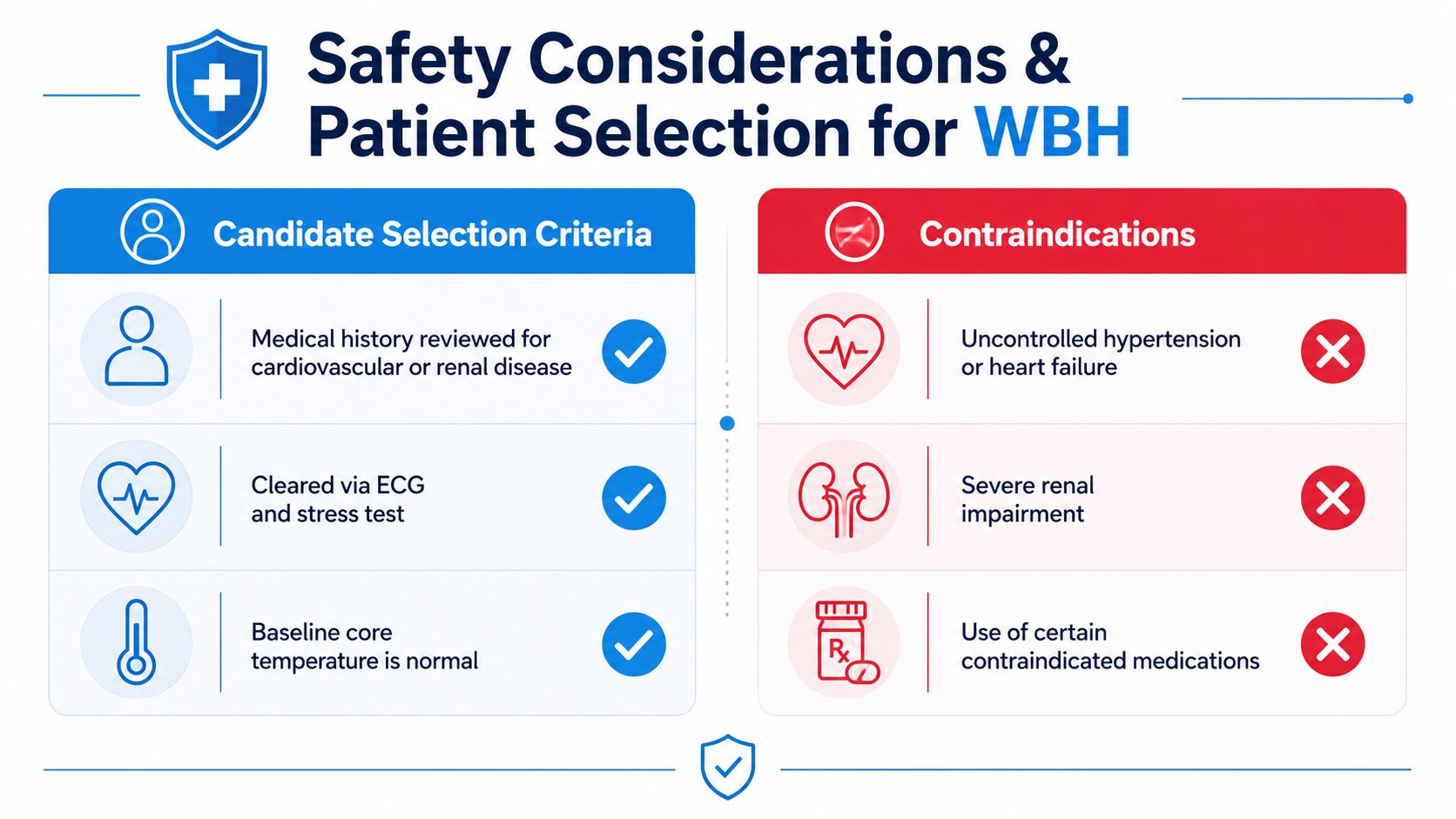
A patient with uncontrolled hypertension, significant cardiac disease, impaired renal function, or certain neurological conditions may not be an appropriate candidate. Medication review is also essential because some drugs can alter thermoregulation, cardiovascular response, kidney function, or sedation risk. There isn't a universal checklist that makes the procedure safe for everyone.
Comparing enthusiasm with responsible selection
Some clinics may focus on the potential antimicrobial rationale, while a careful medical team gives equal weight to contraindications and treatment tolerance. Screening can include a thorough history, ECG, laboratory assessment, hydration review, and additional cardiovascular testing when clinically indicated. The team should also decide whether the patient has enough physiological reserve to complete treatment and recover without a destabilizing setback.
General information about adult fever management strategies can help explain why high body temperature requires thoughtful monitoring, but medically induced hyperthermia is not the same as treating an ordinary fever at home. Patients shouldn't self-treat with extreme heat, attempt to reproduce clinical temperatures, or use fever-reducing medication to alter a prescribed protocol without direct medical guidance.
Integrating Hyperthermia Into Multimodal Lyme Care
Hyperthermia makes the most clinical sense, if it makes sense at all, as one part of a coordinated plan. The laboratory rationale centers on combining heat with antimicrobial therapy, while the patient's broader needs may include symptom control, nutritional support, medication review, sleep restoration, and evaluation for co-infections or other diagnoses.
Sequencing matters
A patient who is dehydrated, nutritionally depleted, severely sleep deprived, or medically unstable may tolerate an intensive thermal procedure poorly. Foundational care comes first. That can include correcting obvious fluid or nutritional problems, reviewing gastrointestinal tolerance, addressing medication interactions, and stabilizing conditions that could complicate sedation or heat exposure.
Antimicrobials may be coordinated with the treatment window when a clinician believes the combination is appropriate. Supportive measures may include IV fluids, electrolyte management, nutritional infusions, and carefully selected supplements, but “detoxification” shouldn't be used as a vague promise or a substitute for monitoring kidney and liver function. The body still needs a medically sound plan for managing inflammation, medication effects, and any worsening of symptoms.
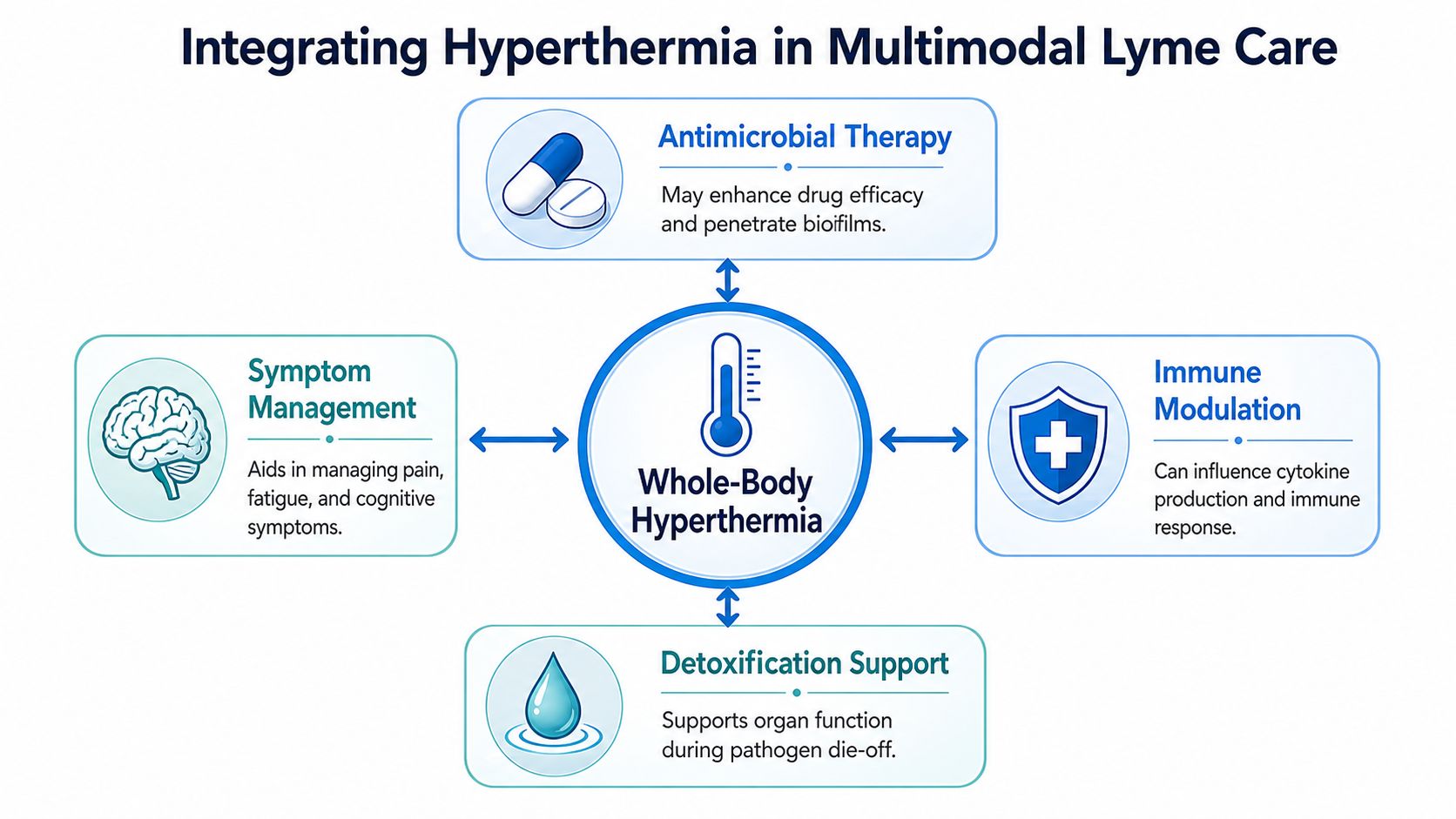
A broader discussion of holistic treatment for managing chronic pain may be useful for understanding how pain, stress, function, and coping strategies can interact. Those approaches don't replace infection assessment, but nervous system regulation, pacing, physical rehabilitation, and psychological support may help patients manage the functional burden of chronic symptoms.
Sunridge Medical's intravenous treatment for Lyme disease is one example of how antimicrobial and supportive therapies may be considered within a physician-directed plan. The precise combination depends on medical history, laboratory findings, previous treatment response, organ function, and the patient's tolerance.
Practical point: A treatment that overwhelms the patient's reserves can create a setback, even when its biological rationale is appealing.
The goal isn't to stack every available therapy. It's to choose interventions in an order that the patient can safely tolerate, measure meaningful changes, and adjust when the response doesn't match expectations.
Evaluating Your Options at Sunridge Medical
Hyperthermia candidacy shouldn't be assumed from symptoms alone. A careful consultation begins with the complete history, including prior doxycycline or amoxicillin courses, other antimicrobial exposure, timing of symptom changes, possible co-infections, medication reactions, cardiovascular history, kidney function, hydration, and the patient's current level of stability.
The clinician also needs to clarify what “success” means for that individual. Is the priority improved mobility, better cognitive function, greater stamina, reduced pain, or a clearer diagnostic direction? Because published outcome summaries are inconsistent and controlled comparative evidence remains limited, a responsible consultation should include uncertainty rather than promise a cure.
What an individualized review may include
A medical team may review prior records and laboratory work, determine whether additional testing is appropriate, assess cardiovascular risk, and evaluate whether the patient can safely tolerate sedation, IV therapy, and prolonged temperature monitoring. The team may also consider whether foundational support should precede any intensive thermal procedure.
Hyperthermia may be discussed alongside antimicrobial treatment, immune-modulating strategies, nutritional IV support, and medically supervised detoxification pathways. It shouldn't be presented as a standalone answer for every person with chronic fatigue, pain, or cognitive symptoms. Patients seeking a broader framework for selecting care can review this clinical guide to choosing advanced integrative care for Lyme disease.
Sunridge Medical is an integrative medical clinic in Scottsdale that evaluates complex chronic conditions through an individualized, evidence-informed model. For patients traveling from Phoenix, Paradise Valley, Tempe, Mesa, Chandler, Gilbert, or elsewhere in Arizona, the consultation can provide a structured opportunity to review records and discuss whether a physician-directed approach is medically appropriate.
Sunridge Medical offers individualized evaluation for Lyme and tick-borne disease, including review of antimicrobial history, supportive IV therapies, and whether hyperthermia may fit safely into a broader plan. Visit Sunridge Medical to request a Scottsdale consultation and discuss your symptoms, prior treatment, and realistic options with the care team.