

SUNRIDGE MEDICAL • INTEGRATIVE ONCOLOGY
Artemisinin and Cancer: Integrative Oncology & Artesunate Therapy
Bring Artemisinin Questions Into a Physician-Directed Plan
Artemisinin products and dosing strategies vary, and cancer use remains investigational. We can review the exact product, oncology treatment, liver status, medications and realistic goals.
- Investigational evidence and limitations are explained clearly
- Product quality, liver status and interactions are reviewed
- Call now for an immediate response from our Patient Care Team
Speak With Our Patient Care Team
Share your diagnosis, current treatment and the artemisinin product or protocol you are considering.
- Investigational evidence and limitations are explained clearly
- Product quality, liver status and interactions are reviewed
- Questions before scheduling are always welcome
Artemisinin and cancer research has attracted growing interest because this natural compound and its derivatives can interact with iron, oxidative stress pathways, cellular metabolism and programmed cell-death mechanisms.
Artemisinin is derived from Artemisia annua, also known as sweet wormwood. Its derivatives—including artesunate, dihydroartemisinin (DHA) and artemether—were originally developed as antimalarial drugs but have since been investigated for potential anticancer activity.
At Sunridge Medical, artemisinin-based therapies may be considered as part of a physician-directed integrative cancer treatment program when appropriate for the individual patient. Treatment decisions are based on diagnosis, laboratory findings, medications, organ function and the broader oncology plan.
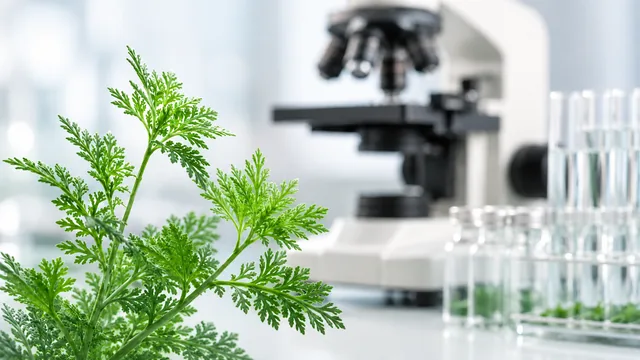
Artemisia annua, the botanical source of artemisinin, a compound being investigated in integrative oncology.
NATURAL COMPOUND • MODERN RESEARCH
What Is Artemisinin?
Artemisinin is a sesquiterpene lactone containing a distinctive endoperoxide bridge. It was isolated from the medicinal plant Artemisia annua and transformed malaria treatment worldwide.
The National Cancer Institute describes artesunate as a water-soluble semisynthetic artemisinin derivative with potential antineoplastic activity. NCI notes that laboratory studies have shown DNA breakage, cell-cycle arrest, inhibition of proliferation and induction of apoptosis through mitochondrial and caspase signaling pathways.1
Those mechanisms are one reason artemisinin derivatives have become an important area of drug-repurposing research in oncology.
ARTEMISININ FAMILY
Artemisinin, Artesunate, DHA and Artemether Are Related—but Not Identical
The term artemisinin is often used broadly, but several related compounds have different pharmaceutical properties.
- Artemisinin is the original natural compound isolated from Artemisia annua.
- Artesunate is a water-soluble semisynthetic derivative that is rapidly converted to the active metabolite dihydroartemisinin.
- Dihydroartemisinin (DHA) is an active metabolite and derivative widely studied in laboratory cancer models.
- Artemether is a lipid-soluble derivative used in antimalarial medicine and studied experimentally in cancer biology.
These compounds should not be treated as interchangeable. Route of administration, pharmacokinetics, metabolism and clinical evidence differ between them.
IRON • HEME • REDOX BIOLOGY
Why Iron Is Central to Artemisinin Cancer Research
One of the most interesting features of artemisinin chemistry is its endoperoxide bridge. When that structure interacts with iron or heme, reactive radical species can be generated.
NCI describes this chemistry for artesunate and notes formation of reactive oxygen species and carbon-centered radicals after activation of the endoperoxide structure.1
Laboratory studies have explored whether cancer cells may be especially susceptible to this mechanism because many tumors alter iron metabolism and increase iron uptake. In prostate-cancer cell research, transferrin-receptor-dependent artemisinin targeting produced apoptosis, supporting the concept that iron handling can influence artemisinin activity.2
Additional laboratory work found that adding iron or transferrin could increase the cytotoxicity of artemisinin derivatives toward tumor cells.3
CELLULAR STRESS
Reactive Oxygen Species, Mitochondria and Apoptosis
Artemisinin derivatives have been studied for their ability to increase oxidative stress inside cancer cells and activate programmed cell-death pathways.
Research in breast-cancer cells found that artesunate activated mitochondrial apoptosis through iron-catalyzed lysosomal reactive oxygen species production.4
NCI also identifies mitochondrial and caspase signaling, DNA damage and cell-cycle effects among the potential antineoplastic mechanisms associated with artesunate.1
This multi-targeted activity is one of the reasons artesunate has been investigated not simply as a plant extract, but as a pharmacologically active compound that may influence several cancer pathways simultaneously.
IRON-DEPENDENT CELL DEATH
Artemisinin Derivatives and Ferroptosis
Ferroptosis is a form of regulated cell death driven by iron-dependent lipid oxidation. It has become an important research area in oncology, particularly in cancers with altered iron metabolism or resistance to other forms of cell death.
Experimental research has shown that artemisinin compounds can sensitize cancer cells to ferroptosis.5 Other studies have reported direct iron-dependent cell death after treatment with artemisinin derivatives.6
Dihydroartemisinin has also been investigated in multiple tumor models for effects involving ferroptosis, glutathione pathways and GPX4-related lipid-peroxide control.
This remains primarily mechanistic and preclinical research, but it has expanded scientific interest in artemisinin compounds well beyond their original antimalarial use.
HUMAN CLINICAL RESEARCH
What Human Cancer Studies Have Found
The strongest reason to remain interested in artemisinin and cancer is that research has progressed beyond cell cultures and animal experiments into early human studies.
The clinical evidence is still much smaller than the evidence base for established oncology drugs, but randomized and phase I studies provide useful information about biological activity, tolerability and dosing feasibility.
RANDOMIZED PILOT STUDY
Oral Artesunate in Colorectal Cancer
A randomized, double-blind, placebo-controlled pilot trial evaluated oral artesunate before surgery in patients with colorectal cancer. Twenty-three patients were randomized to receive 14 days of artesunate or placebo before curative surgery.7
The trial reported evidence consistent with an antiproliferative effect, including a high probability of reduced Ki-67 expression. During a median follow-up of 42 months, recurrence occurred in 1 patient assigned to artesunate and 6 assigned to placebo, although the study was far too small to establish a recurrence or survival benefit.7
The investigators concluded that artesunate showed antiproliferative properties in colorectal cancer and was generally well tolerated.
INTRAVENOUS ARTESUNATE
Phase I Study of IV Artesunate in Advanced Solid Tumors
A phase I dose-escalation study investigated intravenous artesunate in patients with advanced solid tumors. Nineteen patients were enrolled, primarily with heavily pretreated cancers.8
The study established a maximum tolerated dose for the schedule being tested. No objective tumor responses were observed, but four evaluable patients experienced stable disease, including three patients with prolonged stable disease lasting 8, 10 and 11 treatment cycles.8
The investigators reported that IV artesunate was generally tolerable at the established study dose and described the clinical activity as modest in this heavily pretreated population.
This trial is important because it demonstrates that intravenous artesunate has undergone formal oncology dose-escalation research rather than existing only as a laboratory concept.
ORAL ARTESUNATE
Phase I Artesunate Research in Metastatic Breast Cancer
A prospective phase I study evaluated oral artesunate as an add-on treatment in patients with metastatic breast cancer who continued their guideline-based oncology therapy.9
Twenty-three patients received escalating oral doses for approximately four weeks. The investigators reported that the tested doses were generally well tolerated and recommended the highest studied daily dose for future phase II/III research.9
Longer-term compassionate-use follow-up has also been published in a small group of metastatic breast-cancer patients who continued oral artesunate after participating in the phase I program.10
These studies primarily establish feasibility and safety information; they do not prove that artesunate improves survival in metastatic breast cancer.
WHY ARTESUNATE IS OFTEN DISCUSSED
Artesunate Has Advantages for Clinical Investigation
Among the artemisinin derivatives, artesunate has received particular attention in oncology research.
It is water soluble, rapidly converted to DHA and already has an established pharmaceutical history as an antimalarial drug. The FDA has approved Artesunate for Injection for the initial treatment of severe malaria in adults and children.11
That FDA approval is for malaria—not cancer—but the existence of a pharmaceutical-grade injectable formulation and extensive antimalarial experience helped make artesunate a practical candidate for drug-repurposing studies in oncology.
SUNRIDGE MEDICAL
Artemisinin-Based Therapy in Integrative Oncology
At Sunridge Medical, artemisinin-based therapy may be considered as one component of an individualized integrative cancer program.
The decision is not based solely on the diagnosis. Factors that can influence treatment planning include:
- Cancer type and stage
- Current chemotherapy, immunotherapy, targeted therapy or radiation
- Blood counts
- Liver and kidney function
- Medication interactions
- Previous treatment response
- Overall treatment tolerance
- Other physician-directed integrative therapies being used
Artemisinin or artesunate may be combined within a broader program that can also include physician-directed IV therapy, nutritional medicine, botanical medicine, metabolic strategies and other integrative oncology approaches selected for the individual patient.
PHYSICIAN-DIRECTED MONITORING
Why Medical Supervision Matters
Artemisinin compounds are pharmacologically active drugs, not simply nutritional supplements.
Clinical trials of artesunate in cancer patients have reported adverse events including changes in white-cell counts, neutropenia, anemia, fatigue, hypersensitivity reactions, liver-test abnormalities, nausea and vomiting depending on route, dose and study population.89
The appropriate laboratory monitoring depends upon the patient’s medical condition and concurrent treatment. This is especially important in patients already receiving therapies that affect the bone marrow, liver or other organ systems.
BOTANICAL VS PHARMACEUTICAL
Artemisia annua Is Not the Same as Artesunate
Artemisia annua is the plant from which artemisinin was originally isolated. Herbal preparations can contain artemisinin along with many other plant constituents, but their concentration and pharmacokinetics differ from purified pharmaceutical derivatives.
Artesunate is a defined semisynthetic molecule. Dihydroartemisinin and artemether are also chemically distinct derivatives.
For an oncology program, the exact compound, formulation and route matter. Research involving purified artesunate should not automatically be interpreted as evidence for any Artemisia annua tea, capsule or extract.
WHERE THE RESEARCH IS HEADING
Why Artemisinin Remains an Important Cancer Research Candidate
Artemisinin derivatives sit at an unusual intersection of natural medicine and modern pharmacology.
They originate from a medicinal plant but have been developed into defined pharmaceutical compounds. Their chemistry provides a plausible connection between iron metabolism, oxidative stress and cancer-cell death. Preclinical work spans apoptosis, ferroptosis, DNA damage, cell-cycle regulation and other signaling pathways, while early human trials have provided initial safety and biological-activity data.
Large, definitive trials demonstrating improved cancer survival are still needed. At the same time, the existing body of research is substantial enough that artesunate continues to attract serious interest as a repurposed oncology agent.
FREQUENTLY ASKED QUESTIONS
Frequently Asked Questions About Artemisinin and Cancer
What is artemisinin?
Artemisinin is a natural compound originally isolated from the medicinal plant Artemisia annua. It contains an endoperoxide structure that is central to its biological activity.
What is artesunate?
Artesunate is a water-soluble semisynthetic derivative of artemisinin. It is rapidly converted in the body to dihydroartemisinin and is FDA-approved for severe malaria. Its use as a cancer treatment remains investigational.
Why is artemisinin being studied for cancer?
Laboratory studies suggest that artemisinin derivatives can interact with iron and heme, generate reactive radical species, affect mitochondrial signaling, induce apoptosis, alter cell-cycle regulation and influence ferroptosis-related pathways.
Has artemisinin been studied in cancer patients?
Yes. Human research includes a randomized pilot study of oral artesunate in colorectal cancer, phase I intravenous artesunate research in advanced solid tumors, and phase I oral artesunate studies in metastatic breast cancer.
Does artemisinin work against all cancers?
There is no clinical evidence establishing artemisinin as effective against every cancer type. Sensitivity may vary according to tumor biology, iron metabolism, treatment context and the specific artemisinin derivative being studied.
Is artesunate FDA-approved for cancer?
No. FDA approval of Artesunate for Injection is for severe malaria. Oncology use is investigational and should be medically supervised.
Does Sunridge Medical use artemisinin-based therapies?
Artemisinin or artesunate may be considered within individualized physician-directed integrative oncology programs when clinically appropriate.
Can artesunate be combined with other cancer therapies?
Clinical studies have evaluated artesunate as an add-on to standard oncology therapy, but combination decisions require review of the specific medications, blood counts, organ function and treatment schedule.
BECOME A PATIENT
Explore Physician-Directed Integrative Cancer Care
Artemisinin-based therapies represent one of several research-driven approaches that may be considered within an individualized integrative oncology program.
Our Patient Care Team can discuss your diagnosis, current treatment, previous therapies and goals and help determine the appropriate next step.
RESEARCH
References
- National Cancer Institute. Artesunate – NCI Drug Dictionary.
- Nakase I, et al. Transferrin receptor-dependent cytotoxicity of artemisinin-transferrin conjugates on prostate cancer cells and induction of apoptosis. Cancer Letters. 2009.
- Efferth T, et al. Enhancement of cytotoxicity of artemisinins toward cancer cells by ferrous iron.
- Hamacher-Brady A, et al. Artesunate activates mitochondrial apoptosis in breast cancer cells via iron-catalyzed lysosomal reactive oxygen species production.
- Chen GQ, et al. Artemisinin compounds sensitize cancer cells to ferroptosis by regulating iron homeostasis.
- Ooko E, et al. Artemisinin derivatives induce iron-dependent cell death in cancer cells.
- Krishna S, et al. A Randomised, Double Blind, Placebo-Controlled Pilot Study of Oral Artesunate Therapy for Colorectal Cancer. EBioMedicine.
- Deeken JF, et al. A phase I study of intravenous artesunate in patients with advanced solid tumor malignancies. Cancer Chemotherapy and Pharmacology. 2018.
- von Hagens C, et al. Prospective open uncontrolled phase I study to define a well-tolerated dose of oral artesunate as add-on therapy in patients with metastatic breast cancer.
- von Hagens C, et al. Long-term add-on therapy with oral artesunate in patients with metastatic breast cancer. Phytomedicine. 2019.
- U.S. Food and Drug Administration. Artesunate for Injection approval letter. FDA approval is for severe malaria.
Research organized by cancer type
Browse 50 source-linked studies with the full title, publication year, research focus and a concise finding. Select any linked cancer type to move directly to its corresponding Sunridge page.
Artesunate Inhibits Metastatic Potential in Cisplatin-Resistant Bladder Cancer Cells by Altering Integrins.
2025 · Metastasis and invasion
Artesunate (ART) a derivative of artemisinin, used in Traditional Chinese Medicine, shows anti-tumor activity extending over a broad spectrum of human cancers.
Artesunate induces ferroptosis in osteosarcoma through NCOA4-mediated ferritinophagy.
2025 · Apoptosis and cell death
Artesunate (ART) has been proved to have remarkable treatment effects on severe malaria and anti-tumor properties.
Artesunate in glioblastoma therapy: Case reports and review of clinical studies.
2024 · Cancer biology and response
While 8 patients with late stage of the disease had a median survival of 5 months after initiation of artesunate treatment, 4 patients with treatment for remission maintenance showed a median survival of 46 months.
Dihydroartemisinin inhibits EMT of glioma via gene BASP1 in extrachromosomal DNA.
2023 · Metastasis and invasion
The mechanism of dihydroartemisinin (DHA) inhibiting the migration and invasion of glioma in an ROS-DSB-dependent manner has been revealed.
Dihydroartemisinin initiates ferroptosis in glioblastoma through GPX4 inhibition.
2020 · Metastasis and invasion
It has been demonstrated from previous studies about the killing effect of dihydroartemisinin (DHA) on glioblastoma, which involves multiple aspects: cytotoxicity, cell cycle arrest and invasion inhibition.
Dihydroartemisinin suppresses glioma growth by repressing ERRα-mediated mitochondrial biogenesis.
2024 · Immune and inflammatory signaling
Our data demonstrated that DHA significantly inhibited glioma cell proliferation in both temozolomide-resistant cells and glioma stem-like cells.
Synthesis and anti-glioblastoma effects of artemisinin-isothiocyanate derivatives.
2018 · Cancer biology and response
All the compounds showed more potent anti-tumor effects than those of parent dihydroartemisinin (DHA) towards glioblastoma multiforme U87 in vitro.
Susceptibility of cervical cancer to dihydroartemisinin-induced ferritinophagy-dependent ferroptosis.
2023 · Apoptosis and cell death
Dihydroartemisinin (DHA), the primary active metabolites of artemisinin and its derivatives, has exhibited a variety of anticancer properties with low toxicity.
Anticancer Effects of Dihydroartemisinin on Human Esophageal Cancer Cells In Vivo.
2018 · Cancer biology and response
Dihydroartemisinin (DHA), a semisynthetic derivative of artemisinin, has recently exhibited promising anticancer activity against various cancer cells.
Dihydroartemisinin represses esophageal cancer glycolysis by down-regulating pyruvate kinase M2.
2019 · Metabolism and redox biology
We have previously demonstrated that dihydroartemisinin (DHA) has anticancer effect on esophageal cancer.
Artesunate induces ferroptosis in gastric cancer by targeting the TFRC-HSPA9 axis for iron homeostasis regulation.
2025 · Apoptosis and cell death
Additionally, in vivo studies confirm artesunate's anti-tumor efficacy, showing marked tumor growth inhibition and minimal systemic toxicity.
Dihydroartemisinin inhibited vasculogenic mimicry in gastric cancer through the FGF2/FGFR1 signaling pathway.
2024 · Cancer biology and response
Dihydroartemisinin (DHA) is a potential natural antitumor substance that inhibits the progression of tumors in many ways.
Dihydroartemisinin inhibits galectin-1-induced ferroptosis resistance and peritoneal metastasis of gastric cancer via the Nrf2-HO-1 pathway.
2025 · Metastasis and invasion
This study investigated the role and mechanism of galectin-1 within the GC microenvironment in promoting PM and evaluated the inhibitory effects of dihydroartemisinin(DHA) on galectin-1-induced PM.
The Therapeutic Effects of Dihydroartemisinin on Cisplatin-Resistant Gastric Cancer Cells.
2022 · Treatment response
Dihydroartemisinin (DHA) exhibited anti-tumor effect in a variety of cancer cells, but its mechanism of action is unclear.
[Dihydroartemisinin enhances sensitivity of nasopharyngeal carcinoma HNE1/DDP cells to cisplatin-induced apoptosis by promoting ROS production].
2024 · Treatment response
To investigate the effect of dihydroartemisinin (DHA) for enhancing the inhibitory effect of cisplatin (DDP) on DDP-resistant nasopharyngeal carcinoma cell line HNE1/DDP and explore the mechanism.
[Dihydroartemisinin inhibits the progression of oral squamous cell carcinoma].
2026 · Metastasis and invasion
Bioinforma-tics analysis showed that the survival rate of patients with extracapsular spread and metastasis in tumor tissues was lower than that of patients without such phenomena (P<0.05).
Dihydroartemisinin inhibits HNSCC invasion and migration by controlling miR-195-5p expression.
2024 · Metastasis and invasion
Dihydroartemisinin (DHA), an artemisinin derivative extracted from the traditional Chinese medicinal herb Artemisia annua, has the potential to suppress head and neck squamous cell carcinoma (HNSCC) progression.
Repurposing Dihydroartemisinin to Combat Oral Squamous Cell Carcinoma, Associated with Mitochondrial Dysfunction and Oxidative Stress.
2023 · Metabolism and redox biology
Dihydroartemisinin (DHA), as a derivative of artemisinin, has been found to exert potent antitumor activity.
Targeting nasopharyngeal carcinoma by artesunate through inhibiting Akt/mTOR and inducing oxidative stress.
2017 · Tumor growth and proliferation
We demonstrate that artesunate significantly inhibits proliferation via arresting NPC cells at G2/M phase.
Artesunate induces apoptosis and inhibits the proliferation, stemness, and tumorigenesis of leukemia.
2020 · Apoptosis and cell death
Artesunate (Art), a semi-synthetic derivative of artemisinin, is commonly used as an antimalarial drug and has been proven to possess anticancer potential.
Dihydroartemisinin Triggers Ferroptosis in Multidrug-Resistant Leukemia Cells.
2022 · Apoptosis and cell death
However, dihydroartemisinin (DHA) restrained MDR K562/ADM cell viability and enhanced the sensitivity to ADM by strengthening ferroptosis induced by downregulation of GSH levels and GPX4, IRP2, and FTH expression, upregulation of reactive oxygen species (ROS) levels, and the consequent suppression of total serine/threonine kinase (AKT), total mammalian target of rapamycin (t-mTOR), phosphorylated mTOR (p-mTOR), and p-mTOR/t-mTOR levels.
Dihydroartemisinin-induced ferroptosis in acute myeloid leukemia: links to iron metabolism and metallothionein.
2023 · Apoptosis and cell death
Artemisinin is an anti-malarial drug that has shown anticancer properties.
Evaluation of artemisinins for the treatment of acute myeloid leukemia.
2016 · Cancer biology and response
Artemisinins with improved pharmacokinetic properties may offer therapeutic benefit in combination with conventional therapeutic strategies in AML.
Formononetin and Dihydroartemisinin Act Synergistically to Induce Apoptosis in Human Acute Myeloid Leukemia Cell Lines.
2024 · Treatment response
We showed that treatment with either formononetin or dihydroartemisinin alone, led to significant decrease in the cell survival and growth, and triggered apoptosis in U937 and KG-1 AML cell lines.
Retraction to artesunate induces apoptosis and inhibits the proliferation, stemness, and tumorigenesis of leukemia.
2022 · Apoptosis and cell death
The study reports retraction to artesunate induces apoptosis and inhibits the proliferation, stemness, and tumorigenesis of leukemia.
Synthesis, Antiplasmodial, and Antileukemia Activity of Dihydroartemisinin-HDAC Inhibitor Hybrids as Multitarget Drugs.
2022 · Cancer biology and response
Furthermore, the hybrid (α)-7c displayed improved activity against artemisinin-resistant parasites compared to dihydroartemisinin.
Artesunate directly targets glucosylceramidase to suppress hepatocellular carcinoma proliferation and trigger apoptosis.
2026 · Apoptosis and cell death
Network calculation and a series of in vivo and in vitro experimental data demonstrated that the apoptosis-related GBA-ceramide-CTSD-BID-BAX signaling was one of the key putative target pathways by which artesunate may inhibit the malignant progression of HCC.
Artesunate inhibits hepatocellular carcinoma cell migration and invasion through OGA-mediated O-GlcNAcylation of ZEB1.
2025 · Metastasis and invasion
Our results demonstrated that artesunate significantly inhibited HCC cell viability, migration, and invasion.
Artesunate Sensitizes human hepatocellular carcinoma to sorafenib via exacerbating AFAP1L2-SRC-FUNDC1 axis-dependent mitophagy.
2024 · Treatment response
Mechanically, artesunate reduced the expression of AFAP1L2 protein, suppressed the phosphorylation levels of SRC and FUNDC1 proteins, promoted the FUNDC1 recruitment of massive LC3B to mitochondria, and further overactivated the mitophagy and subsequent cell apoptosis of sorafenib resistant cells.
Artesunate synergizes with sorafenib to induce ferroptosis in hepatocellular carcinoma.
2021 · Treatment response
We showed that artesunate greatly enhanced the anticancer effects of low dose of sorafenib against Huh7, SNU-449, and SNU-182 HCC cell lines in vitro and against Huh7 cell xenograft model in Balb/c nude mice.
Dihydroartemisinin promoted FXR expression independent of YAP1 in hepatocellular carcinoma.
2022 · Tumor growth and proliferation
Our previous research showed that dihydroartemisinin (DHA) inhibited cell proliferation in HepG2 and HepG22215 cells.
Dihydroartemisinin inhibits lung cancer bone metastasis by modulating macrophage polarization.
2025 · Metastasis and invasion
In vitro, DHA was found to inhibit M2 polarization while promoting M1 polarization of macrophages, thereby reducing the invasion and migration of lung cancer cells.
[Antitumor Effect of Dihydroartemisinin on Diffuse Large B-Cell Lymphoma].
2022 · Cancer biology and response
To investigate the potential antitumor effect and its mechanism of dihydroartemisinin (DHA) on diffuse large B-cell lymphoma (DLBCL).
Artesunate activates the ATF4-CHOP-CHAC1 pathway and affects ferroptosis in Burkitt's Lymphoma.
2019 · Apoptosis and cell death
showed that artesunate induced ferroptosis in DAUDI and CA-46 cells, as evidenced by the protective effect of liproxstatin-1, ferrostatin-1, and desferoxamine, resulting in an endoplasmic reticulum stress response, activation of the ATF4-CHOP-CHAC1 pathway enhanced ferroptosis in DAUDI and CA-46 cells.
Artesunate shows potent anti-tumor activity in B-cell lymphoma.
2018 · Tumor growth and proliferation
Artesunate markedly inhibited highly aggressive tumor growth in a xenograft model.
Dihydroartemisinin Induced Apoptosis and Synergized With Chemotherapy in Pleural Effusion Lymphoma Cells.
2023 · Treatment response
N-acetylcysteine treatment inhibited DHA-induced ROS elevation and suppressed expression of cleaved caspases leading to significantly reduced PEL apoptosis.
Engineered Artesunate-Naphthalimide Hybrid Dual Drug for Synergistic Multimodal Therapy against Experimental Murine Lymphoma.
2024 · Treatment response
Napthalimide-artesunate conjugates inhibit the growth of lymphoma and induce apoptosis, including ready incorporation and reduction in cell viability.
Mechanisms of Dihydroartemisinin and Dihydroartemisinin/Holotransferrin Cytotoxicity in T-Cell Lymphoma Cells.
2015 · Immune and inflammatory signaling
We found that Jurkat cells (a T-cell lyphoma cell line) were sensitive to DHA treatment with a IC50 of dihydroartemisinin.
Artesunate induces melanoma cell ferroptosis and augments antitumor immunity through targeting Ido1.
2024 · Apoptosis and cell death
In our study, we found that ART inhibited melanoma cell proliferation and induced melanoma cell ferroptosis.
Artesunate inhibits vasculogenic mimicry in choroidal melanoma through HIF-1 α/ VEGF/PDGF pathway.
2024 · Cancer biology and response
This study explored the inhibitory impact of the anti-malarial drug Artesunate (ART) on CM VM through modulation of the HIF-1α/VEGF/PDGF pathway.
Artesunate nanoliposome-hydrogel: a dual-modal therapy for post-surgical melanoma.
2026 · Immune and inflammatory signaling
Artesunate (ARS) emerges as a promising multimodal agent with concurrent anticancer, anti-inflammatory, and tissue-regenerative properties.
Dihydroartemisinin inhibits melanoma migration and metastasis by affecting angiogenesis.
2025 · Metastasis and invasion
As a potential anti-angiogenic agent, Dihydroartemisinin (DHA) can effectively inhibit tumor metastasis.
Artesunate triggers ferroptosis in ovarian cancer via GP130-mediated IL-6/STAT3/OTUB1/SLC711 axis disruption.
2025 · Apoptosis and cell death
Artesunate (ART) has demonstrated relatively broad-spectrum anticancer effects recently, yet whether it can suppress OC by inducing ferroptosis, along with the underlying mechanisms, warrants further exploration.
Dihydroartemisinin inhibits metastatic potential and cancer stemness by modulating the miR-200b-BMI-1/VEGF-A axis in ovarian cancer.
2025 · Metastasis and invasion
Here we demonstrated that dihydroartemisinin (DHA), a derivative of the antimalarial drug artemisinin, inhibits CSC characteristics, tumor neovascularization and resistance to carboplatin via a microRNA-dependent mechanism in ovarian cancer.
Novel Cyano-Artemisinin Dimer ZQJ29 Targets PARP1 to Induce Ferroptosis in Pancreatic Cancer Treatment.
2025 · Apoptosis and cell death
Notably, ZQJ29 is the first reported artemisinin derivative to inhibit PARP1.
Artesunate enhances the efficacy of enzalutamide in advanced prostate cancer.
2025 · Cancer biology and response
Artesunate (ART), a semisynthetic derivative of the Artemisinin plant, is approved for antimalaria treatment.
Dihydroartemisinin induces cell apoptosis through repression of UHRF1 in prostate cancer cells.
2022 · Metastasis and invasion
Our results suggested that dihydroartemisinin decreases proliferation and migration but enhances apoptosis of PCa cells, likely by downregulating UHRF1 and upregulating p16INK4A.
Artesunate induces ferroptosis in osteosarcoma through NCOA4-mediated ferritinophagy.
2025 · Apoptosis and cell death
Artesunate (ART) has been proved to have remarkable treatment effects on severe malaria and anti-tumor properties.
Inactivation of PDH can Reduce Anaplastic Thyroid Cancer Cells' Sensitivity to Artemisinin.
2022 · Cancer biology and response
Artemisinin treatment significantly decreased the expression levels of COX2 and COX7A2 and increased that of COX14, YEM1l1, ALAS1, and OAT after 48h.
Pyrvinium pamoate can overcome artemisinin's resistance in anaplastic thyroid cancer.
2021 · Apoptosis and cell death
The combination of artemisinin and pyrvinium pamoate suppressed the growth of CAL-62 cells and induced the apoptosis.
No studies match those filters. Clear a filter or try a broader term.