
You've completed the antibiotics your physician prescribed, yet the migrating joint pain, fatigue, or brain fog hasn't disappeared. Searching for intravenous treatment for Lyme disease can feel like the logical next step, especially when online clinics present IV therapy as a stronger answer than oral medication. The problem is that “IV treatment” can refer to very different things, from guideline-based antibiotics for serious complications to nutrient infusions and investigational protocols with much less supporting evidence.
The practical question isn't just whether an IV can help. It's whether your symptoms, examination, testing, and disease stage justify the risks of intravenous therapy. Evidence-based care uses IV antibiotics selectively, while integrative care may address persistent symptoms through a broader evaluation rather than assuming that more antibiotics are always the answer.
Table of Contents
- When Intravenous Treatment Becomes Part of Lyme Disease Care
- Clinical Situations Where IV Antibiotics Are Guideline-Recommended
- What the Evidence Shows About IV Ceftriaxone and Outcomes
- Conventional IV Antibiotics Versus Adjunctive IV Therapies
- Why Prolonged IV Antibiotic Courses Are Not Recommended
- How Integrative Medicine Approaches Complex Lyme Disease
- Next Steps for Patients Considering IV Treatment in Scottsdale
When Intravenous Treatment Becomes Part of Lyme Disease Care
A patient may arrive after two rounds of oral doxycycline with fatigue, migrating joint pain, poor concentration, and a growing sense that something has been missed. They may have already searched forums, watched infusion-center videos, and compared clinics offering ceftriaxone, vitamin C, glutathione, ozone, or mineral infusions. The frustration is understandable. Persistent symptoms deserve careful evaluation, not dismissal.
At the same time, persistent symptoms alone don't establish that active Borrelia infection remains or that intravenous antibiotics will improve the underlying problem. The Sunridge Medical Lyme disease program is one example of an integrative setting where the treatment question can be considered alongside the broader clinical picture, rather than treated as a standalone infusion decision.
The central distinction
IV antibiotics have an established role when Lyme disease affects specific organs or systems. Neurologic involvement, severe cardiac conduction abnormalities, and selected difficult cases of Lyme arthritis can justify parenteral treatment under major guideline frameworks. These situations differ substantially from nonspecific fatigue, pain, or cognitive complaints after prior therapy.
That distinction matters because an IV line creates real exposure to complications, while the benefit depends on the diagnosis being treated. A patient with meningitis or clinically significant Lyme carditis may need prompt hospital-based care. A patient with ongoing brain fog and fatigue may need a different diagnostic and rehabilitation strategy, even when those symptoms are profoundly disruptive.
Practical rule: The route of treatment should follow the complication being treated, not the severity of frustration alone.
A useful consultation should answer four questions:
- What diagnosis is active now? Lyme disease, a coinfection, an inflammatory condition, medication effect, sleep disorder, autonomic dysfunction, or another problem can produce overlapping symptoms.
- What objective findings support escalation? Neurologic examination, cerebrospinal fluid results, cardiac testing, imaging, or joint findings may change the plan.
- What outcome should improve? Treatment should have a defined target, such as stabilizing carditis or treating confirmed neurologic inflammation.
- What risks are acceptable? Venous access, medication reactions, gastrointestinal complications, and monitoring needs belong in the decision from the beginning.
Clinical Situations Where IV Antibiotics Are Guideline-Recommended
The strongest rationale for IV antibiotics appears when Lyme disease has reached a clinically important neurologic or cardiac complication. The 2020 guideline from the Infectious Diseases Society of America Lyme disease guideline supports IV ceftriaxone, cefotaxime, or penicillin G, as well as oral doxycycline, for Lyme-associated meningitis, cranial neuropathy, radiculoneuropathy, or other peripheral nervous system involvement. In hospitalized Lyme carditis, the guideline suggests starting with IV ceftriaxone until improvement allows a transition to oral therapy.
Findings that can change the route
The diagnosis usually depends on the clinical presentation plus targeted testing. Cerebrospinal fluid analysis may help evaluate suspected meningitis or other central nervous system involvement. MRI findings can support concern for parenchymal brain or spinal cord disease when interpreted with the examination and history. ECG abnormalities, especially high-grade atrioventricular block, can make Lyme carditis an urgent hospital problem rather than an outpatient infusion decision.
Uncomplicated early Lyme disease generally remains an oral-treatment condition. Oral doxycycline, amoxicillin, or cefuroxime are commonly used when the patient has an appropriate diagnosis without serious neurologic or cardiac involvement. Patients reviewing oral options may also find a plain-language cefuroxime patient guide useful, but medication selection still belongs with the treating clinician.
| Clinical Presentation | Recommended Route | Typical Agent |
|---|---|---|
| Lyme meningitis, cranial neuropathy, radiculoneuropathy, or peripheral nervous system involvement | Oral or IV, depending on severity and clinical context | Doxycycline, ceftriaxone, cefotaxime, or penicillin G |
| Parenchymal brain or spinal cord involvement | IV is generally favored | Ceftriaxone, cefotaxime, or penicillin G |
| Hospitalized Lyme carditis with significant conduction disease | IV initially, then oral after improvement when appropriate | Ceftriaxone |
| Uncomplicated early Lyme disease | Oral | Doxycycline, amoxicillin, or cefuroxime |
| Lyme disease without neurologic involvement or third-degree atrioventricular block | Oral rather than first-line IV | An appropriate oral agent |
| Selected Lyme arthritis requiring parenteral therapy | IV may be considered after clinical assessment | Ceftriaxone |
Lyme symptoms can also overlap with other tick-borne infections. A clinician assessing possible Lyme coinfections may need to consider the symptom pattern, exposure history, laboratory findings, and response to prior treatment before attributing every complaint to Lyme disease alone.
What the Evidence Shows About IV Ceftriaxone and Outcomes
IV ceftriaxone is the most familiar antibiotic in discussions of intravenous Lyme care because it reaches the central nervous system and has been studied in neurologic disease. Its role is clearest when the patient has an acute disseminated complication that requires parenteral therapy. It isn't automatically superior to oral treatment for uncomplicated infection.
Short-term improvement is not the same as durable recovery
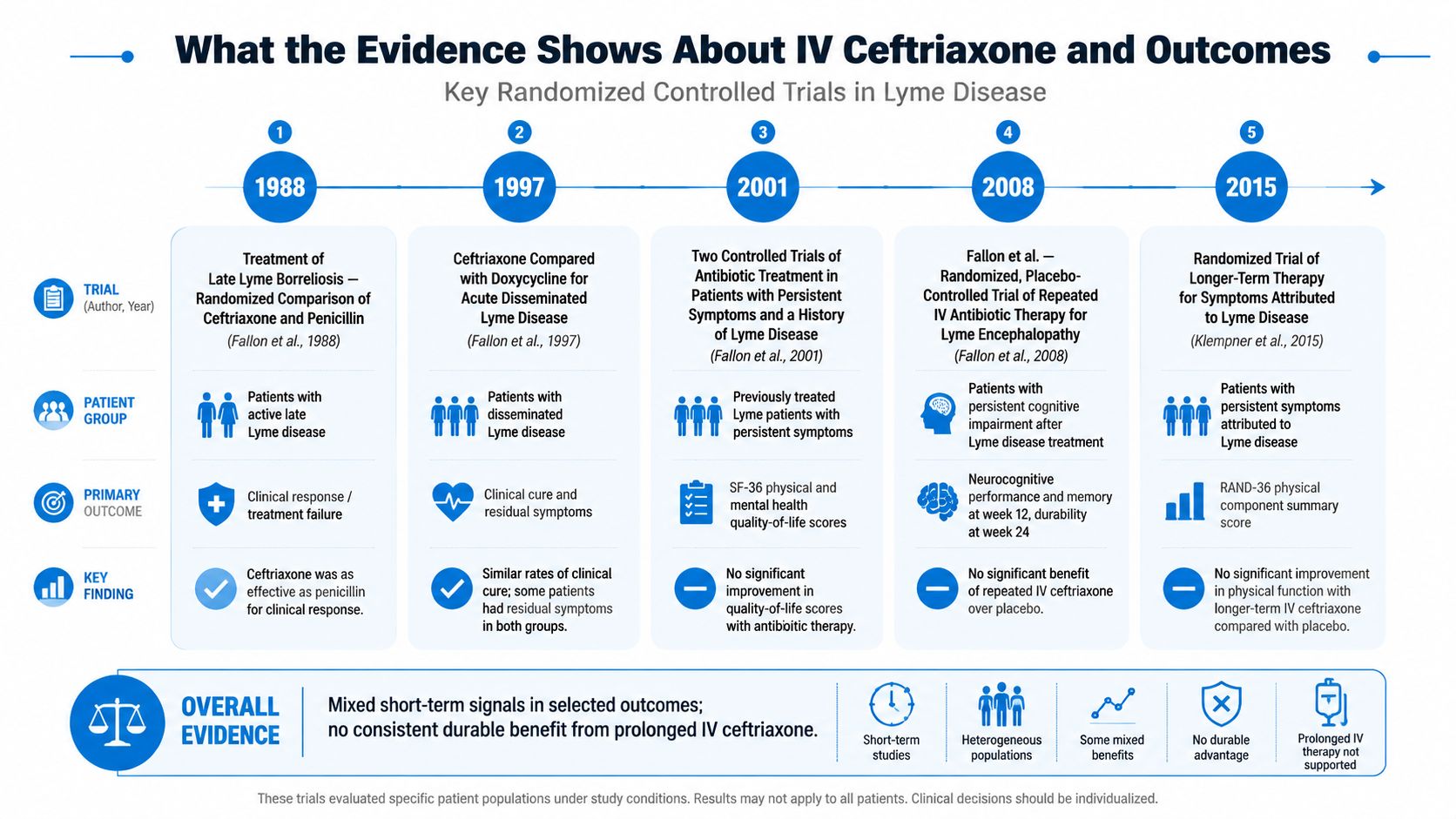
A randomized, placebo-controlled trial published in Neurology found that IV ceftriaxone produced short-term cognitive improvement in patients with post-treatment Lyme encephalopathy. Cognitive relapse occurred after the antibiotic was stopped, however. That result captures the central limitation of ceftriaxone in persistent-symptom discussions. A treatment can produce a measurable change during or soon after administration without proving that prolonged therapy will create lasting recovery. The randomized trial report is important for understanding both possibilities.
The U.S. evidence base is also mixed. A review of U.S. trials found that only two of four trials showed efficacy on primary or secondary outcomes. The authors concluded that fatigue may improve for some patients, while sustained benefits for pain and physical dysfunction remain uncertain, particularly when weighed against IV-line and drug-related adverse events. That uncertainty is why a careful clinician defines the outcome before placing a line.
Why courses remain limited
Major guidance uses limited courses rather than open-ended infusions. CDC treatment pages list ceftriaxone 2 grams IV once daily for 14 to 21 days for adults with neurologic Lyme disease and Lyme carditis, and 14 to 28 days for Lyme arthritis when parenteral therapy is needed, as shown in the CDC-aligned clinical guidance table. Earlier IDSA guidance also specified ceftriaxone 2 grams IV once per day for 14 days, with a 10 to 28 day range, for early Lyme disease with acute neurologic manifestations.
Those boundaries reflect diminishing confidence in benefit beyond the studied treatment window, while exposure to line complications and medication toxicity continues. The appropriate duration depends on the manifestation, severity, response, allergy history, and monitoring environment. It shouldn't be extended just because symptoms remain.
For patients whose primary concerns are fatigue, pain, and cognitive slowing after treatment, care after years of Lyme disease requires a broader assessment of possible contributors instead of assuming that ceftriaxone is the missing step.
Conventional IV Antibiotics Versus Adjunctive IV Therapies
Online searches often place ceftriaxone beside high-dose vitamin C, glutathione, B vitamins, trace minerals, ozone autohemotherapy, hydrogen peroxide, or other infusions. These therapies don't occupy the same evidence category, and presenting them as interchangeable can make informed consent difficult.
Ceftriaxone, cefotaxime, and penicillin G are conventional antimicrobial options with defined roles in selected neurologic, cardiac, and joint complications. Adjunctive infusions may be considered for a different purpose, such as correcting a documented deficiency or supporting a symptom-management plan. They shouldn't be described as proven substitutes for antibiotic treatment when active complicated Lyme disease is present.
Questions that clarify an infusion proposal
Before agreeing to any IV therapy, ask what physiological problem it targets and what result would count as success. A nutrient infusion may be reasonable when a clinician identifies a relevant deficiency or a specific supportive indication. That doesn't establish activity against Borrelia burgdorferi.
Patients should also ask whether the treatment has controlled, Lyme-specific evidence and what adverse effects are recognized. IV immunoglobulin, for example, has a medical role in documented immune deficiencies, but that role shouldn't be generalized into routine treatment for Lyme disease without a clear indication.
| IV Therapy | Evidence Level | Primary Indication | Risk Profile |
|---|---|---|---|
| Ceftriaxone | Established for selected Lyme complications | Neurologic disease, hospitalized significant carditis, or selected arthritis cases | Drug reactions, venous-access complications, and other antibiotic-related risks |
| Cefotaxime or penicillin G | Established option in selected neurologic disease | Defined neurologic manifestations when clinically appropriate | Allergy, infusion, line, and antibiotic-related risks |
| IV immunoglobulin | Established for specific immune disorders, not routine Lyme treatment | Documented immune deficiency or another recognized indication | Infusion reactions and product-specific risks |
| High-dose vitamin C or nutrient infusions | Adjunctive or investigational for Lyme-specific purposes | A documented nutritional or supportive rationale | Infusion reactions, metabolic concerns, and treatment-specific risks |
| Ozone, hydrogen peroxide, or similar oxidative infusions | Investigational or insufficiently established for Lyme disease | No established routine indication for eradicating Borrelia | Procedure-related and treatment-specific risks |
Sunridge Medical describes IV nutritional and supportive therapies within its broader integrative programs. Any such approach should remain distinct from guideline-based antibiotic treatment, with the proposed benefit and uncertainty explained before treatment begins.
Why Prolonged IV Antibiotic Courses Are Not Recommended
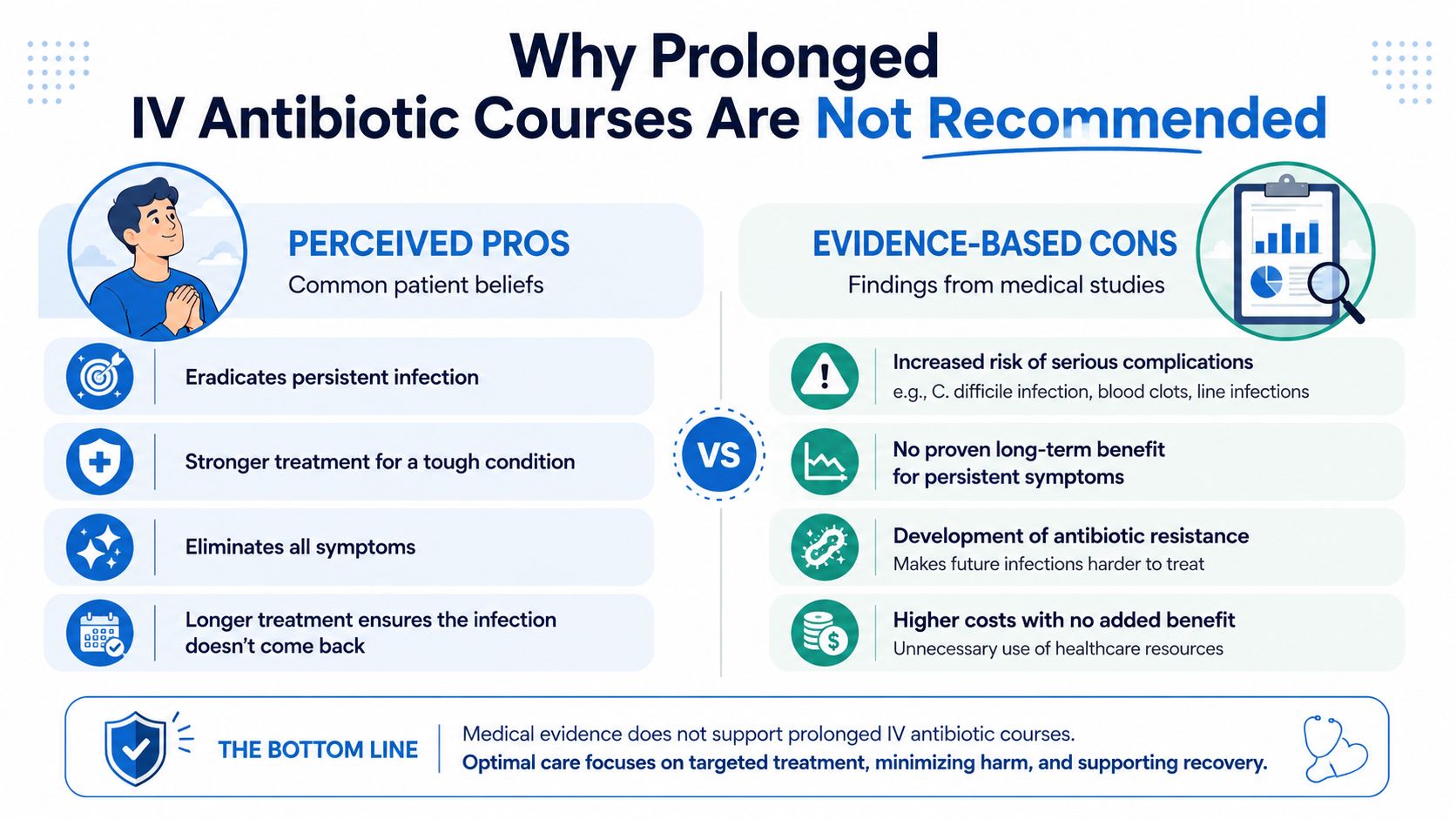
Persistent symptoms can create a compelling but unproven theory: if a short course helped temporarily, a longer course might finally eradicate the infection. Clinical trials haven't established that conclusion. NIH/NIAID notes that multiple trials found no benefit from additional IV antibiotic treatment in patients with Lyme disease, while later reviews have described possible fatigue improvement in some patients but not enough overall benefit to recommend prolonged ceftriaxone in light of significant adverse events. The NIAID review of antibiotic-treatment research summarizes that evidence.
The risk grows with the route
An IV course requires venous access and repeated administration. That adds risks that don't arise in the same way with oral medication, including catheter-related infection and other line complications. Ceftriaxone also carries medication-specific concerns, and broad antibiotic exposure can contribute to Clostridioides difficile colitis and selection of resistant organisms.
A review of U.S. post-treatment Lyme syndrome trials concluded that sustained improvement in physical dysfunction and pain remained uncertain, while adverse events related to the IV route were a major reason prolonged treatment wasn't recommended. The review of IV ceftriaxone trials and adverse events makes the risk-benefit problem explicit.
More treatment isn't automatically more complete treatment. The question is whether the next intervention has a credible target and a measurable benefit.
Patients also face monitoring demands, interruptions to work and travel, and financial costs associated with infusions and line care. Those burdens matter even when a complication doesn't occur. A clinician should be able to explain why an IV course is necessary, what will be monitored, and what would prompt discontinuation.
Persistent symptoms may reflect immune or inflammatory processes, tissue injury, autonomic dysfunction, sleep disruption, deconditioning, or another diagnosis rather than an antibiotic-responsive infection. The mechanism can be complex, and uncertainty should be stated openly. What the evidence doesn't support is treating months or years of symptoms with repeated IV antibiotics as a default strategy.
How Integrative Medicine Approaches Complex Lyme Disease
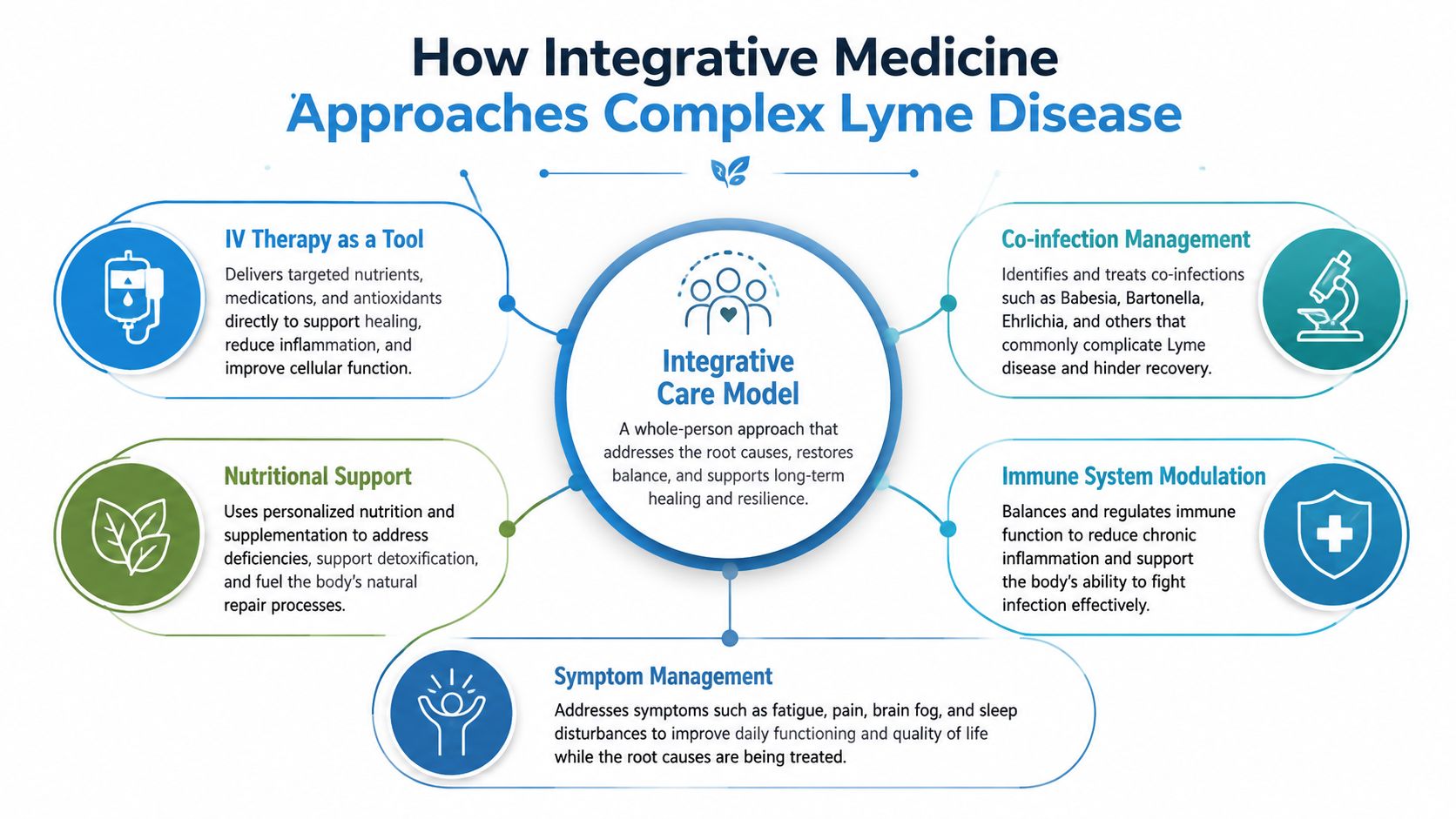
An integrative approach shouldn't mean choosing alternative therapies instead of appropriate conventional care. It means using the right tool for the right clinical question. If a patient has meningitis, severe carditis, or another guideline-supported complication, antibiotic treatment and appropriate specialist or hospital management take priority.
For patients whose symptoms persist after standard therapy, the evaluation can widen. A clinician may review:
- Active disease and treatment history: The original diagnosis, exposure context, testing, antibiotic selection, adherence, response, and subsequent symptom pattern.
- Neurologic and cardiac concerns: Examination findings, cognitive changes, neuropathic symptoms, palpitations, fainting, or documented ECG abnormalities.
- Coinfections and overlapping diagnoses: Babesia, Bartonella, other tick-borne conditions, autoimmune disease, sleep disorders, endocrine problems, and medication effects.
- Inflammatory and metabolic contributors: Nutritional status, functional capacity, autonomic symptoms, and factors that may sustain fatigue or pain.
- Supportive treatment needs: Rehabilitation, symptom control, nutritional support, and carefully selected complementary therapies.
What this means in practice
IV therapy may be one component, not the entire plan. Depending on the findings, supportive care could include nutrition-focused treatment, immune-modulating strategies, anti-inflammatory measures, physical rehabilitation, sleep support, or evaluation for autonomic dysfunction. Herbal products and other complementary therapies also require medication review because “natural” doesn't mean risk-free or automatically effective against Borrelia.
Sunridge Medical's functional medicine approach to Lyme disease recovery reflects this broader model of individualized assessment. A responsible plan should identify which interventions are established, which are adjunctive, and which remain investigational. It should also include a way to reassess symptoms and function rather than continuing treatment indefinitely without a defined endpoint.
Next Steps for Patients Considering IV Treatment in Scottsdale
Start by collecting the information a clinician needs to make a route-of-treatment decision. Bring prior test results, imaging, ECG reports, medication lists, infusion records, and a timeline showing when symptoms began, which treatments you received, and how each response changed over time.
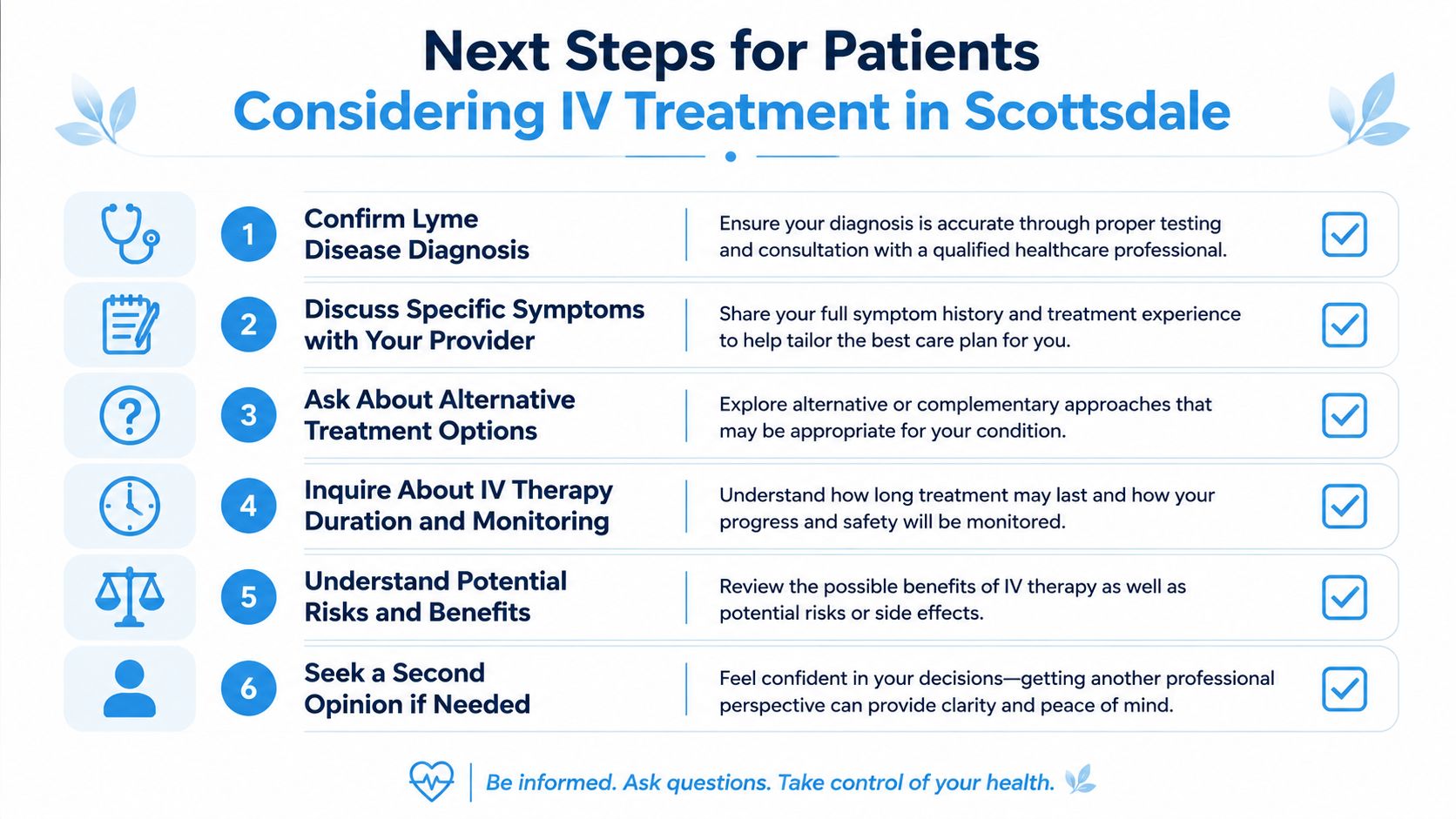
Ask direct questions during the consultation:
- Does my presentation meet a guideline-supported indication for IV antibiotics?
- What testing is needed to assess neurologic, cardiac, joint, or coinfection concerns?
- What outcome should this treatment improve, and when will we reassess it?
- What are the line, medication, allergy, and gastrointestinal risks?
- Would an oral option or supportive approach be safer and more appropriate?
- What happens if symptoms continue after the proposed course?
An evaluation may include detailed history-taking, symptom mapping, review of prior treatment response, targeted laboratory work, and assessment for overlapping conditions. Patients traveling from Phoenix, Paradise Valley, Tempe, Mesa, Chandler, Gilbert, or elsewhere in the greater Phoenix metropolitan area should ask how records are coordinated and how monitoring will occur between visits.
The goal is not to accept or reject IV treatment automatically. It's to work with a clinician who can explain why it is warranted, what it can realistically accomplish, and what other options belong in the plan.
Sunridge Medical offers individualized evaluation for Lyme disease and complex chronic symptoms in Scottsdale, including review of prior treatment, possible coinfections, and conventional or integrative options when appropriate. Visit Sunridge Medical to request a consultation and discuss whether intravenous treatment or another care pathway fits your clinical situation.