

SUNRIDGE MEDICAL • INTEGRATIVE ONCOLOGY
Quercetin and Cancer: Integrative Oncology, Flavonoid Research & Targeted Support
Place Quercetin Into a Personalized, Monitored Plan
Dose, formulation, kidney function, medications and the clinical goal matter. We can review the product and cancer-treatment schedule before a physician consultation.
- Human evidence is separated from laboratory research
- Dose, kidney status and medication interactions are reviewed
- Call now for an immediate response from our Patient Care Team
Speak With Our Patient Care Team
Share your diagnosis, current treatment and the quercetin product you are considering.
- Human evidence is separated from laboratory research
- Dose, kidney status and medication interactions are reviewed
- Questions before scheduling are always welcome
Quercetin and cancer research has become a major area of natural-compound oncology because this plant flavonoid can influence apoptosis, inflammation, angiogenesis, PI3K/AKT/mTOR signaling, NF-κB activity, STAT3 signaling, oxidative stress and tumor-cell migration in laboratory models.
Quercetin is a flavonol found in foods such as onions, apples, capers, berries, citrus peel and many medicinal plants. It is widely studied for its antioxidant, anti-inflammatory and cell-signaling effects.
At Sunridge Medical in Scottsdale, Arizona, quercetin may be considered as part of a physician-directed integrative cancer treatment program when appropriate for the individual patient.
This page is designed as a deeper research hub that can be linked from our lung cancer, cholangiocarcinoma, prostate cancer, pancreatic cancer and other cancer pages where quercetin-related mechanisms may be relevant.
PLANT FLAVONOID • CANCER BIOLOGY

Quercetin is a plant flavonoid being studied for multiple cancer-related signaling effects.
What Is Quercetin?
Quercetin is a naturally occurring flavonoid found in many fruits, vegetables and botanicals. It is especially associated with onions, apples, capers, berries, citrus peel, tea and several medicinal plants.
In cancer research, quercetin is most often discussed as a multi-target natural compound. Rather than acting on a single receptor or one isolated pathway, quercetin has been studied for effects across numerous signaling networks that influence tumor behavior.
Reviews of the anticancer literature describe quercetin as affecting apoptosis, proliferation, inflammation, angiogenesis, invasion, metastasis, autophagy, PI3K/AKT/mTOR signaling, MAPK pathways, NF-κB, STAT3 and oxidative-stress biology.12
That breadth is scientifically interesting, but it also requires careful interpretation. Laboratory findings do not automatically mean quercetin is an established cancer treatment. Human cancer data remain limited compared with the preclinical literature.
FOOD SOURCE VS THERAPEUTIC COMPOUND
Quercetin in Food Is Not the Same as Physician-Directed Quercetin Therapy
Quercetin can be consumed through food, but food intake and therapeutic use are not the same.
- Dietary quercetin comes from foods such as onions, apples, capers, berries and citrus peel.
- Supplemental quercetin may deliver higher amounts but varies widely in formulation and bioavailability.
- Advanced delivery systems such as liposomal, nanoparticle, glycoside or phytosome forms are being studied to improve absorption and tissue exposure.
- Physician-directed oncology use considers cancer type, treatment timing, organ function and drug interactions.
This distinction matters because quercetin has poor oral bioavailability in many conventional formulations. Delivery strategy can influence blood levels and biological effects.
MULTI-PATHWAY BIOLOGY
How Quercetin May Affect Cancer-Related Pathways
One reason quercetin and cancer research continues to grow is that the compound has been studied across multiple mechanisms relevant to cancer development and progression.
Depending on the cancer model, quercetin has been reported to influence:
- Apoptosis and caspase signaling
- Cell-cycle arrest
- PI3K/AKT/mTOR signaling
- NF-κB inflammatory signaling
- STAT3 signaling
- MAPK/ERK pathways
- Angiogenesis and VEGF-related signaling
- Epithelial-mesenchymal transition
- Matrix metalloproteinases involved in invasion
- Autophagy and mitochondrial function
- Drug-resistance pathways
This is why quercetin is often described as a pleiotropic or multi-target flavonoid.
APOPTOSIS AND CELL CYCLE
Quercetin, Apoptosis and Cancer Cell Survival
Apoptosis is the programmed process through which abnormal or damaged cells are eliminated. Many cancer cells acquire the ability to evade apoptosis, allowing them to survive despite stress, DNA damage or therapy.
A broad review of quercetin’s anticancer potential describes direct pro-apoptotic effects in tumor cells across many in vitro and in vivo models.1
Experimental studies have reported quercetin-associated changes in caspase activation, mitochondrial signaling, Bcl-2 family proteins, cell-cycle regulators and survival pathways. In some models, quercetin induces cell-cycle arrest before apoptosis, limiting the ability of malignant cells to continue dividing.
These findings support the biological plausibility of quercetin as an integrative oncology compound, but the strength of evidence remains much greater in laboratory systems than in definitive human cancer outcomes.
INFLAMMATION AND NF-ΚB
Quercetin, NF-κB and Inflammatory Signaling
Chronic inflammatory signaling can support cancer progression by influencing tumor-cell survival, angiogenesis, invasion, immune evasion and metastatic behavior.
Quercetin has been studied for its ability to modulate inflammatory pathways, including NF-κB, one of the central transcription factors involved in inflammation and cell survival.
This becomes particularly relevant when discussing cancers such as cholangiocarcinoma, pancreatic cancer, lung cancer, colorectal cancer and prostate cancer, where inflammatory and survival pathways can influence tumor behavior.
The anti-inflammatory aspect of quercetin is not a generic wellness claim; it reflects specific pathway-level research that may be relevant when evaluating a broader integrative oncology strategy.
ANGIOGENESIS AND INVASION
Quercetin, Angiogenesis, Invasion and Metastatic Signaling
To grow beyond a small size, tumors require blood-vessel support. To spread, they must acquire invasive and migratory behavior. Quercetin has been studied in relation to both angiogenesis and metastatic signaling.
Reviews and experimental studies describe quercetin effects on VEGF-related pathways, matrix metalloproteinases, epithelial-mesenchymal transition and other mechanisms that may influence tumor invasion and migration.2
This makes quercetin biologically interesting for cancers in which invasion and spread are major clinical concerns, including lung cancer, pancreatic cancer, cholangiocarcinoma, breast cancer and prostate cancer.
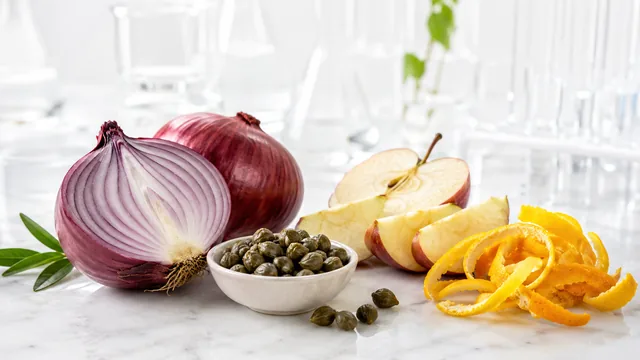
Onions, apples, capers and citrus peel are among dietary sources associated with quercetin.
CANCER-SPECIFIC RESEARCH
Quercetin and Cholangiocarcinoma
Cholangiocarcinoma is a particularly important cancer to include because quercetin has been studied directly in bile-duct cancer models.
A 2014 study reported that quercetin and EGCG exerted chemopreventive effects in cholangiocarcinoma cells through suppression of the JAK/STAT signaling pathway.3
A 2023 study focused on intrahepatic cholangiocarcinoma found that quercetin inhibited tumor behavior by inducing ferroptosis and inhibiting invasion via the NF-κB pathway.4
These are not definitive human treatment trials, but they are highly relevant for building an internal link from the Sunridge cholangiocarcinoma page to this quercetin research page. They connect quercetin to cholangiocarcinoma-specific pathways rather than only to generic cancer biology.
LUNG CANCER RESEARCH
Quercetin and Lung Cancer
Quercetin has been studied in non-small cell lung cancer models, including research involving apoptosis, DNA-damage response, PI3K/AKT signaling and EGFR-related biology.
A 2023 study reported that quercetin inhibited DNA-damage responses and induced apoptosis through the SIRT5/PI3K/AKT pathway in non-small cell lung cancer.5
Other reviews of quercetin in lung-cancer biology describe potential activity involving kinase signaling, EGFR-related pathways, oxidative stress and cancer-cell survival.6
This makes the page useful as a supporting resource for a Sunridge lung cancer page, especially in sections discussing physician-directed botanical medicine, oxidative signaling and molecular pathway support.
PROSTATE CANCER RESEARCH
Quercetin and Prostate Cancer
Quercetin has been studied extensively in prostate-cancer laboratory and animal models.
A prostate-cancer review concluded that in vitro and in vivo studies have shown quercetin can inhibit prostate-cancer processes through multiple mechanisms.7
More recent experimental work reported that quercetin affected cell-survival pathways in prostate cancer and has also been studied for effects on docetaxel resistance in prostate-cancer models.89
In an integrative oncology context, this evidence supports further research into quercetin as a pathway-focused compound, but it does not make quercetin a replacement for prostate-cancer therapies such as surgery, radiation, androgen-deprivation therapy, targeted agents or other physician-directed treatments.
PANCREATIC CANCER RESEARCH
Quercetin and Pancreatic Cancer
Pancreatic cancer is another area where quercetin has been studied in laboratory and animal models.
A pancreatic-cancer study reported that quercetin inhibited the growth of pancreatic cancer cell lines, induced apoptosis and reduced tumor growth in experimental models.10
Additional research has examined quercetin’s ability to sensitize TRAIL-resistant pancreatic cancer cells to apoptosis through JNK-mediated cFLIP turnover.11
These findings are mechanistically important because pancreatic cancer often displays resistance to apoptosis and aggressive survival signaling. The evidence, however, remains primarily preclinical.
BREAST CANCER RESEARCH
Quercetin and Breast Cancer
Quercetin has been studied in breast cancer models involving apoptosis, STAT3, PI3K/AKT/mTOR signaling, migration, cancer stem-like cells and drug-resistance mechanisms.
In HER2-overexpressing breast-cancer cells, quercetin induced caspase-dependent extrinsic apoptosis through inhibition of STAT3 signaling.12
Other studies have reported that quercetin suppresses breast cancer stem-like cells through PI3K/AKT/mTOR inhibition.13
These findings make quercetin a serious topic in breast-cancer natural-compound research, but the clinical evidence remains far less developed than the laboratory literature.
OVARIAN CANCER RESEARCH
Quercetin and Ovarian Cancer
Ovarian cancer research has examined quercetin in relation to apoptosis, cell-cycle regulation, migration, invasion, chemotherapy sensitivity and drug-delivery systems.
Experimental work has shown quercetin-induced apoptosis of human ovarian carcinoma cells through microRNA-145-related mechanisms.14
A review of quercetin in ovarian cancer described evidence for effects on proliferation, apoptosis, cell-cycle progression and combination strategies involving agents such as cisplatin.15
More recent work has also examined quercetin combined with paclitaxel in ovarian-cancer cells, reporting effects on apoptosis, invasion and migration.16
COLON AND BLOOD CANCER RESEARCH
Quercetin in Colorectal and Blood Cancer Research
Quercetin has also been studied across colorectal cancer, leukemia, lymphoma and multiple myeloma models.
A review of quercetin in blood, prostate, skin, lung, breast and colon cancers summarized multiple mechanisms including regulation of apoptosis, proliferation, migration, invasion and signaling pathways.17
In colorectal cancer models, quercetin has been investigated for effects on Wnt/β-catenin signaling, PI3K/AKT, apoptosis and cell-cycle regulation.
In blood cancers, laboratory research has examined effects on leukemia and lymphoma cell survival, apoptosis and inflammatory signaling. Human cancer evidence remains limited, but the breadth of preclinical work is substantial.
LIVER CANCER RESEARCH
Quercetin and Liver Cancer
Because quercetin is metabolized in part through the liver, liver cancer and liver function deserve separate attention.
Reviews of hepatocellular carcinoma research describe quercetin effects on apoptosis, inflammation, migration, angiogenesis and signaling pathways relevant to liver-cancer progression.18
Animal and laboratory models have also explored quercetin as an adjunctive compound in liver-cancer research. From a clinical perspective, however, liver function and drug metabolism must be considered carefully before using concentrated quercetin in patients with liver involvement or active chemotherapy.
HUMAN CANCER EVIDENCE
What Human Cancer Research Actually Shows
The preclinical literature on quercetin and cancer is extensive. Human cancer evidence is much more limited.
This distinction is important for a medically credible integrative oncology page. Quercetin has compelling pathway-level research, but it has not been established as a stand-alone cancer treatment in large randomized clinical trials.
Published clinical research has included small studies and trials in cancer-related contexts, but the strongest evidence for quercetin remains mechanistic, preclinical and formulation-focused. That is why physician-directed use should be presented as part of a broader integrative strategy rather than as a proven replacement for oncology care.
BIOAVAILABILITY AND DELIVERY
The Bioavailability Problem: Why Formulation Matters
One of the biggest obstacles in quercetin research is bioavailability.
Quercetin can have limited water solubility, variable absorption and extensive metabolism. This means that promising effects seen in cell cultures may not translate directly to human tissue exposure after ordinary oral dosing.
For this reason, researchers have studied delivery systems such as nanoparticles, liposomes, nanoemulsions, phytosomes, glycosides and other quercetin derivatives to improve stability, absorption and tumor delivery.19
For integrative oncology, formulation is not a minor detail. It may influence dosing, blood levels, tissue exposure and the ability to combine quercetin with other therapies.
COMBINATION STRATEGIES
Quercetin as a Chemosensitizer and Resistance-Modifying Compound
Some of the most interesting quercetin research involves combination strategies.
Quercetin has been studied with chemotherapy agents, targeted therapies, TRAIL, paclitaxel, cisplatin and docetaxel in different tumor models. These studies often examine whether quercetin can alter apoptosis, oxidative stress, drug resistance, transporter expression or survival signaling.
In pancreatic cancer, quercetin has been reported to sensitize TRAIL-resistant cells to apoptosis.11 In prostate cancer models, quercetin has been studied for reversal of docetaxel resistance.9 In ovarian cancer models, quercetin plus paclitaxel has been studied for effects on apoptosis, invasion and migration.16
These findings do not mean patients should combine quercetin with chemotherapy on their own. Combination strategies require medical oversight because natural compounds may also alter drug metabolism, toxicity or therapeutic effect.
DRUG INTERACTIONS AND SAFETY
Drug Interactions, Safety and Medical Supervision
Quercetin is pharmacologically active and can affect enzymes, transporters and signaling pathways. This is part of what makes it interesting, but it is also why medical supervision matters.
Memorial Sloan Kettering notes that quercetin showed antioxidant, anti-inflammatory and chemopreventive effects in laboratory studies, while also cautioning that it can act as an anti-apoptotic agent in some settings and may interact with drugs.20
Potential areas to review before physician-directed use include:
- Current chemotherapy, immunotherapy or targeted therapy
- Blood-thinning medications
- Kidney and liver function
- Hormone-sensitive cancers and endocrine therapy
- Planned surgery or procedures
- Other supplements and botanicals
- Drug metabolism and transporter concerns
The same biological activity that makes quercetin useful to study also makes it inappropriate to treat as a harmless generic supplement in every cancer case.
SUNRIDGE MEDICAL
Quercetin in a Physician-Directed Integrative Cancer Program
At Sunridge Medical, quercetin may be considered as one part of a broader integrative oncology strategy.
The decision depends on the clinical context, including:
- Cancer type and stage
- Current treatment plan
- Medication interactions
- Laboratory findings
- Liver and kidney function
- Inflammatory and metabolic patterns
- Other botanical and IV therapies being used
- Treatment goals and overall tolerance
Quercetin is best understood as a pathway-focused natural compound rather than a single-purpose cancer drug. It may be most useful when selected deliberately and integrated into a larger plan that also considers nutrition, metabolism, inflammation, oxidative balance, immune signaling and conventional oncology treatments.
INTERNAL LINKING STRATEGY
How This Page Supports Other Sunridge Cancer Pages
This page is designed to support other Sunridge cancer pages through internal linking.
Recommended internal links include:
- From the cholangiocarcinoma page, link the botanical medicine or NF-κB/JAK-STAT section to this page.
- From the lung cancer page, link the natural compounds, apoptosis or PI3K/AKT section to this page.
- From a future prostate cancer page, link the botanical medicine, androgen-independent disease or treatment-resistance section to this page.
- From future pancreatic, breast, ovarian or liver cancer pages, link relevant natural-compound sections to this page.
- From the EGCG and cancer page, link the cholangiocarcinoma JAK/STAT study where quercetin and EGCG were studied together.
That linking structure helps Google understand this page as a central Sunridge resource on quercetin, botanical oncology and pathway-based integrative cancer care.
FREQUENTLY ASKED QUESTIONS
Frequently Asked Questions About Quercetin and Cancer
What is quercetin?
Quercetin is a plant flavonoid found in onions, apples, capers, berries, citrus peel, tea and several medicinal plants. It has been studied for effects on inflammation, oxidative stress and cancer-related signaling pathways.
Why is quercetin being studied for cancer?
Quercetin has been studied because it can influence apoptosis, cell-cycle regulation, PI3K/AKT/mTOR signaling, NF-κB, STAT3, angiogenesis, invasion, migration and drug-resistance pathways in laboratory models.
Has quercetin been studied in cholangiocarcinoma?
Yes. Quercetin has been studied in cholangiocarcinoma cells, including research involving JAK/STAT suppression, ferroptosis, invasion and NF-κB signaling.
Has quercetin been studied in lung cancer?
Yes. Quercetin has been studied in non-small cell lung cancer models, including research involving DNA-damage response, apoptosis and the SIRT5/PI3K/AKT pathway.
Is quercetin a proven cancer treatment?
No. Quercetin has substantial preclinical research, but it has not been established as a stand-alone cancer treatment in large randomized human trials.
Can quercetin be used with chemotherapy?
Quercetin has been studied in combination with several cancer therapies in preclinical models, but patients should not combine it with treatment without medical oversight because natural compounds may alter drug activity or toxicity.
Why does quercetin bioavailability matter?
Quercetin has limited solubility and variable absorption in many conventional oral forms. Formulation and delivery strategy may affect blood levels and biological activity.
Does Sunridge Medical use quercetin in cancer programs?
Quercetin may be considered within individualized physician-directed integrative oncology programs when appropriate for the patient’s diagnosis, medications, laboratory findings and treatment plan.
BECOME A PATIENT
Explore Physician-Directed Integrative Cancer Care
Quercetin is one of several natural compounds being studied for effects on cancer biology. At Sunridge Medical, these therapies are evaluated within the full clinical context of the patient’s diagnosis, medications, laboratory findings and current oncology treatment.
Speak with our Patient Care Team about your diagnosis, previous treatment and treatment goals.
RESEARCH
References
- Rauf A, et al. Anticancer potential of quercetin: A comprehensive review. PMID: 30039547.
- Vafadar A, et al. Quercetin and cancer: new insights into its therapeutic effects on ovarian cancer cells.
- Senggunprai L, et al. Quercetin and EGCG exhibit chemopreventive effects in cholangiocarcinoma cells via suppression of JAK/STAT signaling pathway. PMID: 24038588.
- Song Y, et al. Quercetin inhibits intrahepatic cholangiocarcinoma by inducing ferroptosis and inhibiting invasion via the NF-κB pathway. PMID: 36823098.
- Zhou B, et al. Quercetin inhibits DNA damage responses to induce apoptosis via SIRT5/PI3K/AKT pathway in non-small cell lung cancer. PMID: 37390710.
- Lotfi N, et al. The potential anti-cancer effects of quercetin on blood, prostate, skin, lung, breast, and colon cancers. PMID: 36926328.
- Yang F, et al. Quercetin in prostate cancer: chemotherapeutic and chemopreventive effects, mechanisms and clinical application potential. PMID: 25845380.
- Ward AB, et al. Quercetin inhibits prostate cancer by attenuating cell survival and inhibiting anti-apoptotic pathways. PMID: 29898731.
- Lu X, et al. Quercetin reverses docetaxel resistance in prostate cancer via androgen receptor and PI3K/Akt signaling pathways.
- Angst E, et al. The flavonoid quercetin inhibits pancreatic cancer growth in vitro and in vivo. PMID: 23000892.
- Kim JH, et al. Quercetin sensitizes pancreatic cancer cells to TRAIL-induced apoptosis through JNK-mediated cFLIP turnover. PMID: 27477310.
- Seo HS, et al. Quercetin induces caspase-dependent extrinsic apoptosis through inhibition of STAT3 signaling in HER2-overexpressing breast cancer cells. PMID: 27175602.
- Tang SN, et al. Quercetin suppresses breast cancer stem cells by inhibiting the PI3K/Akt/mTOR-signaling pathway. PMID: 29355544.
- Li N, et al. Quercetin induces the apoptosis of human ovarian carcinoma cells by upregulating microRNA-145. PMID: 25937243.
- Shafabakhsh R, et al. Quercetin: a natural compound for ovarian cancer treatment.
- Ji H, et al. The impact of quercetin and paclitaxel combination on ovarian cancer cells.
- Lotfi N, et al. The potential anti-cancer effects of quercetin on blood, prostate, skin, lung, breast, and colon cancers.
- Reyes-Avendaño I, et al. Quercetin regulates key components of the cellular response in hepatocellular carcinoma.
- Eity TA, et al. Therapeutic efficacy of quercetin and its nanoformulation strategies in cancer research.
- Memorial Sloan Kettering Cancer Center. Quercetin. Integrative Medicine herb and supplement monograph.
Research organized by cancer type
Browse 37 source-linked studies with the full title, publication year, research focus and a concise finding. Select any linked cancer type to move directly to its corresponding Sunridge page.
Synergistic Combination of Quercetin and Mafosfamide in Treatment of Bladder Cancer Cells.
2024 · Treatment response
Interestingly, the synergistic effect was observed only when cells were pre-treated with MFA for 24 h before adding quercetin, not in the reverse order.
Quercetin and Glioma: Which Signaling Pathways are Involved?
2022 · Metastasis and invasion
Multiple lines of evidence have shown that Quercetin has anti-tumor effects, documenting this natural compound exerts its pharmacological effects by targeting a variety of cellular and molecular processes, i.e., apoptosis, metastasis, and autophagy.
Quercetin Induces Apoptosis in Glioblastoma Cells by Suppressing Axl/IL-6/STAT3 Signaling Pathway.
2021 · Apoptosis and cell death
Quercetin treatment significantly reduced cell viability in two GBM cell lines of U87MG and U373MG while keeping 85% of normal astrocytes alive.
Quercetin induces MGMT+ glioblastoma cells apoptosis via dual inhibition of Wnt3a/β-Catenin and Akt/NF-κB signaling pathways.
2023 · Metastasis and invasion
Quercetin significantly suppressed the growth and migration of human GBM T98G cells, induced apoptosis, and arrested cells in the S-phase cell cycle.
Quercetin Inhibits Glioblastoma Growth and Prolongs Survival Rate through Inhibiting Glycolytic Metabolism.
2022 · Apoptosis and cell death
We found that quercetin administration inhibited GBM cell proliferation and promoted cell apoptosis in vitro.
Quercetin Suppresses Human Glioblastoma Migration and Invasion via GSK3β/β-catenin/ZEB1 Signaling Pathway.
2022 · Metastasis and invasion
Our results showed that quercetin markedly suppressed the viability of glioblastoma cells in vitro and in vivo, and significantly inhibited glioblastoma cell migration and invasion.
Quercetin inhibits breast cancer cell proliferation and survival by targeting Akt/mTOR/PTEN signaling pathway.
2024 · Tumor growth and proliferation
Therefore, we aimed to examine quercetin impacts on breast cancer cell proliferation and survival and the involvement of PI3K/Akt/mTOR pathway.
Investigating the potential mechanism of quercetin against cervical cancer.
2023 · Cancer biology and response
Cervical cancer is emerging as a potential target of increased susceptibility to coronavirus disease-2019 (COVID-19), leading to compromised survival rates.
Quercetin up-regulates the expression of tumor-suppressive microRNAs in human cervical cancer.
2023 · Cancer biology and response
The results from this study show that quercetin has the potential to prevent cervical cancer by regulating the expression of tumor-suppressive miRNAs.
ERRATUM: Quercetin Inhibits Intrahepatic Cholangiocarcinoma by Inducing Ferroptosis and Inhibiting Invasion via the NF-[Formula: see text]B Pathway.
2023 · Metastasis and invasion
The study reports eRRATUM: Quercetin Inhibits Intrahepatic Cholangiocarcinoma by Inducing Ferroptosis and Inhibiting Invasion via the NF-[Formula: see text]B Pathway.
Mechanism of Quercetin and Luteolin on Colon Cancer Metastasis: Network Pharmacological Study and Experimental Validation.
2026 · Metastasis and invasion
Quercetin (QCT) and luteolin (LTL) are anticancer herbal compounds.
Quercetin-Induced Glutathione Depletion Sensitizes Colorectal Cancer Cells to Oxaliplatin.
2023 · Treatment response
Furthermore, the incorporation of sulforaphane, recognized for its ability to scavenge glutathione, in combination with quercetin and oxaliplatin, substantially suppressed tumor growth in an HCT116 xenograft mouse model.
Quercetin inhibits invasion and angiogenesis of esophageal cancer cells.
2021 · Metastasis and invasion
The migration distance and the number of invasive cells were significantly reduced in the 10 μg/mL quercetin group.
A Bioinformatic Assay of Quercetin in Gastric Cancer.
2024 · Cancer biology and response
Quercetin (QRC), a flavonoid present in various plants and foods, has demonstrated multiple health benefits, including anticancer properties.
Quercetin induces immunogenic cell death against gastric cancer by targeting NR3C1.
2025 · Apoptosis and cell death
Quercetin significantly reduced the viability and proliferation of gastric cancer cells while promoting apoptosis, ER stress and ICD.
Quercetin Inhibits the Progression of Gastric Cancer Through the AKT/MAPK Signaling Pathway.
2026 · Metastasis and invasion
In vitro, quercetin dose-dependently inhibited cell proliferation, suppressed migration, and induced apoptosis through increasing Bax while decreasing Bcl-2 expression.
Effect of quercetin on proliferation and apoptosis of human nasopharyngeal carcinoma HEN1 cells.
2008 · Apoptosis and cell death
It was concluded that the growth inhibition of quercetin was highly related to cell cycle arrest at the G(2)/M phase and induction of caspase-dependent apoptosis in human nasopharyngeal carcinoma HEN1 cells.
Quercetin as a Bitter Taste Receptor Agonist with Anticancer Effects in Head and Neck Cancer Cells.
2025 · Cancer biology and response
Quercetin induced a Ca2+ response in HNSCC cells, which was significantly reduced by LF1 and YM.
Quercetin Induces Cell Cycle Arrest and Apoptosis in YD10B and YD38 Oral Squamous Cell Carcinoma Cells.
2023 · Apoptosis and cell death
Quercetin has been reported to be a modulator of proliferation and survival in various types of cancers due to its cytotoxic effects.
Quercetin inhibits cell viability, migration and invasion by regulating miR-16/HOXA10 axis in oral cancer.
2019 · Metastasis and invasion
showed that quercetin suppressed cell viability, migration, invasion and abundances of metalloproteinase-9 (MMP-9) and MMP-2 in oral cancer cells. miR-16 was down-regulated and reversed by addition of quercetin.
Reappraisal of the anticancer efficacy of quercetin in oral cancer cells.
2013 · Apoptosis and cell death
Quercetin (Qu) is a principal flavonoid compound and an excellent free-radical-scavenging antioxidant that promotes apoptosis.
Multitarget effects of quercetin in leukemia.
2014 · Apoptosis and cell death
Furthermore, in vivo administration of quercetin significantly reduced tumor volume in P39 xenografts and confirmed in vitro results regarding apoptosis, autophagy, and cell-cycle arrest.
Quercetin inhibits the cAMP/PKA/CREB/glycolysis axis to exert anti-acute lymphoblastic leukemia effects.
2025 · Tumor growth and proliferation
Quercetin (Que) demonstrates broad antitumor effects by inhibiting glycolysis and cell proliferation.
Quercetin inhibits endothelial & hepatocellular carcinoma cell crosstalk via reducing extracellular vesicle-mediated VEGFR2 mRNA transfer.
2024 · Tumor growth and proliferation
In vivo, quercetin reduced VEGF secretion, impaired angiogenesis, slowed tumor growth, and decreased the number and proportion of VEGFR2-positive CTCs.
Quercetin-induced degradation of RhoC suppresses hepatocellular carcinoma invasion and metastasis.
2024 · Metastasis and invasion
We explored whether quercetin could inhibit cell migration or invasion by transwell assay.
Quercetin induces pro-apoptotic autophagy via SIRT1/AMPK signaling pathway in human lung cancer cell lines A549 and H1299 in vitro.
2021 · Apoptosis and cell death
Quercetin inhibited cell viability and induced mitochondria-dependent apoptosis in both A549 and H1299 cells in a dose-dependent.
Quercetin Induces Mitochondrial Apoptosis and Downregulates Ganglioside GD3 Expression in Melanoma Cells.
2024 · Apoptosis and cell death
Moreover, our investigation indicates that quercetin significantly reduces the expression levels of ganglioside GD3 and its synthetic enzyme.
Quercetin Mediated TET1 Expression Through MicroRNA-17 Induced Cell Apoptosis in Melanoma Cells.
2023 · Metastasis and invasion
In addition, quercetin treatment induced apoptosis and inhibited migration and invasion.
Identification of Quercetin as a Natural MMP1 Inhibitor for Overcoming Cisplatin Resistance in Epithelial Ovarian Cancer.
2025 · Metastasis and invasion
In vitro experiments demonstrated that quercetin effectively inhibited the proliferation, apoptosis resistance, invasion, and migration of cisplatin-resistant EOC cells.
Quercetin combined with shTERT induces apoptosis in ovarian cancer via the P53/Bax pathway, and RGD-MSN/QR/shTERT nanoparticles enhance the therapeutic efficacy.
2025 · Apoptosis and cell death
Quercetin(QR) has been shown to inhibit the cell cycle and induce the apoptosis in various types of tumors.
Quercetin induces ferroptosis in ovarian cancer through regulating HSPB1/Notch1 pathway.
2026 · Apoptosis and cell death
Quercetin inhibited cell proliferation and colony formation, triggered apoptosis, and promoted ferroptosis in A2780 and SKOV3 cells, marked by GPX4 downregulation and malondialdehyde levels increase.
The impact of quercetin and paclitaxel combination on ovarian cancer cells.
2024 · Treatment response
This study investigated the synergistic effects of quercetin and paclitaxel on ovarian cancer.
Quercetin liposomes conjugated with hyaluronidase: An efficient drug delivery system to block pancreatic cancer.
2025 · Cancer biology and response
Quercetin (Que), a natural flavonoid, has the ability to inhibit tumor cell growth in a number of cancers; however, its poor water solubility and low bioavailability largely limit its application in cancer therapy.
Quercetin-Resveratrol Combination for Prostate Cancer Management in TRAMP Mice.
2020 · Apoptosis and cell death
Utilizing PCa PCR array analysis with prevention tumor tissues, we identified that quercetin-resveratrol modulates genes involved in promoter methylation, cell cycle, apoptosis, fatty acid metabolism, transcription factors, androgen response, PI3K/AKT and PTEN signaling.
Targeting S1PR1 in Thyroid Cancer: Functional Characterization and Proteasome-Mediated Suppression by Quercetin.
2026 · Cancer biology and response
Furthermore, we screened several anticancer compounds to determine their effects on S1PR1 expression levels in thyroid cancer cells and found that quercetin significantly reduced S1PR1 protein levels in these cells.
Integrating network pharmacology to investigate the mechanism of quercetin's action through AKT inhibition in co-expressed genes associated with polycystic ovary syndrome and endometrial cancer.
2025 · Cancer biology and response
Quercetin, a widely distributed natural flavonoid, has demonstrated potential therapeutic effects in managing both PCOS and EC.
Quercetin suppresses endometrial cancer stem cells via ERα-mediated inhibition of STAT3 signaling.
2025 · Cancer biology and response
This study aimed to evaluate the anti-tumor effects of Quercetin by targeting CSCs and suppressing their stemness properties.
No studies match those filters. Clear a filter or try a broader term.