

You've done the part many patients know too well. You took the antibiotics, tried to be patient, and still wake up with stiff joints, a foggy head, strange nerve pain, or a chest wall tenderness that doesn't fit the usual Lyme story. When labs come back “normal,” it's easy to feel stuck between two unsatisfying explanations, that nothing is wrong, or that everything is just post-treatment Lyme.
Persistent symptoms deserve a wider lens. Lyme disease can leave a broad symptom trail, but Bartonella can add a different layer of neurologic, vascular, and inflammatory problems that are easy to miss if the evaluation stops at one test or one textbook pattern. In Scottsdale and across the Phoenix area, that's often where a more careful, integrative workup becomes useful.
Table of Contents
- When Lyme Symptoms Keep Building After Antibiotics
- The Two Infections Patients Often Confuse
- Symptom Clusters That Point Toward Bartonella
- The Symptoms That Look Telling but Aren't Specific
- Why Bartonella Coinfection Makes Bartonella Lyme Disease Symptoms Harder to Diagnose
- Treatment Planning When Bartonella Is in the Picture
- How an Integrative Evaluation at Sunridge Medical Works
- Frequently Asked Questions and Next Steps
When Lyme Symptoms Keep Building After Antibiotics
A common pattern sounds like this. A patient finishes doxycycline, expects the joint pain and fatigue to fade, then starts noticing more, not less, trouble. The knees still ache, the brain feels slower, sleep is lighter, and there's a weird soreness along the ribs or under the arms that doesn't behave like a routine muscle strain. If you've had that experience, you're not describing something rare.
That situation doesn't automatically mean active infection is still driving everything. It does mean the working diagnosis should stay open. The CDC notes that Lyme often presents as a multi-system illness, with fever, fatigue, headache, chills, muscle and joint aches, swollen lymph nodes, and the expanding rash called erythema migrans, which appears in about 70% to 80% of infected people and has the classic bull's-eye look only about 20% of the time (CDC Lyme signs and symptoms). The same CDC page notes that about 73% of patients have symptoms beyond a skin lesion when they first seek treatment, and about 25% continue to report milder symptoms after treatment (CDC Lyme signs and symptoms).
That's why the conversation shouldn't stop at “post-treatment Lyme” too early. The CDC uses PTLDS for prolonged symptoms after treatment and says the cause is currently unknown (CDC chronic symptoms and Lyme disease). In a patient who now has neuropathy-type complaints, autonomic changes, or new cognitive lapses, it's worth asking whether another infection, especially Bartonella, is adding to the picture.
For patients who've already been told they're fine because one lab panel looked unrevealing, a second look can be clinically rational. Sunridge Medical's discussion of Lyme disease treatment after years reflects that reality, chronic tick-borne symptoms don't always follow a neat recovery curve.
Practical rule: if the symptom list is growing after treatment, don't just ask whether Lyme is “still there.” Ask what else could be layering on top of it.
The Two Infections Patients Often Confuse
Lyme disease and Bartonellosis are distinct infections, although their symptoms can overlap enough to confuse the clinical picture. Lyme disease is caused by organisms in the Borrelia burgdorferi sensu lato complex. In U.S. tick-borne cases, Bartonellosis is most often associated with Bartonella henselae, Bartonella quintana, and Bartonella koehlerae. The organisms differ in biology, reservoirs, and testing needs, even when the patient reports similar fatigue, pain, or neurologic complaints.
Exposure history adds another layer. One tick bite may transmit more than one pathogen, while repeated outdoor exposure can produce separate infections. Coinfection means multiple organisms are present at the same time. Superinfection describes a new infection layered onto an active illness. Relapsing infection refers to symptoms returning after they appeared to settle.
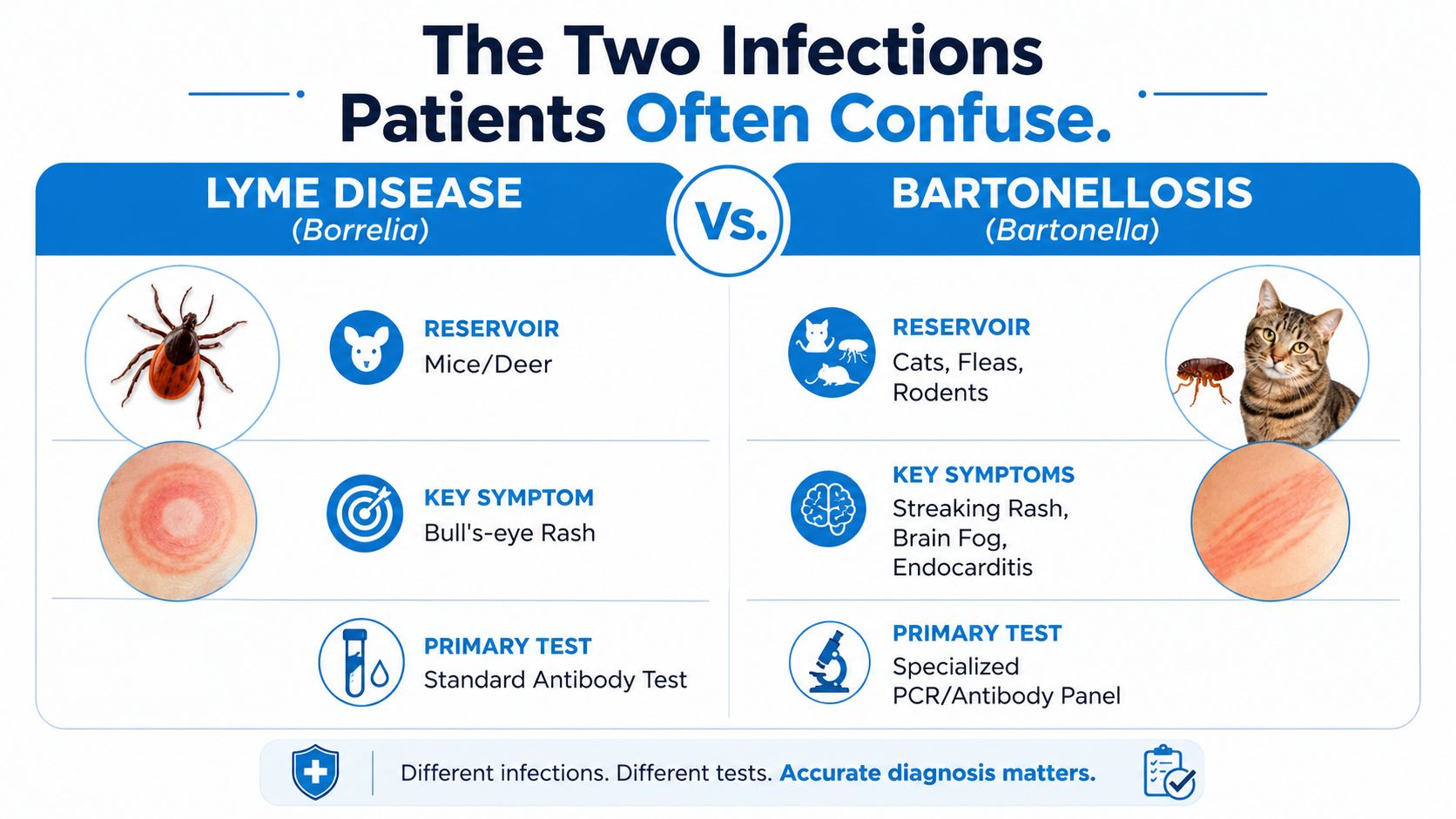
Both infections may involve inflammatory cascades, endothelial involvement, and immune dysregulation, so symptoms alone rarely identify the organism. A Lyme-typical rash can be followed by a more neurologic illness, while another patient may never notice a rash and instead report a marked change after a tick exposure. A careful evaluation also considers other tick-borne infections, including the clinical overlap discussed in this comparison of babesiosis and Lyme disease.
Working definition: Lyme may explain the initial syndrome, while Bartonella becomes a consideration when persistent illness develops a distinctly neurologic or vascular pattern.
Symptom Clusters That Point Toward Bartonella
A patient may tell you that the fatigue and pain never fully resolved, then describe new visual changes, balance problems, or abrupt shifts in mood. That progression deserves a different question than, “Which symptom matches Bartonella?” The more useful question is whether the illness has developed a neurologic and vascular pattern that fits Bartonella better than a straightforward Lyme presentation.
The neurologic pattern matters more than the headline symptom
Clinical reviews describe cognitive dysfunction, concentration and memory problems, tremor, ataxia, impaired balance, and psychiatric manifestations such as anxiety, irritability, rage episodes, and mood swings in Bartonella-associated illness (LymeDisease.org Bartonella basics). These findings carry more weight when they occur together, particularly with limited joint swelling or a shift from pain alone to CNS irritability or encephalopathic symptoms.
A CDC-linked study provides narrower associations than broad online checklists. Among people with a prior Lyme diagnosis, the clinically selected study population included participants with Bartonella antibodies and bacteremia (LymeDisease.org Bartonella prevalent in Lyme disease). B. henselae positivity was associated with blurred vision and numbness, while B. vinsonii subsp. berkhoffii was associated with paralysis (CDC-linked EID study). These associations can guide the differential, but they do not establish that Bartonella caused every symptom.
The skin, lymph, and vascular clues
Bartonella can also enter the evaluation through lymphadenopathy, fever, malaise, arthralgia, rashes, or vascular-appearing skin findings. With Bartonella henselae, a papule or pustule at a cat-scratch site and enlarged, tender lymph nodes are recognized features. More severe disease can involve neuroretinitis, encephalitis, osteomyelitis, or the liver and spleen, as described by the CDC overview of Bartonella henselae.
| Symptom Cluster | More Specific to Bartonella | Common to Both |
|---|---|---|
| Visual or focal neurologic findings | Blurred vision, numbness, paralysis associations | Brain fog, headache |
| Neurobehavioral changes | Irritability, rage episodes, mood swings with CNS features | Fatigue, poor sleep |
| Lymphatic or vascular findings | Tender lymph nodes, atypical rashes, subcutaneous nodules | Fever, malaise |
| Pain pattern | Neurologic pain clustered with visual or balance issues | Joint and muscle pain |
Combinations matter more than a checklist. Persistent fatigue alone does not establish Bartonella. Visual complaints, balance changes, focal sensory symptoms, and emotional volatility appearing together justify a broader differential and a review of exposure history, examination findings, prior treatment, and competing neurologic or inflammatory explanations.
The Symptoms That Look Telling but Aren't Specific
A lot of patients arrive with a printed symptom checklist and feel convinced that fatigue, brain fog, headaches, and joint pain point straight to Bartonella. Those symptoms are real, but they're not discriminating on their own. They also fit Lyme alone, PTLDS, sleep disorders, endocrine disease, autoimmune disease, and other inflammatory conditions.
Headache is a good example. In Bartonella, headache can fit the vascular and neurologic pattern. It can also come from cervical tension, migraine, or sleep apnea. Neuralgic pain, especially when it is sharp, shooting, or burning, can raise suspicion when it migrates quickly and doesn't behave like ordinary musculoskeletal pain, but even that can overlap with small-fiber neuropathy from noninfectious causes.
The same caution applies to night sweats and fever. Those symptoms can absolutely belong in an infectious workup, but they're not Bartonella-specific. Thyroid problems, anxiety disorders, and other systemic conditions can produce the same pattern. That's why a useful evaluation asks what the symptom is doing, how it clusters, and whether it's evolving in a way that suggests vascular or neurologic inflammation.
The question isn't whether a symptom exists. The question is whether several symptoms are arriving together in a pattern that makes biologic sense.
Many Bartonella checklists overpromise. They turn overlap into specificity. A patient can have fatigue, joint pain, and brain fog without Bartonella at all. The stronger signal is when those complaints are joined by focal neurologic, visual, or relapsing features that don't fit the original Lyme story anymore.
Why Bartonella Coinfection Makes Bartonella Lyme Disease Symptoms Harder to Diagnose
A patient can continue feeling unwell after Lyme treatment while routine testing remains unrevealing. The difficulty is partly biological. Lyme panels assess antibody responses to Borrelia burgdorferi sensu lato, whereas Bartonella behaves differently. It may involve red blood cells and endothelial lining, and bacterial levels in blood can fluctuate, making the timing and type of sample relevant.
A negative PCR does not settle the question. If the blood level is low when the sample is collected, the test may miss infection. Serology can provide supporting evidence, yet early or persistent illness may produce a weak or absent antibody response. Culture is possible, but its slow, technically demanding process rarely gives a practical answer during a routine office visit.
| Test Type | Sensitivity in Chronic Cases | Key Limitation |
|---|---|---|
| PCR | Variable | Blood levels can be too low at draw time |
| Serology | Limited | Antibody response may be weak or absent |
| Culture | Low practical yield | Slow, technically difficult, often delayed |
The clinical task is to weigh the result against the patient's history, examination, exposure pattern, and symptom course. A positive Lyme test followed by incomplete improvement does not prove Bartonella, and an unrevealing Bartonella test does not exclude it. Persistent symptoms may also reflect post-treatment Lyme disease syndrome, which requires a separate clinical assessment, as described in this clinical discussion of chronic Lyme disease and persistence.
An integrative evaluation in Scottsdale would review prior tests and treatments, examine neurologic and vascular findings, assess sleep and other medical contributors, and decide whether repeat or specialized testing could change management. The goal is a defensible working diagnosis, not a positive result at any cost.
For readers comparing specialists, Sunridge Medical's clinical guide to choosing advanced integrative care in 2026 outlines what a broader workup may include.
Treatment Planning When Bartonella Is in the Picture
Once Bartonella is on the table, the treatment conversation changes. A single-pathogen approach that only targets Lyme usually isn't enough, because Bartonella has a different intracellular behavior and a different inflammatory footprint. The plan needs to account for the organism, the host response, and the organs being stressed by the illness.
Standard Lyme antibiotics such as doxycycline, amoxicillin, or ceftriaxone may have limited Bartonella activity. In clinical practice, Bartonella-oriented regimens often include agents such as azithromycin, rifampin, or trimethoprim-sulfamethoxazole, sometimes in combination, because intracellular penetration matters. Even then, antibiotics are only one part of the picture. Patients may need anti-inflammatory support, careful pacing, hydration, and monitoring for symptom flares during treatment.
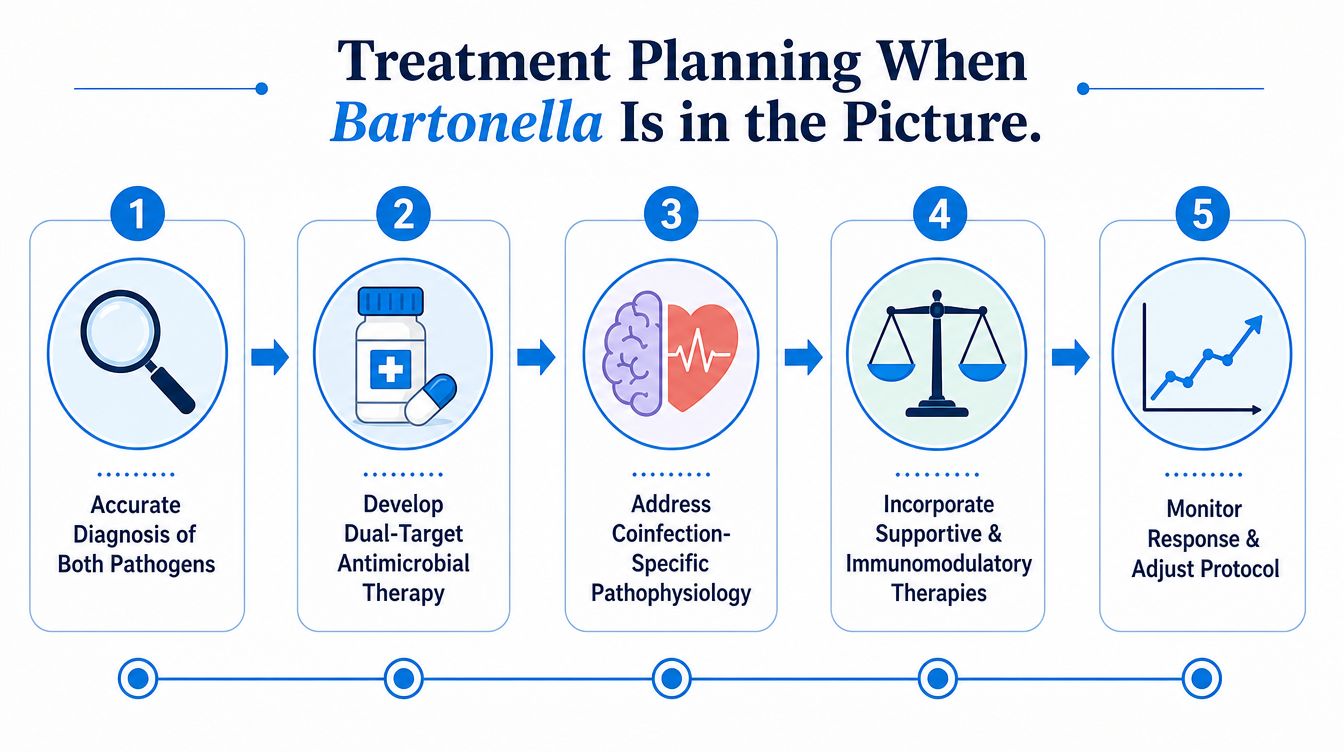
The practical trade-off is straightforward. More targeted therapy can be more effective, but it also asks more from the patient and the prescribing clinician. Liver and kidney monitoring becomes important when multiple antimicrobials are used. So does watching for die-off reactions, which can make people feel temporarily worse before they feel better.
At Sunridge Medical in Scottsdale, Bartonella-related care can be folded into a broader integrative plan that uses conventional antimicrobials, supportive therapies, and symptom-specific strategies together. That matters because the goal isn't just to suppress a pathogen. It's to reduce the inflammatory burden enough for the nervous system and vascular system to settle.
How an Integrative Evaluation at Sunridge Medical Works
A careful evaluation starts before any new prescription. The clinician reviews tick exposure, prior Lyme and Bartonella labs, antibiotic history, and the current symptom map across neurologic, musculoskeletal, and autonomic domains. That conversation matters because a patient's symptom trajectory often tells you more than one isolated result ever will.
The next step is usually targeted and selective. If prior testing was inconclusive, repeat serology or specialized workup may be considered. If the story includes eye symptoms, balance problems, or clear neurologic changes, referral partners for neuroimaging or autonomic testing can help narrow the picture. That's especially important when trying to distinguish PTLDS from an active coinfection or another inflammatory process.
Scottsdale and Phoenix patients often want to know whether their care can stay coordinated with the rest of their medical team. It can. A plan may include IV antibiotic infusion suites when appropriate, lymphatic and oxidative support, and communication with a local primary care physician so the workup doesn't become fragmented. For patients who travel from Mesa, Chandler, Gilbert, Tempe, or Paradise Valley, that coordination reduces a lot of the back-and-forth that usually slows chronic care.
Clinical priority: write the plan with milestones, not guesses. If symptoms haven't moved by the expected checkpoint, the protocol should be reviewed instead of repeated blindly.
That's also where modern practice logistics matter. A patient portal, triage workflow, and reliable follow-up system help the clinical team keep track of complex cases. For practices building those systems, healthcare solutions that work in 2026 is a relevant lens on how intake and follow-up can stay organized without losing the human side of care.
Frequently Asked Questions and Next Steps
How long can PTLDS last?
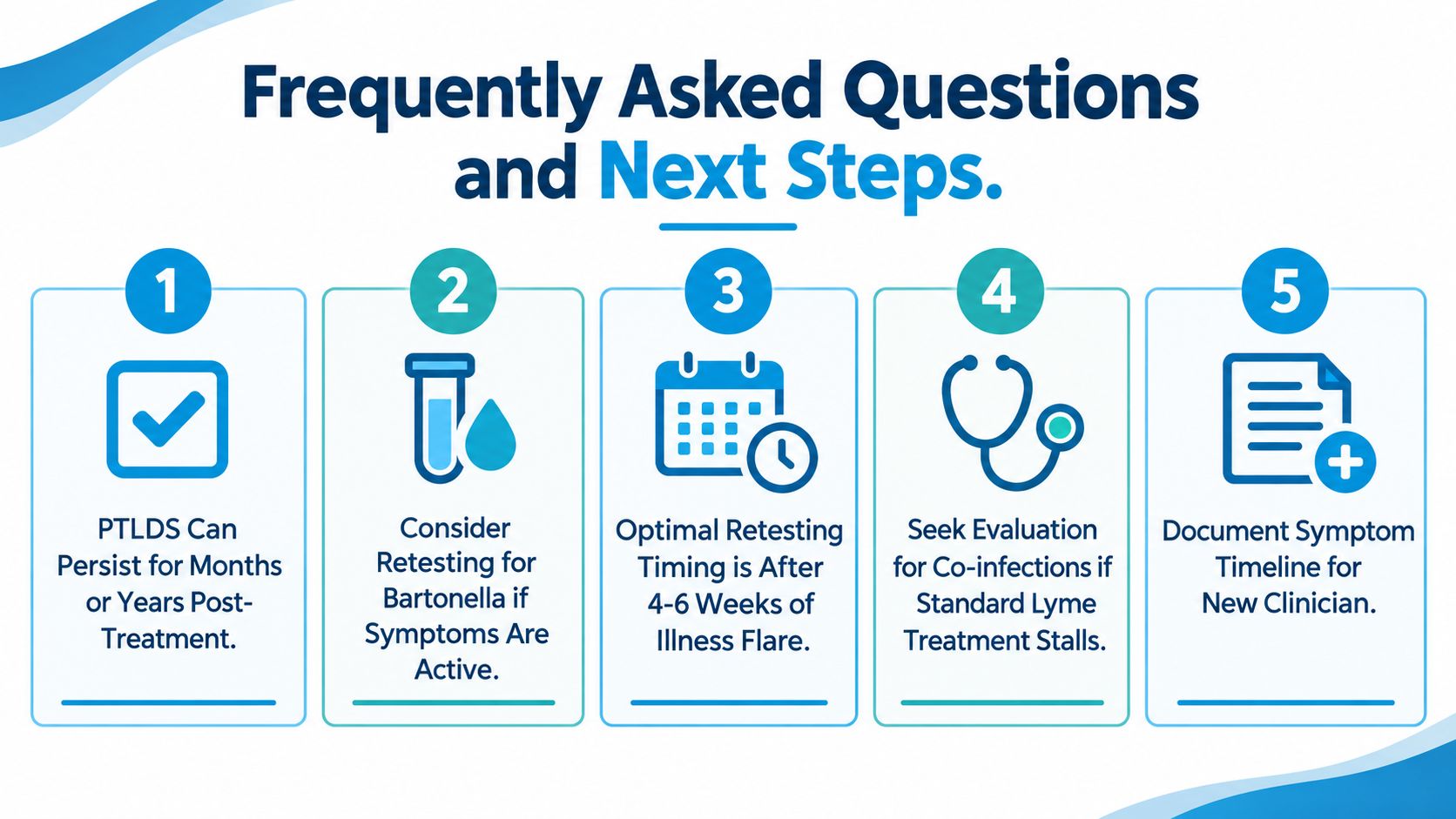
There isn't a single timeline that fits every patient. The CDC recognizes PTLDS as prolonged symptoms after treatment and says the cause is currently unknown (CDC chronic symptoms and Lyme disease). If symptoms keep changing or new symptom domains appear, it's reasonable to reassess the diagnosis instead of assuming everything belongs under one label.
Does a negative Bartonella antibody test rule it out?
No. A negative test lowers the odds, but it doesn't fully exclude Bartonella, especially when the clinical pattern still looks suspicious. As covered above, serology can be limited in chronic cases, and symptom clustering still matters.
When is IV therapy considered instead of oral treatment?
That decision depends on severity, organ involvement, treatment tolerance, and the overall clinical picture. IV therapy is considered when oral regimens are not enough, when neurologic or systemic involvement is more concerning, or when the treatment plan needs tighter control. It is not automatic, and it should be matched to the patient.
What records should I bring to a consultation?
Bring prior Lyme and Bartonella labs, antibiotic records, imaging reports, and a simple symptom timeline. If you've kept notes on flares, sleep changes, neurologic symptoms, or travel and tick exposure, bring those too. A good history often saves time and changes the direction of the workup.
What should I do next?
If you still feel unwell after standard Lyme treatment, don't guess at the cause. Get a structured evaluation that can separate PTLDS, Bartonella, and other contributors, then decide what deserves treatment. Telehealth intake is available for Arizona residents and out-of-state patients seeking a second opinion.
Sunridge Medical in Scottsdale evaluates persistent Lyme-linked symptoms with a multimodal, evidence-informed process that looks beyond a single lab result or checklist. If Bartonella may be part of your picture, Sunridge Medical can help you review your history, clarify the differential, and decide whether an integrative consultation makes sense for you.