

What if the unyielding fatigue, cognitive fog, and chronic inflammation you battle daily aren’t separate conditions, but interconnected alarms from the same underlying breakdown? It’s profoundly frustrating to endure recurring flare-ups while standard blood panels return “normal,” or to collect multiple specialist diagnoses without an overarching framework explaining how they connect. Conventional care often suppresses isolated symptoms through medications that bring debilitating side effects rather than foundational healing. Adopting a clinical root cause approach to chronic illness changes this trajectory entirely, moving past symptom suppression to uncover why multi-system dysfunction developed in the first place.
Discover how a root cause approach identifies the hidden biological drivers of chronic illness to achieve lasting clinical recovery. This explainer examines the physiological mechanisms behind persistent systemic distress, highlights advanced diagnostics capable of detecting occult cellular dysfunction, and details an evidence-based roadmap combining conventional precision with targeted restorative medicine.
Key Takeaways
- Discover how a clinical root cause approach to chronic illness reframes persistent symptoms as downstream distress signals of multi-system dysfunction rather than isolated diseases.
- Understand why conventional episodic protocols struggle to resolve complex illness, often leaving underlying biological triggers undetected by standard laboratory bloodwork.
- Identify the primary physiological drivers behind chronic illness, including latent intracellular pathogens, environmental toxic burdens, and persistent immune dysregulation.
- Learn how advanced cellular and immunological diagnostics map systemic biological breakdowns long before irreversible tissue damage occurs.
- Explore physician-directed clinical roadmaps that deploy targeted intravenous and restorative therapies to bypass compromised digestive pathways and support cellular recovery.
What Is the Root Cause Approach to Chronic Illness?
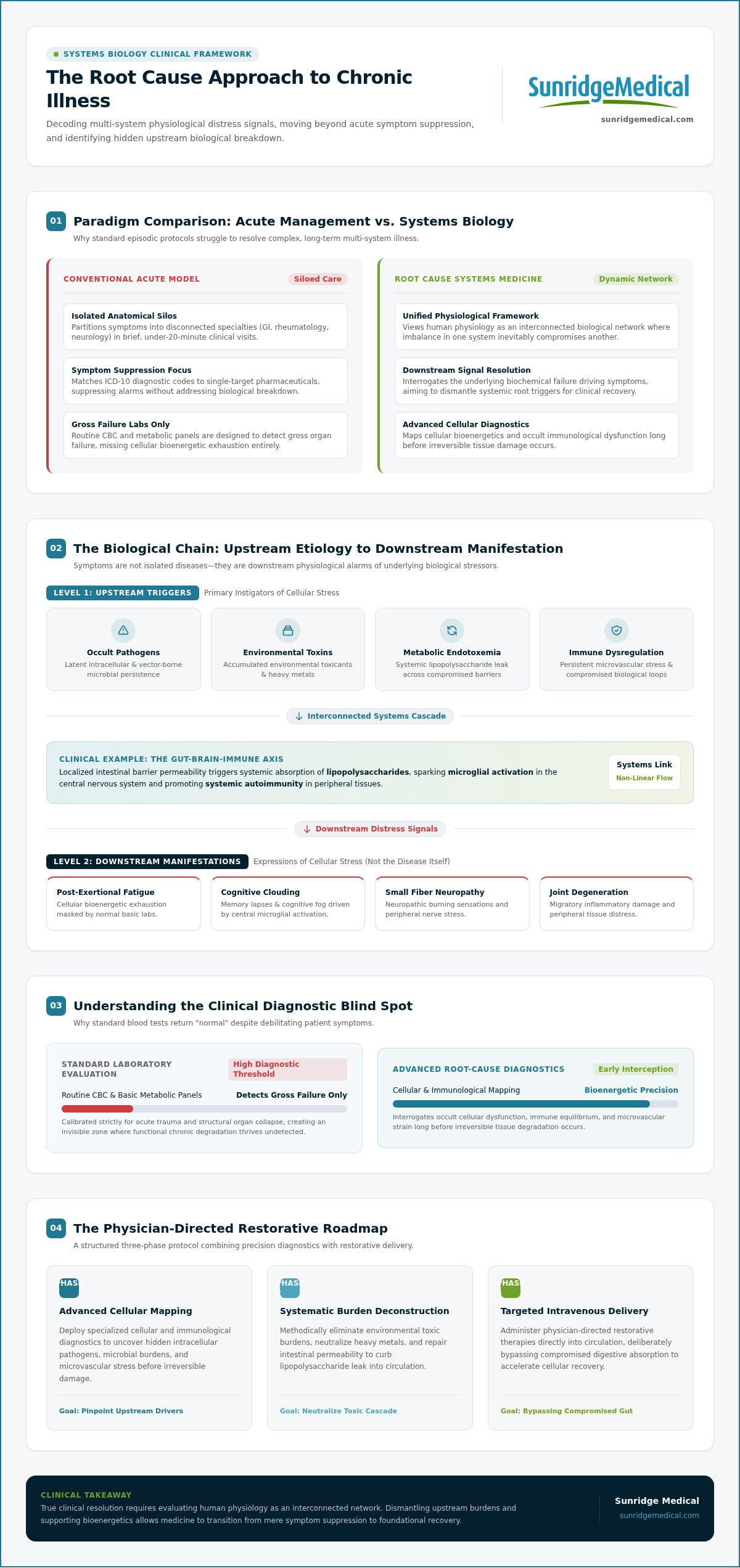
Root-cause medicine is the clinical practice of identifying and resolving the primary biochemical disruptions that drive persistent symptoms. Rather than assigning a descriptive label to an isolated set of complaints, this method interrogates the biological breakdown creating those signals. A root-cause approach views symptoms as downstream physiological distress signals. When conventional medicine treats illness purely by matching an ICD-10 diagnostic code to a targeted pharmaceutical, it suppresses those signals without addressing the biological failure beneath them.
Standard protocols excel during acute trauma, yet the broader clinical management of chronic conditions demands a shift away from isolated specialty silos. While conventional care separates gastrointestinal, rheumatologic, and neurological symptoms into disconnected appointments, a true root cause approach to chronic illness relies on systems biology. This framework recognizes human physiology as an integrated, dynamic network where an imbalance in one system inevitably compromises another.
The Systems Biology Paradigm in Modern Medicine
Systems biology views the body as an interconnected biological network rather than a collection of independent organs. Consider intestinal barrier function: when localized gut permeability develops, systemic absorption of lipopolysaccharides triggers microglial activation in the brain and systemic autoimmunity in peripheral tissue. Single-target pharmaceutical agents often fail because they attempt to force a single pathway into compliance, ignoring how biological equilibrium operates across interconnected cellular loops.
Upstream Etiology Versus Downstream Manifestation
Clinicians practicing root-cause medicine distinguish between two critical phases of disease development:
- Upstream Triggers: These include occult vector-borne pathogens, accumulated environmental toxicants, heavy metals, and persistent metabolic endotoxemia. They represent the primary instigators of cellular stress.
- Downstream Manifestations: These present as joint degeneration, small fiber neuropathy, memory lapses, and severe post-exertional fatigue. They are expressions of stress, not the disease itself.
Physicians utilize advanced protocols in integrative medicine for chronic illness to systematically dismantle these upstream burdens, moving beyond palliative suppression toward genuine clinical recovery.
Why Conventional Care Struggles with Complex Chronic Illness
Modern conventional medicine remains unparalleled for stabilizing acute medical emergencies and surgical trauma. If you fracture a bone or suffer acute myocardial infarction, conventional intervention saves lives. That same model falters when applied to insidious, multisystem conditions. The acute framework looks for a single exogenous agent causing an isolated pathology. Chronic illness behaves entirely differently, arising from multi-layered environmental burdens, latent microbial persistence, and microvascular stress that develop over years.
Standard laboratory panels illustrate this mismatch clearly. Routine complete blood counts and basic metabolic panels are designed to detect gross organ failure, not cellular bioenergetic exhaustion. You can experience debilitating fatigue, profound cognitive clouding, and migratory pain while your standard bloodwork returns normal. This clinical blind spot explains why academic institutions have established dedicated systems-based functional medicine programs to evaluate the deeper biochemical mechanisms driving unresolved symptoms.
The Limitations of the Acute Medical Paradigm
The conventional clinical visit, often constrained to under twenty minutes, forces providers to partition symptoms into narrow anatomical specialties. A patient presenting with gastroparesis, joint pain, and neuropathic burning is referred to three separate specialists. Each clinician prescribes a medication targeted solely at their respective domain, leaving no single physician evaluating the unifying mechanism connecting the entire presentation.
The Problem of Pure Symptom Suppression
Pharmacologic management frequently relies on long-term non-steroidal anti-inflammatory drugs, biologic immune modulators, or neuropathic pain blockers. While these agents offer temporary symptomatic relief, they fail to arrest underlying disease processes. Suppressing an inflammatory signal without addressing its trigger invites disease progression. Blunting inflammatory cascades masks the body’s warning system, allowing tissue damage to quietly continue beneath pharmaceutical sedation.
- Immune exhaustion: Long-term suppression impairs natural surveillance against latent pathogens.
- Mitochondrial injury: Chronic medication dependency can deplete vital cellular cofactors, worsening cellular fatigue.
- Epithelial disruption: Frequent use of anti-inflammatory medications damages intestinal mucosal integrity.
True healing requires identifying why cellular dysfunction began rather than silencing its alarms. Transitioning to a comprehensive root cause approach to chronic illness allows physicians to evaluate cellular repair capacity rather than managing endless symptom cycles. If standard treatments have left you managing persistent symptoms without lasting progress, consulting the clinical team at Sunridge Medical can help uncover the deeper biological drivers behind your illness.
Primary Biological Drivers Behind Persistent Chronic Illness
Persistent chronic illness rarely stems from an isolated defect. Instead, it reflects a progressive cascade across three interconnected physiological pillars: occult infectious burdens, accumulated environmental toxicants, and immune dysregulation. When these stressors overwhelm the body’s adaptive reserves, cellular bioenergetics collapse. A rigorous root cause approach to chronic illness maps this multi-system failure, identifying where regulatory circuits broke down rather than merely suppressing downstream inflammatory fires.
Stealth Pathogens and Immune Exhaustion
Occult intracellular pathogens, including species of Borrelia, Bartonella, and Babesia, employ protective extracellular biofilms and antigenic variation to evade host defenses. These microbes establish low-grade, persistent niches within collagenous tissue, vascular endothelium, and central nervous structures. Over time, continuous antigen exposure induces severe T-cell exhaustion, blunting cytotoxic responses while fueling chronic cytokine release. For patients navigating these overlapping vector-borne complexities, working with experienced lyme disease specialists ensures diagnostic protocols account for immune evasion tactics rather than relying on blunt serological screens.
Mitochondrial Impairment and Oxidative Cascade
Mitochondria generate over 90% of cellular adenosine triphosphate (ATP) through oxidative phosphorylation. When environmental mycotoxins, heavy metals, and persistent lipopolysaccharides accumulate within tissues, they bind to mitochondrial membranes and inhibit critical electron transport chain complexes. This creates an unyielding oxidative cascade:
- Bioenergetic collapse: Impaired ATP production triggers unrelenting physical and cognitive exhaustion that fails to improve with rest.
- Microglial priming: Systemic circulating reactive oxygen species cross the blood-brain barrier, activating central microglial cells and driving localized neuroinflammation.
- Cell danger response: Stressed cells halt normal biotransformation to prioritize innate defense, locking physiology into a self-perpetuating inflammatory cycle.
Autonomic and Neuro-Endocrine Axis Disruption
Chronic inflammatory signaling directly impairs the hypothalamic-pituitary-adrenal (HPA) axis. Unrelenting physiological distress first causes hypercortisolemia before exhausting adrenal signaling pathways, disrupting diurnal cortisol curves. Concurrently, neuroinflammation destabilizes autonomic nervous system nuclei in the brainstem. This autonomic shift leads to persistent sympathetic dominance, impaired vagal tone, and postural orthostatic tachycardia. As systemic steroidogenesis and catecholamine rhythms unravel, systemic cellular recovery becomes impossible without resolving the underlying infectious and toxic burden driving the cycle.
Advanced Diagnostic Pathways: Mapping Your Cellular Health
Resolving complex, multi-system dysfunction requires a methodical diagnostic strategy rather than isolated laboratory snapshots. Functional testing identifies physiological distress years before cellular damage manifests on standard panels. When clinical teams apply a comprehensive root cause approach to chronic illness, diagnostics follow a four-tier sequence designed to pinpoint occult triggers:
- Step 1: Multi-Hour Environmental History: Mapping lifetime residential, occupational, and geographic exposures to uncover latent chemical or mold toxicities.
- Step 2: Advanced Immunological Profiling: Assessing cell-mediated immune competence, cytokine activation, and stealth vector-borne persistence.
- Step 3: Intracellular Metabolomics: Measuring active nutrient reserves and mitochondrial enzyme efficiency within white blood cells rather than transient serum levels.
- Step 4: Toxic Burden Quantification: Utilizing provoked excretion testing and mass spectrometry to measure stored heavy metals and environmental toxicants.
Specialized Immunological and Molecular Panels
Standard antibody titers evaluate gross humoral immunity, often yielding false negatives in patients with severe immune exhaustion. Advanced immunoblotting, EliSpot T-cell assays, and flow cytometry measure direct cell-mediated pathogen surveillance. Concurrently, comprehensive stool metagenomics and mucosal barrier tests evaluate secretory IgA levels and zonulin expression. These granular insights uncover early autoimmune shifts and barrier breaches long before irreversible tissue destruction appears on standard diagnostic imaging.
Metabolic, Toxicological, and Intracellular Profiling
Serum nutrient tests reveal only what circulates through the bloodstream at a single moment. In contrast, intracellular nutritional testing measures whether essential minerals, amino acids, and antioxidants actually cross cellular membranes to support enzymatic function.
Provoked urinary testing evaluates deep tissue heavy metal accumulation that blood panels miss entirely. In tandem, urine organic acid testing (OAT) analyzes intermediate metabolites of the Krebs cycle. When specific organic acids accumulate abnormally, they highlight exact enzymatic bottlenecks within mitochondrial respiration, guiding precise biochemical remediation. To pinpoint your underlying physiological stressors with personalized testing, schedule an advanced diagnostic evaluation with our clinical team.
Restorative Clinical Interventions: Moving from Diagnosis to Recovery
Reversing multi-system chronic conditions requires a structured, multi-phase roadmap rather than isolated therapies. Healing cannot occur in chaos. A clinical root cause approach to chronic illness systematically removes biological roadblocks in sequence, prioritizing cellular stabilization, targeted pathogen clearance, and tissue rebuilding. This phased trajectory ensures the body’s elimination pathways are open and functioning before initiating aggressive pathogen clearance or toxicant mobilization.
Targeted Intravenous and Biological Therapies
Patients battling complex chronic illness almost universally suffer from compromised gastrointestinal integrity, which severely limits oral nutrient absorption. Intravenous protocols bypass the digestive tract entirely, delivering therapeutic concentrations of cellular nutrients, amino acids, and cofactors directly into the bloodstream. In clinical practice, utilizing iv therapy for autoimmune disease restores damaged cellular membrane lipids, replenishes exhausted intracellular glutathione, and supplies essential bioenergetic substrates to starving mitochondria. Concurrently, targeted biological and oxidative therapies weaken persistent microbial biofilms, exposing concealed pathogens to the body’s natural defenses without harming healthy host tissue.
Immune Modulation and Cellular Detoxification
Standard pharmaceutical approaches frequently default to blunt immunosuppression, leaving patients vulnerable to opportunist flares. In contrast, advanced restorative medicine utilizes physician-directed immune re-education. This strategy stabilizes mast cells, downregulates inflammatory cytokines, and promotes regulatory T-cell differentiation, calming auto-reactivity while preserving vital surveillance mechanisms.
- Phase I activation: Converting fat-soluble chemical toxins and mycotoxins into intermediate metabolites.
- Phase II conjugation: Utilizing amino acids, sulfur, and methylation donors to render metabolites water-soluble for safe excretion.
- Physician oversight: Careful clinical monitoring ensures phase I and II processes remain balanced, preventing toxic re-circulation and severe Herxheimer reactions.
Constructing an Individualized Care Plan
Cookie-cutter protocols consistently fail complex patients because biological stressors never manifest identically. One patient’s primary trigger may be vector-borne microbes complicated by heavy metals, while another struggles with severe mold mycotoxins and autonomic collapse. Long-term recovery demands dynamic care plans that evolve alongside the patient. Regular biomarker tracking allows physicians to refine therapeutic dosing in real time as organ systems regain resilience. Discover how the experienced physicians at Sunridge Medical build personalized restorative protocols designed to navigate complex health journeys and achieve foundational clinical recovery.
Reclaiming Your Health Through Precision Medicine
Living with complex, unresolved symptoms doesn’t mean your body has lost its capacity to heal. Rather, it indicates your physiology is sounding alarms that standard diagnostic models were never designed to interpret. Shifting toward an evidence-based root cause approach to chronic illness transforms recovery by systematically resolving the occult infections, toxic burdens, and bioenergetic failures beneath your symptoms.
With over two decades of clinical dedication treating complex conditions since 2003, Sunridge Medical provides a trusted clinical sanctuary for patients seeking foundational answers. Every protocol is directed and supervised by licensed medical physicians, combining advanced multi-system diagnostics with targeted biological therapies designed to restore cellular integrity. You don’t have to accept endless symptom management as your permanent reality. Schedule a comprehensive medical consultation with Sunridge Medical to uncover your underlying biological drivers and begin a structured path toward renewed vitality.
Frequently Asked Questions
How does a root cause approach differ fundamentally from functional medicine?
A root-cause approach represents the overarching diagnostic philosophy, whereas functional medicine serves as one operational system within that philosophy. Both prioritize biological drivers over symptom suppression. However, an advanced clinical root cause approach to chronic illness integrates conventional clinical rigor, molecular pathology, and targeted biological treatments alongside systems-biology frameworks, moving beyond dietary adjustments into physician-directed restorative therapies.
Can advanced root-cause diagnostics detect illnesses when standard blood work is normal?
Yes, advanced testing detects cellular and metabolic strain before gross tissue pathology registers on standard blood tests. Routine panels measure broad organ failure parameters within wide reference intervals. Advanced diagnostics evaluate intracellular micronutrient status, subtle immune dysregulation, provoked heavy metal burdens, and occult microbial persistence, identifying functional collapse long before standard lab markers trigger red flags.
What medical conditions benefit most from an integrative root-cause evaluation?
Complex, multi-system illnesses that resist conventional single-agent therapies benefit most from this evaluation. These include persistent vector-borne infections, environmental toxicity, complex autoimmune disorders, hormone imbalances, and chronic neuro-inflammatory conditions. When patients experience overlapping symptoms across multiple bodily systems without a unifying diagnosis, a comprehensive biological mapping uncovers the primary drivers maintaining the illness.
How long does a comprehensive root-cause medical treatment program take to work?
Clinical recovery typically follows a multi-phase trajectory spanning several months rather than delivering immediate overnight fixes. Cellular repair, tissue rebuilding, and immune re-education require systematic sequencing. While many patients experience noticeable gains in vitality and symptom reduction within the initial weeks of targeted intravenous therapy, fully restoring systemic biological equilibrium requires consistent, physician-guided protocol management.
Why do conventional doctors rarely offer root-cause testing panels?
Conventional medical practices operate within strict time constraints and insurance-dictated diagnostic parameters designed primarily for acute care. Standard insurance codes prioritize establishing a rapid diagnostic label to pair with an approved pharmaceutical drug. Evaluating multi-system biological drivers requires extended clinical consultations and specialized functional testing panels that fall outside standard reimbursement models.
Are root-cause treatments safe to combine with essential conventional medications?
Yes, integrative protocols are deliberately designed to coordinate safely with necessary pharmaceutical regimens under direct physician oversight. Licensed medical physicians evaluate pharmacokinetics, drug-nutrient interactions, and metabolic clearance pathways before administering targeted therapies. The goal is supporting cellular resilience and reducing toxic burdens without compromising essential medical baselines or triggering unexpected adverse interactions.
How do physicians determine which underlying root cause to address first?
Physicians prioritize clinical interventions based on biological tolerance, energetic capacity, and open drainage pathways. Initiating aggressive microbial eradication before clearing elimination bottlenecks can trigger severe inflammatory flare-ups. A structured root cause approach to chronic illness stabilizes mitochondrial output and hepatic clearance first, creating the cellular reserve necessary to handle pathogen clearance and systemic detoxification safely.